


The FBI is having trouble recruiting new agents, the Wall Street Journal reported this week.
A sharp decline in the number of applicants for special agent positions, long considered among the most prestigious in US law enforcement, continued last year, from a peak of 68,500 in 2009 to 11,500 last year, the report said.
“We had a lot of discussion internally about why the number of special agent applicants were fluctuating so much over the years. We were trying to figure out what’s the story,” said Peter Sursi, the man in charge of recruitment for the FBI.
According to the FBI, the number of already employed special agents has also dropped somewhat over the past few years, from 14,050 in 2014 to 13,906 in 2017.
At first blush it might seem that a certain polarizing political figure disparaging the honor and the trustworthiness of the FBI on TV and on Twitter every day might play a role in lowered enthusiasm.
From special counsel Robert Mueller’s investigation into US President Donald Trump’s ties to Russia, which Trump has frequently called a witch hunt, to his spats with former FBI acting director Andrew McCabe and others, scarcely a week goes by without his impugning the law enforcement agency.
It does seem that under the Trump administration, positive impressions of the FBI, at least among Republicans have dropped.
A Pew survey found that while overall support of the FBI has remained positive at 65 percent, since 2017, “the share of Republicans and Republican-leaning independents with a positive view of the bureau has fallen 16 percentage points, from 65 percent to 49 percent.”
Similarly, a Gallup poll found that the percentage of Republicans saying the FBI did an “excellent” or “good” job dropped from 62 percent in 2014 to 49 percent in 2017.
However, the decrease in applications began long before Trump was president, said the FBI, which thinks the problem is economics, not politics.
“Our recruiters never had to actively encourage special agent applicants to apply before,” Sursi told the Journal. “But the labor market is tight for most employers these days, with more jobs than qualified workers. We have to adjust our strategies to be a competitive option.”
Among the bureau’s efforts has been a sustained social media campaign under the hashtag #UnexpectedAgent.
A scroll through the hashtag on Twitter will find FBI departments hoping to open people’s eyes to the possibility of employment with the bureau, particularly women and minorities, who have long been underrepresented.
White men currently account for 67 percent of special agents.
The FBI is not alone in this.
The US Army, Navy and other military branches have seen recruitment shortages, according to the New York Times and the Army Times.
Police forces across the nation have also had trouble recruiting. The total number of full-time sworn officers has dropped 23,000 since 2013 to about 700,000, said a National Public Radio report, which called the officer shortage “a quiet crisis in American policing.”
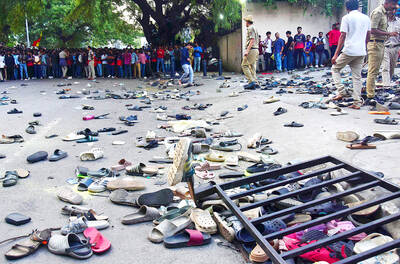
Packed crowds in India celebrating their cricket team’s victory ended in a deadly stampede on Wednesday, with 11 mainly young fans crushed to death, the local state’s chief minister said. Joyous cricket fans had come out to celebrate and welcome home their heroes, Royal Challengers Bengaluru, after they beat Punjab Kings in a roller-coaster Indian Premier League (IPL) cricket final on Tuesday night. However, the euphoria of the vast crowds in the southern tech city of Bengaluru ended in disaster, with Indian Prime Minister Narendra calling it “absolutely heartrending.” Karnataka Chief Minister Siddaramaiah said most of the deceased are young, with 11 dead
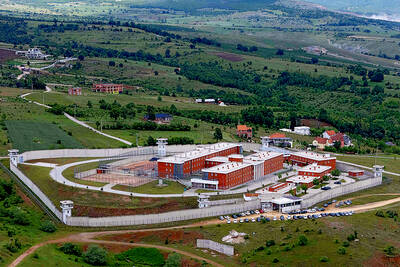
By 2027, Denmark would relocate its foreign convicts to a prison in Kosovo under a 200-million-euro (US$228.6 million) agreement that has raised concerns among non-governmental organizations (NGOs) and residents, but which could serve as a model for the rest of the EU. The agreement, reached in 2022 and ratified by Kosovar lawmakers last year, provides for the reception of up to 300 foreign prisoners sentenced in Denmark. They must not have been convicted of terrorism or war crimes, or have a mental condition or terminal disease. Once their sentence is completed in Kosovan, they would be deported to their home country. In

Brazil, the world’s largest Roman Catholic country, saw its Catholic population decline further in 2022, while evangelical Christians and those with no religion continued to rise, census data released on Friday by the Brazilian Institute of Geography and Statistics (IBGE) showed. The census indicated that Brazil had 100.2 million Roman Catholics in 2022, accounting for 56.7 percent of the population, down from 65.1 percent or 105.4 million recorded in the 2010 census. Meanwhile, the share of evangelical Christians rose to 26.9 percent last year, up from 21.6 percent in 2010, adding 12 million followers to reach 47.4 million — the highest figure

LOST CONTACT: The mission carried payloads from Japan, the US and Taiwan’s National Central University, including a deep space radiation probe, ispace said Japanese company ispace said its uncrewed moon lander likely crashed onto the moon’s surface during its lunar touchdown attempt yesterday, marking another failure two years after its unsuccessful inaugural mission. Tokyo-based ispace had hoped to join US firms Intuitive Machines and Firefly Aerospace as companies that have accomplished commercial landings amid a global race for the moon, which includes state-run missions from China and India. A successful mission would have made ispace the first company outside the US to achieve a moon landing. Resilience, ispace’s second lunar lander, could not decelerate fast enough as it approached the moon, and the company has


 RSS
RSS