


Japan has a new cafe where customers can enjoy coffee brewed and served by a robot barista.
The robot named Sawyer debuted this week at Henna Cafe in Shibuya. The shop’s name in Japanese means “strange cafe.”
The single-armed robot scans a ticket purchased from a vending machine and greets the customer.
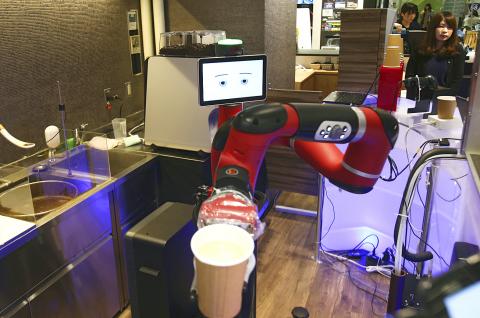
Photo: AP
“Would you care for a delicious coffee?” the barista, with a screen showing a pair of cartoon eyes, asks in a flat tone. “I can make one better than human beings around here.”
It grinds the coffee beans, fills a filter and pours hot water over a paper cup for up to five people at once. A cup of brewed coffee costs ¥320 (US$2.91) and takes a few minutes.
Sawyer can also operate an automated machine for six other hot drinks, including cappuccinos, hot chocolate and green tea lattes.
Customers, many of them young men, took photographs with their smartphones while they waited in line.
The cafe operator, travel agency H.I.S. Co, says robots can increase productivity while also entertaining customers.
“An essential point is to increase productivity,” H.I.S corporate planning general manager Masataka Tamaki said.
Only one person needs to oversee the robot cafe, compared to several people needed at a regular coffee shop, so it can serve better quality coffee at a reasonable price, he added.
However, he said it is not just about efficiency.
“We want the robot to entertain customers, so it’s not like buying coffee at a vending machine,” he added.
Takeshi Yamamoto, a 68-year-old restaurant employee who works in the neighborhood, said his first experience with the robot cafe was very enjoyable, and his coffee was delicious.
“It’s quite rich and tastes very good,” Yamamoto said as he took a sip. “You can get machine-made coffee at convenience stores, too, and it’s actually good, but here, I had great fun.”
See ROBOTS on page 7

Swedish campaigner Greta Thunberg was deported from Israel yesterday, the Israeli Ministry of Foreign Affairs said, the day after the Israeli navy prevented her and a group of fellow pro-Palestinian activists from sailing to Gaza. Thunberg, 22, was put on a flight to France, the ministry said, adding that she would travel on to Sweden from there. Three other people who had been aboard the charity vessel also agreed to immediate repatriation. Eight other crew members are contesting their deportation order, Israeli rights group Adalah, which advised them, said in a statement. They are being held at a detention center ahead of a
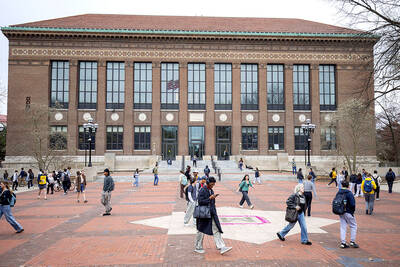
A Chinese scientist was arrested while arriving in the US at Detroit airport, the second case in days involving the alleged smuggling of biological material, authorities said on Monday. The scientist is accused of shipping biological material months ago to staff at a laboratory at the University of Michigan. The FBI, in a court filing, described it as material related to certain worms and requires a government permit. “The guidelines for importing biological materials into the US for research purposes are stringent, but clear, and actions like this undermine the legitimate work of other visiting scholars,” said John Nowak, who leads field
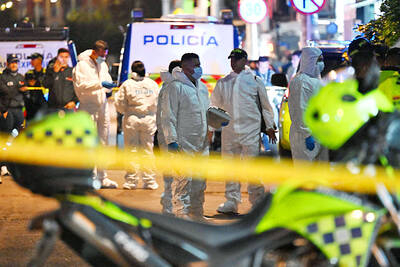
‘THE RED LINE’: Colombian President Gustavo Petro promised a thorough probe into the attack on the senator, who had announced his presidential bid in March Colombian Senator Miguel Uribe Turbay, a possible candidate in the country’s presidential election next year, was shot and wounded at a campaign rally in Bogota on Saturday, authorities said. His conservative Democratic Center party released a statement calling it “an unacceptable act of violence.” The attack took place in a park in the Fontibon neighborhood when armed assailants shot him from behind, said the right-wing Democratic Center, which was the party of former Colombian president Alvaro Uribe. The men are not related. Images circulating on social media showed Uribe Turbay, 39, covered in blood being held by several people. The Santa Fe Foundation
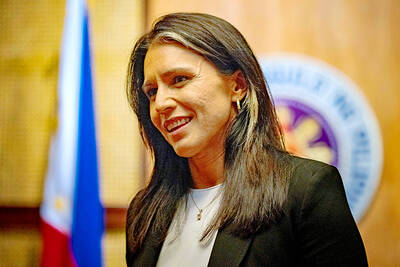
NUCLEAR WARNING: Elites are carelessly fomenting fear and tensions between nuclear powers, perhaps because they have access to shelters, Tulsi Gabbard said After a trip to Hiroshima, US Director of National Intelligence Tulsi Gabbard on Tuesday warned that “warmongers” were pushing the world to the brink of nuclear war. Gabbard did not specify her concerns. Gabbard posted on social media a video of grisly footage from the world’s first nuclear attack and of her staring reflectively at the Hiroshima Peace Memorial. On Aug. 6, 1945, the US obliterated Hiroshima, killing 140,000 people in the explosion and by the end of the year from the uranium bomb’s effects. Three days later, a US plane dropped a plutonium bomb on Nagasaki, leaving abut 74,000 people dead by the


 RSS
RSS