


Waddling over the rocks, legions of penguins hurl themselves into the icy waters of Antarctica, foraging to feed their young.
Like seals and whales, they eat krill, an inch-long shrimp-like crustacean which forms the basis of the Southern Ocean food chain.
However, penguin watchers say the krill are getting scarcer around the western Antarctic peninsula, under threat from climate change and fishing.
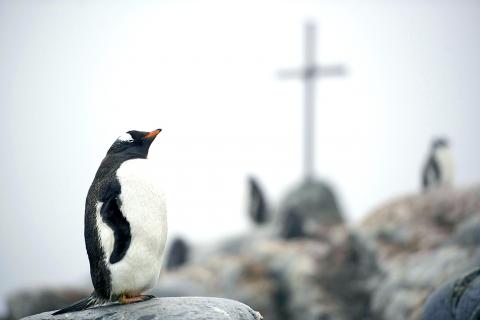
Photo: AFP
“Krill is the power lunch of the Antarctic. It’s a keystone species for everybody,” said Ron Naveen, leader of the US conservation group Oceanites, as penguins squawked on the rocks behind him.
In a vast ocean whose water flows influence the whole planet, krill rely on the sea ice to protect them and provide algae to feed them while they grow.
The ice is getting scarcer.
The peninsula has warmed by 3oC over the past 50 years, according to groups such as the WWF.
Scientists suspect that shifting ice patterns are effecting penguin populations.
“The interaction between warming temperatures, increasing ocean acidity and of course to some extent, although that’s not clear yet, an interaction with the fishing industry fishing for krill, will put pressure on predator populations that are mostly krill feeders,” such as penguins, said Steven Chown, a biologist at Monash University in Australia.
“Krill fishing may be occurring too close to where the penguin breeding colonies are,” Naveen said. “And perhaps more importantly, areas where the penguins are foraging.”
Fishing boats catch 300,000 tonnes of krill a year, which is then made into feed for farmed fish and Omega 3 oil supplements, the International Union for Conservation of Nature said.
Cilia Indahl, head of sustainability at Norwegian fishing company Aker BioMarine, said the total amount of krill caught is just 0.5 percent of the 60 million tonnes eaten each year by sea creatures.
However, Indahl said that the company has developed a method to minimize environmental harm. The boats trawl slowly, using special filtered nets to avoid catching other creatures.
“We will also have to consider where we fish for krill, making sure that there is minimum overlap with other animals like penguins and whales and where they feed,” she said.
Fishing in Antarctica is monitored by the Commission for the Conservation of Antarctic Marine Living Resources (CCAMLR). Member countries must agree between them on catch limits and no-fish areas.
Environmentalists insist that CCAMLR renew key regulations on krill fishing when it gathers for its annual meeting in October.
“There’s going to be a fight about whether or not the subdivision of the krill catch, that protects foraging predators like penguins, will be continued,” said Andrea Kavanagh, head of the penguin conservation campaign of the Pew Charitable Trusts, a US non-government organization, referring to the system of restrictions on krill fishing in certain areas.
“Some countries such as Russia and China indicated they did not see the need for it at last year’s meeting,” Kavanagh said.
Campaigners said agreement on conservation measures would be crucial for the future of the region, considered one of Earth’s last wildernesses.
“I feel when I’m here, like, I’m on the front lines of climate change,” said Naveen, who has spent 22 years counting penguins. “It’s happening right now and these penguins are trying to adapt. They’re sending messages to us about how the planet is changing.”

ROCKY RELATIONS: The figures on residents come as Chinese tourist numbers drop following Beijing’s warnings to avoid traveling to Japan The number of Chinese residents in Japan has continued to rise, even as ties between the two countries have become increasingly fractious, data released on Friday showed. As of the end of December last year, the number of Chinese residents had increased by 6.5 percent from the previous year to 930,428. Chinese people accounted for 22.6 percent of all foreign residents in Japan, making them by far the largest group, Japanese Ministry of Justice data showed. Beijing has criticized Tokyo in increasingly strident terms since Japanese Prime Minister Sanae Takaichi last year suggested that a military conflict around Taiwan could

A pro-Iran hacking group claimed to breach FBI Director Kash Patel’s personal e-mail inbox and posted some of the contents online. The e-mails provided by the hacking group include travel details, correspondence with leasing agents in Washington and global entry, and loyalty account numbers. The e-mail address the hackers claim to have compromised has been previously tied to Patel’s personal details, and the leaked e-mails contain photos of Patel and others, in addition to correspondence with family members and colleagues. “The FBI is aware of malicious actors targeting Director Patel’s personal email information,” the agency said in a statement on
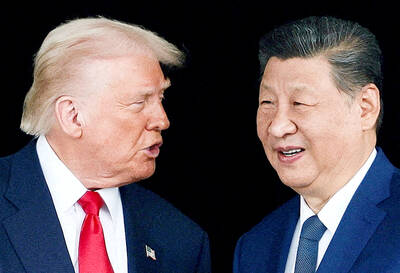
RIVALRY: ‘We know that these are merely symbolic investigations initiated by China, which is in fact the world’s most profligate disrupter of supply chains,’ a US official said China has started a pair of investigations into US trade practices, retaliating against similar probes by US President Donald Trump’s administration as the superpowers stake out positions before an expected presidential summit in May. The move, announced by the Chinese Ministry of Commerce on Friday, is a direct mirror of steps Trump took to revive his tariff agenda after the US Supreme Court last month struck down some of his duties. “China expresses its strong dissatisfaction and firm opposition to these actions,” a ministry spokesperson said in a statement, referring to the so-called Section 301 investigations initiated on March 11.

When a hiker fell from a 55m waterfall in wild New Zealand bush, rescuers were forced to evacuate the badly hurt woman without her dog, which could not be found. After strangers raised thousands of dollars for a search, border collie Molly was flown to safety by a helicopter pilot who was determined to reunite the pet and the owner. A week earlier, an emergency rescue helicopter found the woman with bruises and lacerations after a fall at a rocky spot at the waterfall on the South Island’s West Coast. She was airlifted on March 24, but they were forced to


 RSS
RSS