


Australian Prime Minister Malcolm Turnbull will be looking to reset a vital diplomatic and economic relationship badly strained under his predecessor when he visits Jakarta today to meet Indonesian President Joko Widodo.
Australia and its giant neighbor have a history of diplomatic turbulence stretching back decades, but relations reached historic lows under former Australian prime minister Tony Abbott, who was ousted in a party coup in September.
Turnbull inherited ties strained by rows over spying, the execution of Australian citizens in Indonesia and Abbott’s tough asylum seeker policies, all amid an atmosphere of growing Chinese assertiveness in the region.
However, with anxiety in Jakarta growing over Beijing’s intentions and Turnbull looking to build bridges to Asia, the visit was key for both sides, said Adrian Vickers, director of the Asian Studies Centre at the University of Sydney.
“The big thing for Turnbull will actually just be getting enough attention from Indonesia, where there is a potential at this moment to really refocus the relationship given the problems between Indonesia and China,” he said. “It might also be a good way to remind Indonesia of Australia and the potential benefits of the economic relationship.”
Indonesia is Australia’s 10th-largest overall trading partner and is the largest export market for Australian wheat worth A$1.3 billion (US$917 million) last year, as well as a major destination for live cattle and sugar.
They also cooperate closely on counter-terrorism, an area of growing concern as Islamic State militants seek footholds outside the Middle East, where Australia is bombing the group as part of a US-led military campaign.
However, in recent years, perpetual crisis became the norm, Vickers said, with Abbott very much its public face in Indonesia.
Just one month after he took office in September 2013, revelations that Canberra had spied on then-Indonesian president Susilo Bambang Yudhoyono and his wife sent relations plummeting.
His policy of towing back to Indonesia vessels carrying asylum seekers, while popular at home, infuriated Jakarta, which sees it as an infringement on its sovereignty.
Tensions reached their peak in May when Indonesia executed two Australian members of the so-called “Bali Nine” drug trafficking ring, despite intense lobbying from Canberra.


Kehinde Sanni spends his days smoothing out dents and repainting scratched bumpers in a modest autobody shop in Lagos. He has never left Nigeria, yet he speaks glowingly of Burkina Faso military leader Ibrahim Traore. “Nigeria needs someone like Ibrahim Traore of Burkina Faso. He is doing well for his country,” Sanni said. His admiration is shaped by a steady stream of viral videos, memes and social media posts — many misleading or outright false — portraying Traore as a fearless reformer who defied Western powers and reclaimed his country’s dignity. The Burkinabe strongman swept into power following a coup in September 2022
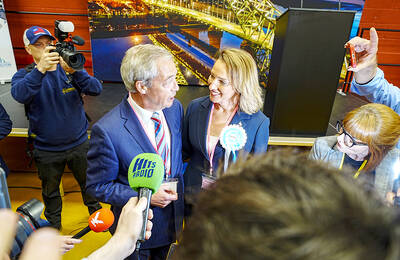
‘FRAGMENTING’: British politics have for a long time been dominated by the Labor Party and the Tories, but polls suggest that Reform now poses a significant challenge Hard-right upstarts Reform UK snatched a parliamentary seat from British Prime Minister Keir Starmer’s Labor Party yesterday in local elections that dealt a blow to the UK’s two establishment parties. Reform, led by anti-immigrant firebrand Nigel Farage, won the by-election in Runcorn and Helsby in northwest England by just six votes, as it picked up gains in other localities, including one mayoralty. The group’s strong showing continues momentum it built up at last year’s general election and appears to confirm a trend that the UK is entering an era of multi-party politics. “For the movement, for the party it’s a very, very big
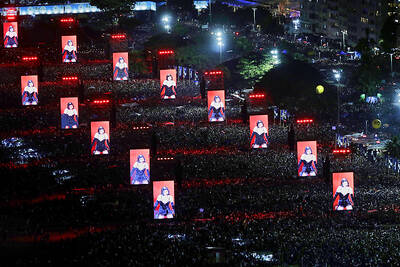
ENTERTAINMENT: Rio officials have a history of organizing massive concerts on Copacabana Beach, with Madonna’s show drawing about 1.6 million fans last year Lady Gaga on Saturday night gave a free concert in front of 2 million fans who poured onto Copacabana Beach in Rio de Janeiro for the biggest show of her career. “Tonight, we’re making history... Thank you for making history with me,” Lady Gaga told a screaming crowd. The Mother Monster, as she is known, started the show at about 10:10pm local time with her 2011 song Bloody Mary. Cries of joy rose from the tightly packed fans who sang and danced shoulder-to-shoulder on the vast stretch of sand. Concert organizers said 2.1 million people attended the show. Lady Gaga

SUPPORT: The Australian prime minister promised to back Kyiv against Russia’s invasion, saying: ‘That’s my government’s position. It was yesterday. It still is’ Left-leaning Australian Prime Minister Anthony Albanese yesterday basked in his landslide election win, promising a “disciplined, orderly” government to confront cost-of-living pain and tariff turmoil. People clapped as the 62-year-old and his fiancee, Jodie Haydon, who visited his old inner Sydney haunt, Cafe Italia, surrounded by a crowd of jostling photographers and journalists. Albanese’s Labor Party is on course to win at least 83 seats in the 150-member parliament, partial results showed. Opposition leader Peter Dutton’s conservative Liberal-National coalition had just 38 seats, and other parties 12. Another 17 seats were still in doubt. “We will be a disciplined, orderly


 RSS
RSS