


Has China found its own Gangnam Style? From Beijing parks to Shanghai skyscrapers and in Guangzhou factories to karaoke rooms in Macau, people are singing Little Apple — a song apparently so catchy it has even won over the army and police.
Calling themselves the “Chopsticks Brothers,” Xiao Yang (肖央) and Wang Taili (王太利) are neither brothers nor composers, but are responsible for a hit that has become a nationwide phenomenon. Xiao Pingguo (“Little Apple”) was originally intended to promote their latest film when it was released in July, but has proven to be an earworm — the kind of song so insistent it gets stuck in the brain.
“This song is easy to follow, the pace is basic and repetitive. Even the old ladies in public gardens are learning it quickly,” said Zeng Qiumei, a marketing manager from Sichuan Province.

Photo: AFP
The accompanying music video has notched up more than 50 million views on Chinese video sites such as Sohu, iQiyi and Youku.
The surreal six-minute clip begins with a botched plastic surgery operation before cutting to Xiao and Wang naked in the Garden of Eden. They then appear in a number of sequences, including dressed as mermaids on a beach or acting as village children.
The lyrics are largely nonsense, with the chorus running: “You’re my little apple, you’re my little apple.”
Even so, and perhaps aided by relaxed attitudes toward intellectual property in China, the tune has become ubiquitous — whether playing on smartphone ringtones to shopping malls, nightclubs and gyms.
The People’s Liberation Army in Xian has used the song in a recruitment video, while police in Shandong last month modified the lyrics for a broadcast warning about phone-banking scams.
“We changed the words to make people aware,” a police officer said in comments broadcast on CCTV.
And a clip showing soldiers dancing to Xiao Pingguo with child survivors of an August earthquake that killed 600 people in the southwest became an online sensation.
There are countless other amateur videos of groups of people dancing to the song, including air stewardesses, cheerleaders, firefighters and students. One parody brings together North Korean leader Kim Jong-un, US President Barack Obama, Russian President Vladimir Putin, Japanese Prime Minister Shinzo Abe and UN Secretary-General UN Ban Ki-moon.
The song’s success has also put a spotlight on Da Ma — the old ladies who gather every morning and evening to dance in city squares across China.
Zheng Xiaomin, a 76-year-old retiree in Beijing, said the Xiao Pingguo dance phenomenon has brought more people together, although she was happy to remain a spectator.
“In a park, it is usually embarrassing to be seen putting your hands on the shoulder or hip of a partner,” said the former typographer, who used to translate official documents into the dialects of ethnic minorities.
“But with Xiao Pingguo that’s not the case,” she added.
Despite its nationwide appeal, there are few expectations that Little Apple will become the kind of global phenomenon that was Gangnam Style, the stratospheric 2012 hit by South Korea’s Psy that has been viewed on YouTube more than 2.1 billion times. In contrast, the Chopstick Brothers’ video has only clocked up 3 million hits on the site, which is blocked in China by the country’s vast network of Internet controls.
Experts say Xiao Pingguo lacks the Westernized ingredients that helped Psy find such success.
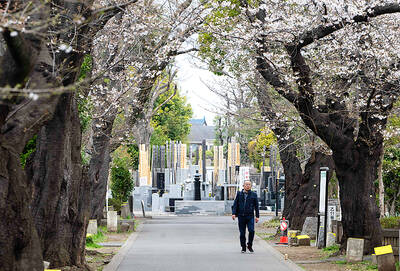
ROCKY RELATIONS: The figures on residents come as Chinese tourist numbers drop following Beijing’s warnings to avoid traveling to Japan The number of Chinese residents in Japan has continued to rise, even as ties between the two countries have become increasingly fractious, data released on Friday showed. As of the end of December last year, the number of Chinese residents had increased by 6.5 percent from the previous year to 930,428. Chinese people accounted for 22.6 percent of all foreign residents in Japan, making them by far the largest group, Japanese Ministry of Justice data showed. Beijing has criticized Tokyo in increasingly strident terms since Japanese Prime Minister Sanae Takaichi last year suggested that a military conflict around Taiwan could

Germany is considering Australia’s Ghost Bat robot fighter as it looks to select a combat drone to modernize its air force, German Minister of Defense Boris Pistorius said yesterday. Germany has said it wants to field hundreds of uncrewed fighter jets by 2029, and would make a decision soon as it considers a range of German, European and US projects developing so-called “collaborative combat aircraft.” Australia has said it will integrate the Ghost Bat, jointly developed by Boeing Australia and the Royal Australian Air Force, into its military after a successful weapons test last year. After inspecting the Ghost Bat in Queensland yesterday,

A pro-Iran hacking group claimed to breach FBI Director Kash Patel’s personal e-mail inbox and posted some of the contents online. The e-mails provided by the hacking group include travel details, correspondence with leasing agents in Washington and global entry, and loyalty account numbers. The e-mail address the hackers claim to have compromised has been previously tied to Patel’s personal details, and the leaked e-mails contain photos of Patel and others, in addition to correspondence with family members and colleagues. “The FBI is aware of malicious actors targeting Director Patel’s personal email information,” the agency said in a statement on
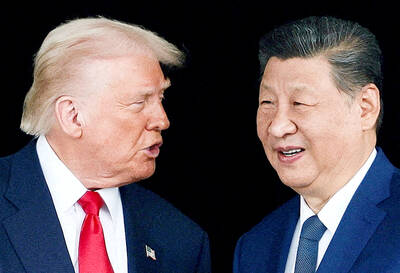
RIVALRY: ‘We know that these are merely symbolic investigations initiated by China, which is in fact the world’s most profligate disrupter of supply chains,’ a US official said China has started a pair of investigations into US trade practices, retaliating against similar probes by US President Donald Trump’s administration as the superpowers stake out positions before an expected presidential summit in May. The move, announced by the Chinese Ministry of Commerce on Friday, is a direct mirror of steps Trump took to revive his tariff agenda after the US Supreme Court last month struck down some of his duties. “China expresses its strong dissatisfaction and firm opposition to these actions,” a ministry spokesperson said in a statement, referring to the so-called Section 301 investigations initiated on March 11.


 RSS
RSS