


Spaniards battling a deep recession voted yesterday in two snap regional elections that could deal a blow to Spanish Prime Minister Mariano Rajoy.
Rajoy’s right-leaning Popular Party has imposed tough austerity measures on the eurozone’s fourth-largest economy and now faces votes in the Prime Minister’s home region of Galicia and in the Basque Country.
The elections are full of risks for the Spanish leader as he agonizes over whether and when to snatch a eurozone rescue line to help finance the nation’s soaring public debt.
Many investors believe the prime minister is waiting to get the two votes out of the way before requesting a rescue, keeping world financial markets on edge.
In Galicia, which has 2.7 million eligible voters including 400,000 abroad, the Popular Party was defending a tight, absolute majority. Opinion polls gave it hopes of keeping power.
However, Rajoy risks a humiliating upset if his prescription of deep spending cuts and higher taxes causes voters in Galicia, where the unemployment rate is 21 percent, to punish his party.
Economic pain and cuts in education and health are fuelling discontent across the country’s 17 powerful regions.
In the Basque Country, a pro-independence coalition is expected to enjoy a surge in support in the first regional vote since armed separatists ETA renounced the use of bombs and guns.
One voter, 43-year-old engineer Inaki Arteaga, said both the economy and the new climate in the Basque Country weighed on his mind.
“These elections have two keys: the economy and the fact that this time anyone who wants to can vote,” he said.
A 60-year-old unemployed electrician, Elvira Saotua, said young people were desperate for jobs.
“It is very bad for the young people around here. Most of them don’t have work,” she said.
Rajoy, who is already struggling to contain pro-independence demands in Catalonia, which goes to the polls on Nov. 25, has urged Spaniards to stay united.
To vote for his Popular Party “is to bet on the values that unite all Spaniards — values that are the same for us in Galicia, in the Basque Country, Catalonia and all of Spain,” he said before the elections.
“There is a choice between stability, moderation and common sense, or confusion, uncertainty and constant stress,” he said.
The Basque Nationalist Party, a conservative nationalist party, was ahead in opinion polls before the Basque vote, in which nearly 1.8 million people are eligible to cast ballots.
However, a new coalition of left-wing Basque separatists, Euskal Herria Bildu, is likely to come second. The alliance has filled the space left by the ETA-linked Batasuna party, which was outlawed in 2003.

Packed crowds in India celebrating their cricket team’s victory ended in a deadly stampede on Wednesday, with 11 mainly young fans crushed to death, the local state’s chief minister said. Joyous cricket fans had come out to celebrate and welcome home their heroes, Royal Challengers Bengaluru, after they beat Punjab Kings in a roller-coaster Indian Premier League (IPL) cricket final on Tuesday night. However, the euphoria of the vast crowds in the southern tech city of Bengaluru ended in disaster, with Indian Prime Minister Narendra calling it “absolutely heartrending.” Karnataka Chief Minister Siddaramaiah said most of the deceased are young, with 11 dead
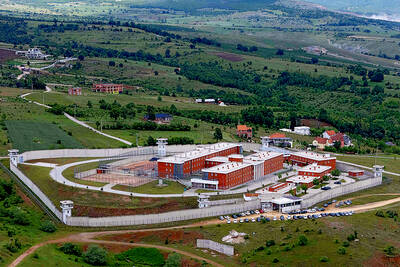
By 2027, Denmark would relocate its foreign convicts to a prison in Kosovo under a 200-million-euro (US$228.6 million) agreement that has raised concerns among non-governmental organizations (NGOs) and residents, but which could serve as a model for the rest of the EU. The agreement, reached in 2022 and ratified by Kosovar lawmakers last year, provides for the reception of up to 300 foreign prisoners sentenced in Denmark. They must not have been convicted of terrorism or war crimes, or have a mental condition or terminal disease. Once their sentence is completed in Kosovan, they would be deported to their home country. In

Brazil, the world’s largest Roman Catholic country, saw its Catholic population decline further in 2022, while evangelical Christians and those with no religion continued to rise, census data released on Friday by the Brazilian Institute of Geography and Statistics (IBGE) showed. The census indicated that Brazil had 100.2 million Roman Catholics in 2022, accounting for 56.7 percent of the population, down from 65.1 percent or 105.4 million recorded in the 2010 census. Meanwhile, the share of evangelical Christians rose to 26.9 percent last year, up from 21.6 percent in 2010, adding 12 million followers to reach 47.4 million — the highest figure

LOST CONTACT: The mission carried payloads from Japan, the US and Taiwan’s National Central University, including a deep space radiation probe, ispace said Japanese company ispace said its uncrewed moon lander likely crashed onto the moon’s surface during its lunar touchdown attempt yesterday, marking another failure two years after its unsuccessful inaugural mission. Tokyo-based ispace had hoped to join US firms Intuitive Machines and Firefly Aerospace as companies that have accomplished commercial landings amid a global race for the moon, which includes state-run missions from China and India. A successful mission would have made ispace the first company outside the US to achieve a moon landing. Resilience, ispace’s second lunar lander, could not decelerate fast enough as it approached the moon, and the company has


 RSS
RSS