


The Afghan-born man at the center of an anti-terrorism probe was determined to make a bomb and perhaps detonate it in New York City on the anniversary of the Sept. 11 attacks, before he was thwarted by authorities, a US prosecutor said on Friday.
Assistant US Attorney Tim Neff summed up the government’s case against Najibullah Zazi, 24, in a Denver courtroom before the suspect was flown in federal custody to New York to face a charge of plotting bomb attacks in the US.
Zazi, linked by authorities to al-Qaeda, was making his third appearance before a federal judge in Denver. He was ordered to remain held without bail, then put aboard a US Marshals Service jet for the cross-country flight. His first New York court appearance is set for Tuesday.
Zazi is accused of receiving bomb-making instructions during a trip to Pakistan last year, then buying and preparing chemicals for use in home-made explosives like those employed in the deadly London mass transit bombings in 2005.
A grand jury in New York has charged Zazi, a legal US resident born in Afghanistan, under federal anti-terrorism laws with conspiracy to use weapons of mass destruction, an offense outlined in an indictment unsealed on Thursday. He faces a maximum penalty of life in prison if convicted.
Law enforcement experts have called the suspected conspiracy, if proven, one of the most significant security threats in the US since the attacks of Sept. 11, 2001. Authorities say the case is unrelated to two other security arrests this week in Dallas and Springfield, Illinois.
Before his arrest, Zazi denied wrongdoing in media interviews and through his lawyers.
The investigation came to light earlier this month after Zazi drove across the country from Colorado, arriving in New York City on Sept. 10 in a rental car in which authorities say he carried a laptop computer with detailed bomb-making notes.
Neff, arguing in court that Zazi should remain in custody, said the evidence showed “a chilling, disturbing sequence of events that indicate the defendant was intent on making a bomb and being in New York on 9/11, perhaps using such items.”
“The evidence suggests the defendant was in the throes of making a bomb,” he said.
Prosecutors say Zazi, who worked as a shuttle bus driver at the Denver airport after moving to Colorado this year, traveled to Pakistan three or four times and to Canada twice during the past 10 years. Neff also said Zazi’s wife was in Pakistan and “is having trouble getting into this country.”
Documents accompanying the indictment against him refer to at least three other unnamed associates purchasing large amounts of hydrogen peroxide and acetone products from beauty supply stores over the summer.
Authorities have said they are continuing an investigation that has so far focused on Zazi, suggesting more arrests are possible in New York and Colorado. They have not made clear whether they consider Zazi a conspiracy leader or someone acting at the behest of others.
He was arrested last Saturday on charges of lying to federal agents investigating the case following three days of intense questioning by the FBI in Denver.
US Magistrate Judge Craig Shaffer ordered him to remain held without bond and moved to New York.
Dressed in a white T-shirt and tan trousers, he said little during the hearing, answering only, “Yes, your honor,” when asked whether he understood the charge against him, the penalties he faced and his constitutional rights.
At the request of prosecutors, Shaffer dismissed the earlier charge of making false statements, a move that made it easier to transfer him to New York.
The suspect’s father, Mohammed Zazi, and a New York imam, Ahmad Afzali, accused of having tipped off the younger Zazi that he was under scrutiny, also were charged with lying to investigators.
They were released on Thursday but ordered placed under electronic monitoring.

IDENTITY: A sex extortion scandal involving Thai monks has deeply shaken public trust in the clergy, with 11 monks implicated in financial misconduct Reverence for the saffron-robed Buddhist monkhood is deeply woven into Thai society, but a sex extortion scandal has besmirched the clergy and left the devout questioning their faith. Thai police this week arrested a woman accused of bedding at least 11 monks in breach of their vows of celibacy, before blackmailing them with thousands of secretly taken photos of their trysts. The monks are said to have paid nearly US$12 million, funneled out of their monasteries, funded by donations from laypeople hoping to increase their merit and prospects for reincarnation. The scandal provoked outrage over hypocrisy in the monkhood, concern that their status
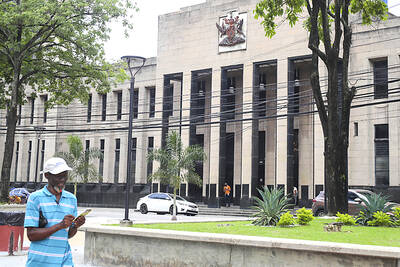
Trinidad and Tobago declared a new state of emergency on Friday after authorities accused a criminal network operating in prisons across the country of plotting to kill key government officials and attack public institutions. It is the second state of emergency to be declared in the twin-island republic in a matter of months. In December last year, authorities took similar action, citing concerns about gang violence. That state of emergency lasted until mid-April. Police said that smuggled cellphones enabled those involved in the plot to exchange encrypted messages. Months of intelligence gathering led investigators to believe the targets included senior police officers,

A disillusioned Japanese electorate feeling the economic pinch goes to the polls today, as a right-wing party promoting a “Japanese first” agenda gains popularity, with fears over foreigners becoming a major election issue. Birthed on YouTube during the COVID-19 pandemic, spreading conspiracy theories about vaccinations and a cabal of global elites, the Sanseito Party has widened its appeal ahead of today’s upper house vote — railing against immigration and dragging rhetoric that was once confined to Japan’s political fringes into the mainstream. Polls show the party might only secure 10 to 15 of the 125 seats up for grabs, but it is
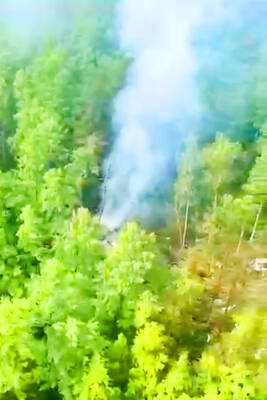
FOREST SITE: A rescue helicopter spotted the burning fuselage of the plane in a forested area, with rescue personnel saying they saw no evidence of survivors A passenger plane carrying nearly 50 people crashed yesterday in a remote spot in Russia’s far eastern region of Amur, with no immediate signs of survivors, authorities said. The aircraft, a twin-propeller Antonov-24 operated by Angara Airlines, was headed to the town of Tynda from the city of Blagoveshchensk when it disappeared from radar at about 1pm. A rescue helicopter later spotted the burning fuselage of the plane on a forested mountain slope about 16km from Tynda. Videos published by Russian investigators showed what appeared to be columns of smoke billowing from the wreckage of the plane in a dense, forested area. Rescuers in


 RSS
RSS