


Computer security specialists warn that Facebook users have been hit with a series of data-theft attacks in the past week as cyber crooks increasingly stalk social-networking Web sites.
Facebook has become prime hunting ground for tricksters and malicious software spreaders because it is the leading social-networking community, with more than 175 million people sharing personal information.
“There are so many people on social-networking sites it is becoming profitable for bad guys to go there,” said David Perry, global director of education at software security firm Trend Micro. “Bad guys can see all the things you post. You may be revealing personal information that is extremely valuable.”
Even seemingly innocent information posted on profile pages can sometimes provide opportunities for criminals. For example, names of grandparents or pets in posted pictures can tip hackers off to answers for typical challenge questions asked before providing information about “forgotten passwords” to online accounts.
Hackers can try to infect software used at social-networking Web sites with malicious code as well as dupe people in the trust-based communities with fake messages and rigged mini-applications.
“We have a rogue application that happened this weekend,” Trend Micro research manager Jamz Yaneza said on Monday.
Applications installed by Facebook users sent messages to their friends warning that the Web site was shutting down or that they had been reported for violating terms of service.
If people followed instructions in the bogus messages, software was installed on their computers that stole information and sent similar messages to their friends.
The most recent attack came in the form of messages claiming to be from friends that wanted to share digital video of the receivers.
Clicking on the link results in a prompt to download viewing software that is actually a computer worm called Koobface, a variation on the spelling of Facebook.
“It steals your cookie on your desktop; not just for Facebook but for a half-dozen social networking Web sites including MySpace,” Yaneza said. “Your account is compromised at that point. Using the hijacked cookie it tries to log in as you, goes through your address book and starts posting messages and comments.”
People can reduce the odds of becoming victims by being selective about friends at social networking Web sites and not clicking on links that take them outside the walls of their online communities.
Computer users are also wise to use unique complex passwords for each online account, Yaneza said.

The death of a former head of China’s one-child policy has been met not by tributes, but by castigation of the abandoned policy on social media this week. State media praised Peng Peiyun (彭珮雲), former head of China’s National Family Planning Commission from 1988 to 1998, as “an outstanding leader” in her work related to women and children. The reaction on Chinese social media to Peng’s death in Beijing on Sunday, just shy of her 96th birthday, was less positive. “Those children who were lost, naked, are waiting for you over there” in the afterlife, one person posted on China’s Sina Weibo platform. China’s
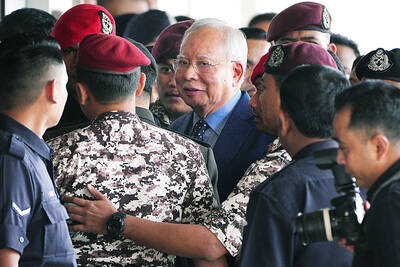
‘NO COUNTRY BUMPKIN’: The judge rejected arguments that former prime minister Najib Razak was an unwitting victim, saying Najib took steps to protect his position Imprisoned former Malaysian prime minister Najib Razak was yesterday convicted, following a corruption trial tied to multibillion-dollar looting of the 1Malaysia Development Berhad (1MDB) state investment fund. The nation’s high court found Najib, 72, guilty on four counts of abuse of power and 21 charges of money laundering related to more than US$700 million channeled into his personal bank accounts from the 1MDB fund. Najib denied any wrongdoing, and maintained the funds were a political donation from Saudi Arabia and that he had been misled by rogue financiers led by businessman Low Taek Jho. Low, thought to be the scandal’s mastermind, remains
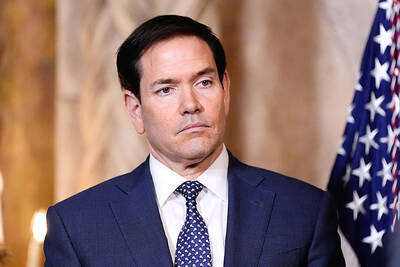
‘POLITICAL LOYALTY’: The move breaks with decades of precedent among US administrations, which have tended to leave career ambassadors in their posts US President Donald Trump’s administration has ordered dozens of US ambassadors to step down, people familiar with the matter said, a precedent-breaking recall that would leave embassies abroad without US Senate-confirmed leadership. The envoys, career diplomats who were almost all named to their jobs under former US president Joe Biden, were told over the phone in the past few days they needed to depart in the next few weeks, the people said. They would not be fired, but finding new roles would be a challenge given that many are far along in their careers and opportunities for senior diplomats can

Australian Prime Minister Anthony Albanese yesterday announced plans for a national bravery award to recognize civilians and first responders who confronted “the worst of evil” during an anti-Semitic terror attack that left 15 dead and has cast a heavy shadow over the nation’s holiday season. Albanese said he plans to establish a special honors system for those who placed themselves in harm’s way to help during the attack on a beachside Hanukkah celebration, like Ahmed al-Ahmed, a Syrian-Australian Muslim who disarmed one of the assailants before being wounded himself. Sajid Akram, who was killed by police during the Dec. 14 attack, and


 RSS
RSS