


Pope Benedict XVI raised the issue of Christians living in Saudi Arabia in a historic meeting on Tuesday with King Abdullah, the first monarch of the ultra-conservative Muslim kingdom to visit the Vatican.
During their talks, which also touched on conflicts in the Middle East, the pope highlighted "the positive and hard-working presence of the Christians" in Saudi Arabia, a Vatican communique said.
The two men also stressed "the value of collaboration among Christians, Muslims and Jews" and renewed a commitment to "intercultural and inter-faith dialogue with the goal of peaceful and fruitful coexistence," the statement said.
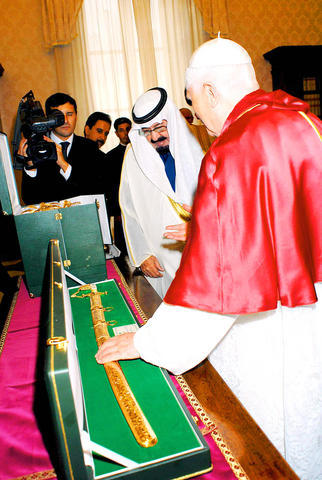
PHOTO: EPA
The Holy See does not have diplomatic ties with Saudi Arabia, which is home to Islam's holiest shrines in Mecca and Medina and applies a rigorous doctrine of Sunni Islam known as Wahhabism.
The question of religious freedoms for the roughly one million Christians and other non-Muslims in Saudi Arabia remains an extremely sensitive one.
In September, the US State Department's annual report on religious freedoms noted some improvement in "specific areas" in Saudi Arabia but said overall government policies continued to place "severe restrictions on religious freedom."
The report mentioned discrimination against non-Muslims, or against Muslims with practices other than Wahhabism, citing allegations of harassment, abuse and "even killings."
The groundbreaking talks were not King Abdullah's first contact with the head of the Roman Catholic Church, since he met Pope Benedict's predecessor John Paul II in 1999 when he was crown prince to his half brother King Fahd.
King Abdullah, 84, and the 80-year-old pontiff also exchanged "ideas on the Middle East and the need to find a fair solution to the conflicts afflicting the region, in particular the Israeli-Palestinian conflict," the Vatican communique said.
The king gave Pope Benedict a gold sword encrusted with precious stones and accepted a 16th-century engraving of the Vatican in return.
Italian Prime Minister Romano Prodi met the Saudi king later, saying afterward that he hoped a planned Middle East peace conference in Annapolis, Maryland, later this year would "yield solid expectations for an end, once and for all, to this conflict."
He said the conference held out "strong expectations" among Palestinians for a future sovereign state "with geographical continuity in peace and security with the state of Israel, which in turn would be recognized by all the countries of the region."
Prodi also mentioned the upcoming election by the Lebanese parliament of a new president, saying that Italy and Saudi Arabia were in "constant close contact to facilitate dialogue and to exhort Lebanese political forces to reach a compromise in the primary interests of the people."
Lebanese officials said on Tuesday that the parliamentary speaker might again postpone a special session to elect a president to replace Emile Lahoud, whose mandate expires on Nov. 24.
Two other sessions to pick a president have already been delayed for lack of consensus between the Western-backed ruling majority and the Hezbollah-led opposition.
King Abdullah, who ascended the throne two years ago, had arrived in Rome late on Monday following a lavish three-day visit to London at the invitation of Queen Elizabeth II.

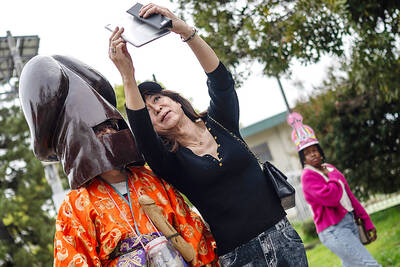
Showcasing phallus-shaped portable shrines and pink penis candies, Japan’s annual fertility festival yesterday teemed with tourists, couples and families elated by its open display of sex. The spring Kanamara Matsuri near Tokyo features colorfully dressed worshipers carrying a trio of giant phallic-shaped objects as they parade through the street with glee. The festival, as legend has it, honors a local blacksmith in the Edo Period (1603-1868) who forged an iron dildo to break the teeth of a sharp-toothed demon inhabiting a woman’s vagina that had been castrating young men on their wedding nights. A 1m black steel phallus sits in the courtyard of
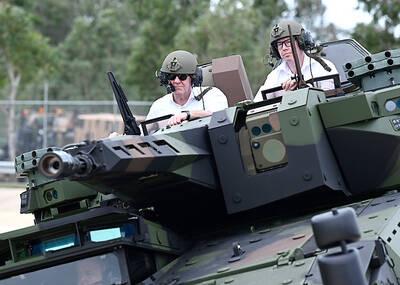
JAN. 1 CLAUSE: As military service is voluntary, applications for permission to stay abroad for over three months for men up to age 45 must, in principle, be granted A little-noticed clause in sweeping changes to Germany’s military service policy has triggered an uproar after it emerged that the law requires men aged up to 45 to get permission from the armed forces before any significant stay abroad, even in peacetime. The legislation, which went into effect on Jan. 1 aims to bolster the military and demands all 18-year-old men fill out a questionnaire to gauge their suitability to serve in the armed forces, but stops short of conscription. If the “modernized” model fails to pull in enough recruits, parliament will be compelled to discuss the reintroduction of compulsory service, German
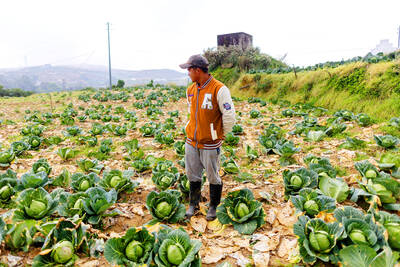
Filipino farmers like Romeo Wagayan have been left with little choice but to let their vegetables rot in the field rather than sell them at a loss, as rising oil prices linked to the Iran war drive up the cost of harvesting, labor and transport. “There’s nothing we can do,” said Wagayan, a 57-year old vegetable farmer in the northern Philippine province of Benguet. “If we harvest it, our losses only increase because of labor, transportation and packing costs. We don’t earn anything from it. That’s why we decided not to harvest at all,” he said. Soaring costs caused by the Middle East
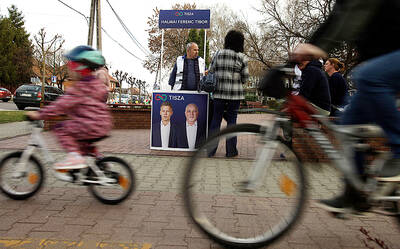
Hungarian Prime Minister Viktor Orban’s officially declared wealth is fairly modest: some savings and a jointly owned villa in Budapest. However, voters in what Transparency International deems the EU’s most corrupt country believe otherwise — and they might make Orban pay in a general election this Sunday that could spell an end to his 16-year rule. The wealth amassed by Orban’s inner circle is fueling the increasingly palpable frustration of a population grappling with sluggish growth, high inflation and worsening public services. “The government’s communication machine worked well as long as our economic situation remained relatively good,” said Zoltan Ranschburg, a political analyst


 RSS
RSS