


Investigations began yesterday into what caused Australia's worst train disaster in decades as rescuers went about the gruesome task of recovering bodies from the mangled wreckage.
Rescue crews set up a temporary morgue at the crash site in southern Victoria state, where a fully-laden truck slammed into a passenger train on Tuesday afternoon, killing 11 people.
They spent most of the day working to remove bodies from the carriages, which were ripped open on impact with the semi-trailer, and believe they have now accounted for all of those travelling on the Melbourne-bound train.
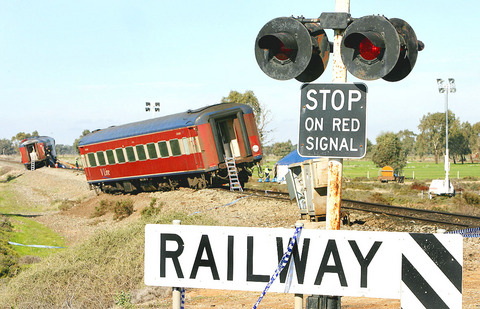
PHOTO: AFP
Their work was complicated by the extensive damage to the train carriages and the fact that some of the bodies were cut apart.
"There were a lot of people who lost legs and arms, it was just horrible," a German tourist, known only as Helena, told the Seven Network on Tuesday.
Police confirmed late yesterday that 11 people had died in the accident near the small town of Kerang, including a 13-year-old boy and a 32-year-old man from New Zealand, and that 23 others were injured.
"There was a person who died in a Melbourne hospital and 10 bodies were recovered at the wreck site," police spokesman Senior Constable Wayne Wilson said.
The truck driver survived the accident and is being interviewed by police.
Disaster worker Shane Leerson said volunteers were helping to remove the bodies from the two rail carriages hit by the truck.
"We've got to remove a lot of the twisted metal and steel and recover the deceased that are still inside the carriage," he said.
"Just the carnage there on the rail was horrific. I've never seen anything like it before up here, at all," Leerson said.
Witnesses described the site of the collision on the rural Victorian rail crossing as "like a war scene."
"It was like someone had dropped a bomb next to the train," Brian Frichot said.
"Where the truck had hit it, it just ripped the side clean out of it, torn all the seats away from the floor, packed it all back into the corner," he said.
"It's pretty horrific, there were bits and pieces of luggage, glass and parts of the train, items of clothing, telephones ringing everywhere," Frichot said.
Victorian state Premier Steve Bracks pledged a thorough investigation into the tragedy but said it seemed unlikely the crash could have been prevented.
"It's hard to know what you can do. Obviously we don't know whether a truck careering into a train would have been stopped by anything at all," he said.
Bracks said the damage to the train, which was on its way from Swan Hill to Australia's second largest city when the accident occurred, was horrific.
"It was catastrophic, the mangling of the three carriage set, particularly the middle carriage, which had most of the people ... the truck, which was hardly recognisable," he said.
"It's hard to imagine how someone could have survived driving that truck," Bracks said.
Assistant police commissioner Noel Ashby said the accident had shaken "an ordinary place where ordinary people are going about their business" and the investigation would be thorough.
"It will be comprehensive, it will be searching and we will find out what happened," he said.
The accident has raised questions about the safety of thousands of rail crossings in the country, most of which do not have boom gates.
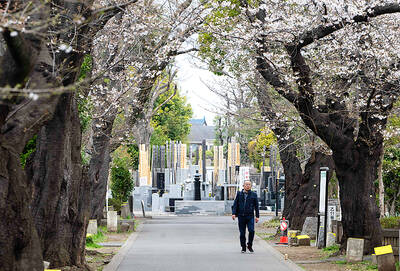
ROCKY RELATIONS: The figures on residents come as Chinese tourist numbers drop following Beijing’s warnings to avoid traveling to Japan The number of Chinese residents in Japan has continued to rise, even as ties between the two countries have become increasingly fractious, data released on Friday showed. As of the end of December last year, the number of Chinese residents had increased by 6.5 percent from the previous year to 930,428. Chinese people accounted for 22.6 percent of all foreign residents in Japan, making them by far the largest group, Japanese Ministry of Justice data showed. Beijing has criticized Tokyo in increasingly strident terms since Japanese Prime Minister Sanae Takaichi last year suggested that a military conflict around Taiwan could
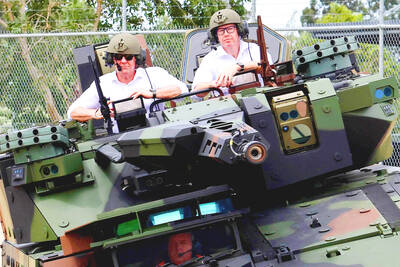
Germany is considering Australia’s Ghost Bat robot fighter as it looks to select a combat drone to modernize its air force, German Minister of Defense Boris Pistorius said yesterday. Germany has said it wants to field hundreds of uncrewed fighter jets by 2029, and would make a decision soon as it considers a range of German, European and US projects developing so-called “collaborative combat aircraft.” Australia has said it will integrate the Ghost Bat, jointly developed by Boeing Australia and the Royal Australian Air Force, into its military after a successful weapons test last year. After inspecting the Ghost Bat in Queensland yesterday,
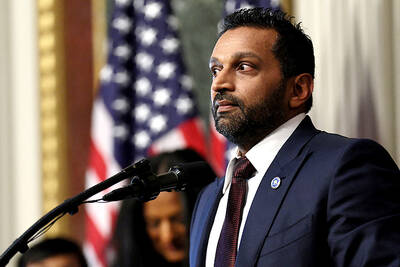
A pro-Iran hacking group claimed to breach FBI Director Kash Patel’s personal e-mail inbox and posted some of the contents online. The e-mails provided by the hacking group include travel details, correspondence with leasing agents in Washington and global entry, and loyalty account numbers. The e-mail address the hackers claim to have compromised has been previously tied to Patel’s personal details, and the leaked e-mails contain photos of Patel and others, in addition to correspondence with family members and colleagues. “The FBI is aware of malicious actors targeting Director Patel’s personal email information,” the agency said in a statement on
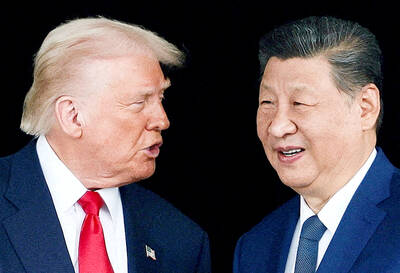
RIVALRY: ‘We know that these are merely symbolic investigations initiated by China, which is in fact the world’s most profligate disrupter of supply chains,’ a US official said China has started a pair of investigations into US trade practices, retaliating against similar probes by US President Donald Trump’s administration as the superpowers stake out positions before an expected presidential summit in May. The move, announced by the Chinese Ministry of Commerce on Friday, is a direct mirror of steps Trump took to revive his tariff agenda after the US Supreme Court last month struck down some of his duties. “China expresses its strong dissatisfaction and firm opposition to these actions,” a ministry spokesperson said in a statement, referring to the so-called Section 301 investigations initiated on March 11.


 RSS
RSS