


In another sign that Japan is pressing ahead in revising its history of World War II, new high school textbooks will no longer acknowledge that the Imperial Army was responsible for a major atrocity in Okinawa, the government announced late on Friday.
The Ministry of Education ordered publishers to delete passages stating that the Imperial Army ordered civilians to commit mass suicide during the Battle of Okinawa, as the island was about to fall to US troops in the final months of the war.
The decision was announced as part of the ministry's annual screening of textbooks used in all public schools. The ministry also ordered changes to other delicate issues to dovetail with government assertions, though the screening is supposed to be free of political interference.
"I believe the screening system has been followed appropriately," said Japanese Prime Minister Shinzo Abe, who has long campaigned to soften the treatment in textbooks of Japan's wartime conduct.
The decision on the Battle of Okinawa, which came as a surprise because the ministry had never objected to the description in the past, followed recent denials by Abe that the military had coerced women into sexual slavery during the war.
The results of the annual textbook screening are closely watched in China, South Korea and other Asian countries. So the fresh denial of the military's responsibility in the Battle of Okinawa and in sexual slavery -- long accepted as historical facts -- is likely to deepen suspicions in Asia that Tokyo is trying to whitewash its militarist past even as it tries to raise the profile of its current forces.
Some 200,000 Americans and Japanese died during the Battle of Okinawa, one of the most brutal clashes during the war. During the 1945 battle, during which one-quarter of the civilian population was killed, Japanese soldiers used civilians as shields against the Americans, and convinced locals that victorious US soldiers would go on a rampage of killing and raping. With the impending victory of US troops, civilians committed mass suicide, urged on by fanatical Japanese soldiers.
"There were some people who were forced to commit suicide by the Japanese army," one old textbook explained. But in the revision ordered by the ministry, it now reads, "There were some people who were driven to mass suicide."
In explaining its policy change, the ministry said that it "is not clear that the Japanese army coerced or ordered the mass suicides."
As with Abe's denial regarding sexual slavery, the ministry's new position appeared to discount overwhelming evidence of coercion, particularly the testimony of victims and survivors themselves.
"There are many Okinawans who have testified that the Japanese army directed them to commit suicide," Ryukyu Shimpo, a major Okinawan newspaper, said in an angry editorial.
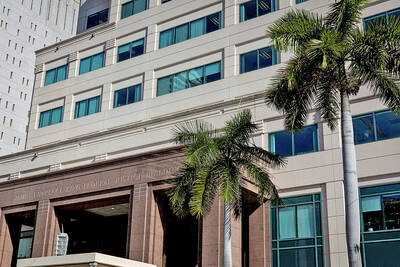
‘GROSS NEGLIGENCE?’ Despite a spleen typically being significantly smaller than a liver, the surgeon said he believed Bryan’s spleen was ‘double the size of what is normal’ A Florida surgeon who is facing criminal charges after allegedly removing a patient’s liver instead of his spleen has said he is “forever traumatized” by that person’s death. In a deposition from November last year that was recently obtained by NBC, 44-year-old Thomas Shaknovsky described the death of 70-year-old William Bryan as an “incredibly unfortunate event that I regret deeply.” Bryan died after the botched surgery; and last month, a grand jury in Tallahassee indicted Shaknovsky on a charge of manslaughter. “I’m forever traumatized by it and hurt by it,” Shaknovsky added, also saying that wrong-site surgeries can happen “during
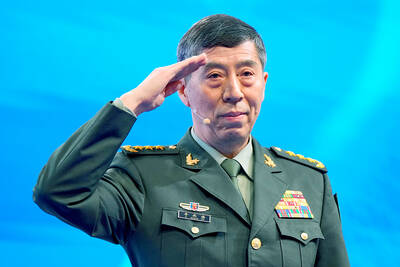
Former Chinese ministers of national defense Wei Fenghe(魏鳳和) and Li Shangfu (李尚福) were both sentenced to death with a two-year reprieve over graft charges, state news agency Xinhua reported on Thursday, underscoring the severity of the purge in the military. The armed forces have been one of the main targets of a broad corruption crackdown ordered by Chinese President Xi Jinping (習近平) after coming to power in 2012. The purges reached the elite Rocket Force, which oversees nuclear weapons as well as conventional missiles, in 2023. Earlier this year they escalated further, resulting in the removal of the top general in
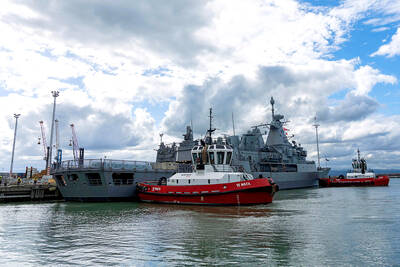
New Zealand is open to expanding its frigate fleet beyond its current two vessels, with New Zealand Minister of Defence Chris Penk saying “no options are off the table” as the government weighs buying new warships from Japan or the UK. The government yesterday said it is looking to replace its two aging Anzac-class frigates, which were both commissioned almost 30 years ago. The UK’s Type 31 and Japan’s Mogami-class warships are the options under consideration. Speaking in an interview, Penk said there is potential to increase the number of frigates the nation purchases. “We need a certain amount of capability as a

The Philippine Coast Guard yesterday said it deployed aircraft to issue radio warnings to a Chinese research ship in a disputed area of the South China Sea “swarming” with vessels from Beijing’s so-called maritime militia. The research vessel Xiang Yang Hong 33 (向陽紅33), which is capable of supporting submersible craft, was operating near a reef in the contested Spratly Islands (Nansha Islands, 南沙群島), which Taiwan also claims, the Philippine Coast Guard said. The Chinese ship was deploying a service boat toward the Spratly’s Iroquois Reef on Wednesday when it was spotted by a coast guard plane, “confirming ongoing unauthorized [marine scientific research]


 RSS
RSS