

The ritual slaughtering of a bull by a former governing party politician and convicted fraudster to celebrate his release from prison has pitted African traditionalists against animals rights activists.
The South African Society for Prevention of Cruelty to Animals said on Wednesday that it was investigating allegations of animal cruelty against Tony Yengeni, the former chief whip of the African National Congress.
The issue has been simmering in newspapers and on radio talk shows ever since pictures in weekend papers showed the killing of a bull and a sheep at Yengeni's father's house in Cape Town as part of a ceremony following his release from prison last week. Yengeni was already something of a lightning rod, portrayed by some as proof the ANC was soft on corruption in its ranks.
"Judging by the picture, in our opinion the bull was greatly traumatized and unreasonably restrained," said Allan Perrins, chief executive officer of the Cape of Good Hope SPCA.
Perrins said officials were also investigating allegations that the bull's tail was bitten in an effort to make it move and that Yengeni stabbed the animal with a spear before it was killed.
"If that is true, then it is a deliberate act of cruelty," he said.
Yengeni, who served only four months of a five-year sentence for fraud relating to a much-criticized arms deal, has not responded to the allegations. Perrins said SPCA officials have tried unsuccessfully to make contact with Yengeni so the circumstances of the slaughter could be clarified, though they have spoken to his relatives.
Attempts to reach him for comment were unsuccessful.
The issue of slaughtering animals in accordance with African customs has become increasingly controversial. Apartheid once kept the races and their ways apart; now more black people are moving into middle-class suburbs and their new white neighbors object to the bloodletting.
The Arts and Culture Ministry has come to Yengeni's defense, saying he had a constitutional right to practice his culture.
"In the case of the Yengeni family, we observe selective racism that condemns this specific African ritual," said Sandile Memela, spokesman for the ministry, in a statement.
Memela noted that Muslim and Jewish communities also have rituals to kill animals to ensure their meat is halal and kosher.
"Strangely, this is not considered abnormal and thus their right to do so is rarely questioned," he said.
The South African Human Rights Commission has also stepped into the fray, calling for further debate on the issue.
If convicted of animal cruelty, Yengeni could face up to a year in prison.
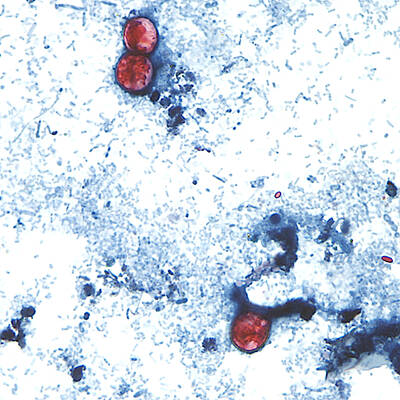
‘EXPLOSIVE’ DIARRHEA: The disease stems from consuming the parasite ‘Cyclospora’ that contaminate food or water, with cases rising in Michigan, New York, Illinois and Ohio A dangerous parasite that causes severe diarrhea is spreading throughout the Midwest, as US federal health officials investigate the still-undetermined source of the outbreak. Michigan — the state with the highest infection count — recorded 1,251 total cases of cyclosporiasis on Thursday, a 26 percent jump from the previous day. The infections are largely concentrated in the southeastern part of the state. Neighboring Ohio has reported more than 360 cases, a spokesperson for the health department said. Other states, including New York and Illinois, are also seeing rising rates. Since May 1, New York City has recorded 273 infections. The health department’s
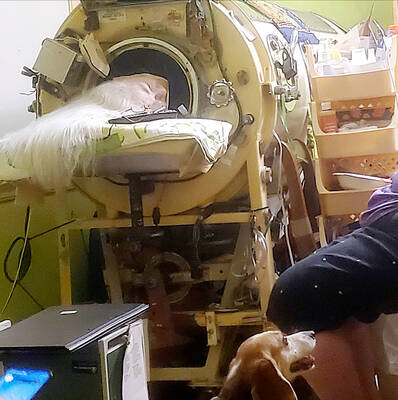
Martha Lillard had just turned five when she was diagnosed with polio and depended on an iron lung to live. She died on June 26 in Oklahoma, the last US polio patient who used the machine, her sister said on Friday. She was 78. “They told her she wasn’t supposed to live past 20 years old,” said Lillard’s younger sister, Cindy McVey. “She had the enthusiasm and the drive to continue living and make the best of her life.” McVey attributes her sister’s death to the effects of long-haul COVID-19. A death certificate lists causes as chronic pulmonary failure and post-polio syndrome,

KEY REVENUE SOURCE: An agreement to freeze the bloc’s floating price cap on Russian oil also appeared elusive, despite a looming deadline today to reset the limit The EU on Monday failed to endorse a 21st sanctions package against Russia, putting the bloc at risk of undermining one of its key tools to restrict the Kremlin’s oil revenue. The main points of contention were restrictions on the transport of Russian liquefied natural gas (LNG) and measures regarding Austria’s Raiffeisen Bank International AG, said people familiar with the matter who spoke anonymously to describe the private talks. An agreement to freeze the bloc’s floating price cap on Russian oil — a central element of the package — was also elusive, despite a looming deadline today to reset the limit. Without

HOT TREND: Heatwave days rose from eight in the 1970s to 19 over the past five years, and tropical nights jumped from four to 14 over the same period, KMA data showed South Korea yesterday issued its first-ever emergency heatwave alert under a new warning system launched this year, advising people to halt outdoor activities and keep cool. The new warning system was introduced to better deal with a rising number of heatwaves in South Korea, which have become longer and more intense, officials said. An emergency alert is issued when areas experiencing a heatwave are forecast to hit perceived temperatures of 38°C or an actual temperature of 39°C for one day. “The Korea Meteorological Administration [KMA] issued an Emergency Heatwave Warning at 10am today for two cities in southern North Gyeongsang Province —


 RSS
RSS