


A pagan religion that some experts say can be interpreted as encouraging violence is gaining popularity among prison inmates, one of whom is scheduled to be executed this week for killing a fellow prisoner at the foot of an altar.
Michael Lenz is scheduled to die tomorrow for the death of Brent Parker, who was stabbed dozens of times at Augusta Correctional Center during a gathering of inmates devoted to Asatru, whose followers worship Norse gods.
At his trial, Lenz testified that Parker had not taken the religion seriously and had to die to protect the honor of the gods.
Other followers call the religion misunderstood and say most adherent inmates do not use it to further violent agendas.
Asatru has been gaining popularity among inmates, say religious leaders and prison experts who believe its roots in Viking mythology attract prisoners seeking power, protection and unity. The gang culture in prison also contributes, said theologian Britt Minshall, a former police officer and Baltimore pastor who ministers to inmates.
Some white inmates who felt threatened by black prison gangs formed their own gangs and sought out a belief system they felt would provide additional security, he said.
SAFETY IN NUMBERS
"It's a way of grouping together for safety," he said. "And you have to have a god in the middle of that to really keep you safe."
Asatru is often referred to as Odinism, although some followers believe the two are separate religions. It is a polytheistic, pre-Christian faith native to Scandinavia whose adherents worship gods including Thor and Odin.
It emphasizes a connection with one's ancestors and values honor, loyalty, generosity and truth.
An estimated 10,000 to 20,000 people in the US consider themselves Asatruars or Odinists, said Stephen McNallen, director of the Asatru Folk Assembly, a leading Asatru group.
No national statistics are kept on how many inmates follow Asatru. But experts say its popularity enjoyed a boost from the Supreme Court, which last year sided with an Asatru inmate by upholding a federal law requiring state prisons to accommodate prisoners' religious affiliations.
Asatru is often associated with white supremacy, although most Asatru leaders bristle at suggestions of such a relationship.
A 1999 FBI report on domestic terrorism described Odinism as a "white supremacist ideology that lends itself to violence."
"What makes Odinists dangerous is the fact that many believe in the necessity of becoming martyrs for their cause," the report said.
MISUNDERSTANDINGS
Such comments are typical of those who don't understand Asatru, said Jane Ruck, who runs the National Prison Kindred Alliance and ministers to Asatru inmates.
White supremacists make up only a small portion of Asatruars, and most inmates who follow the religion do not use it to push hate-filled, violent agendas, she said.
"There might be some white supremacists who consider themselves Asatruars, but they're not because they're not following our beliefs," Ruck said.
Lenz and fellow Asatruar Jeffrey Remington, stabbed Parker a total of 68 times with makeshift knives. Remington was sentenced to death but committed suicide in 2004.
According to Art Jipson, who studies white racial extremism and directs the University of Dayton's criminal justice studies program, Lenz's belief that fatal force was warranted is not surprising.
"If he's a truly devout practicing Odinist or Asatruist, he's doing what he must do ... It would be a black mark on his soul ... not to fight," Jipson said.
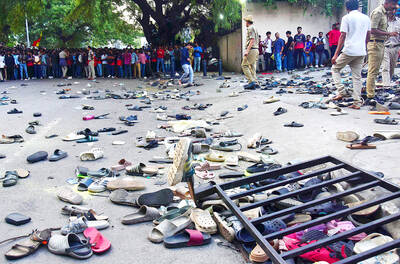
Packed crowds in India celebrating their cricket team’s victory ended in a deadly stampede on Wednesday, with 11 mainly young fans crushed to death, the local state’s chief minister said. Joyous cricket fans had come out to celebrate and welcome home their heroes, Royal Challengers Bengaluru, after they beat Punjab Kings in a roller-coaster Indian Premier League (IPL) cricket final on Tuesday night. However, the euphoria of the vast crowds in the southern tech city of Bengaluru ended in disaster, with Indian Prime Minister Narendra calling it “absolutely heartrending.” Karnataka Chief Minister Siddaramaiah said most of the deceased are young, with 11 dead
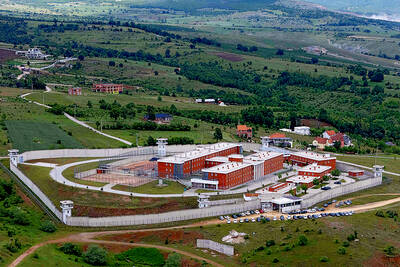
By 2027, Denmark would relocate its foreign convicts to a prison in Kosovo under a 200-million-euro (US$228.6 million) agreement that has raised concerns among non-governmental organizations (NGOs) and residents, but which could serve as a model for the rest of the EU. The agreement, reached in 2022 and ratified by Kosovar lawmakers last year, provides for the reception of up to 300 foreign prisoners sentenced in Denmark. They must not have been convicted of terrorism or war crimes, or have a mental condition or terminal disease. Once their sentence is completed in Kosovan, they would be deported to their home country. In

Brazil, the world’s largest Roman Catholic country, saw its Catholic population decline further in 2022, while evangelical Christians and those with no religion continued to rise, census data released on Friday by the Brazilian Institute of Geography and Statistics (IBGE) showed. The census indicated that Brazil had 100.2 million Roman Catholics in 2022, accounting for 56.7 percent of the population, down from 65.1 percent or 105.4 million recorded in the 2010 census. Meanwhile, the share of evangelical Christians rose to 26.9 percent last year, up from 21.6 percent in 2010, adding 12 million followers to reach 47.4 million — the highest figure

LOST CONTACT: The mission carried payloads from Japan, the US and Taiwan’s National Central University, including a deep space radiation probe, ispace said Japanese company ispace said its uncrewed moon lander likely crashed onto the moon’s surface during its lunar touchdown attempt yesterday, marking another failure two years after its unsuccessful inaugural mission. Tokyo-based ispace had hoped to join US firms Intuitive Machines and Firefly Aerospace as companies that have accomplished commercial landings amid a global race for the moon, which includes state-run missions from China and India. A successful mission would have made ispace the first company outside the US to achieve a moon landing. Resilience, ispace’s second lunar lander, could not decelerate fast enough as it approached the moon, and the company has


 RSS
RSS