


Hopes for a revival of Sri Lanka's peace process dimmed after Tamil Tiger rebels rejected a government offer to hold ice-breaking talks at an Asian venue hosted by Japan, diplomats said yesterday.
The rebel Liberation Tigers of Tamil Eelam (LTTE) on Saturday rejected a government offer to end an impasse over a venue for talks on a fragile ceasefire in place since 2002 by agreeing to an Asian location.
Colombo had earlier insisted that any talks with the Tigers must be held on the island, but last week told Japan's peace envoy Yasushi Akashi that it was amenable to an Asian venue. The suggestion promoted Akashi to offer Japan as a venue.
But the LTTE rejected the offer saying it wanted to continue with a Norwegian-sponsored talks format that the new government of President Mahinda Rajapakse had pledged to review.
Location of talks
"There is no change in our position with regard to the venue for talks and we stand by the Norwegian facilitator's original suggestion that the talks on effective implementation of the ceasefire take place in Oslo," the LTTE's political leader S.P. Thamilselvan said on the group's official Web site.
There was no formal government reaction to the LTTE's rejection of an Asian venue and insistence on Oslo for the proposed talks.
Asian diplomats said the latest stance of the Tigers was a setback to hopes of the current peace broker Norway, as well as Sri Lanka's key backers that talks to shore up the ceasefire could begin early next month.
Diplomats said the Tiger statement was also a snub to Akashi who last week publicly offered to host the talks in Japan after Colombo told him that it was climbing down from its earlier stance and agreed to negotiations in Asia.
The rejection comes ahead of a meeting by a quartet known as the "co-chairs" that have pledged financial support for peace building in Sri Lanka -- Japan, the EU, the US and Norway.
They are due to meet in Brussels today to review Sri Lanka's faltering peace talks which broke down in 2003 on LTTE demands for autonomy in the northeast which is largely controlled by the rebels.
"The co-chairs were keen that the talks begin as soon as possible particularly in view of the deteriorating security situation in the northeast," a Western diplomat involved in the peace effort, who declined to be named, said.
At least 35 people, including 18 government soldiers and two policemen, have been killed in the northeast of the island nation this month alone in bloodshed linked to a separatist ethnic conflict that has claimed more than 60,000 lives since 1972.
`Bogged down'
The Western diplomat said there was growing concern that mediation efforts on the ceasefire were stalled completely as several governments have said continued violence has heightened the possibility of a return to war.
"We are not in a position to even talk about talks. We are getting bogged down over a venue," the Western diplomat said.
"Even if we clear that soon, there has to be the question of delegations on both sides and where they want to start," the diplomate said.
The status of the ceasefire was thrown into further doubt after rebel leader Velupillai Prabhakaran warned on Nov. 27 that the LTTE would step up a struggle for an independent homeland next year if the peace process remains stalled.
A return to war could lead to further isolation for the LTTE.
The EU has already rebuked the Tigers after the Aug. 12 assassination of Sri Lankan foreign minister Lakshman Kadirgamar and announced that their delegations will not be received by any member state.
The LTTE denies it had any role in the killing.
Britain, the US and several other countries have already declared the Tamil Tigers a terrorist organization.
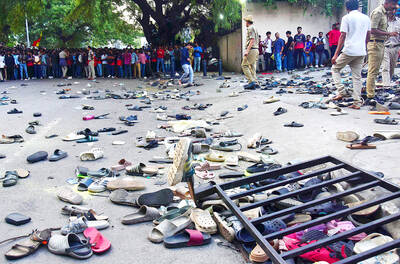
Packed crowds in India celebrating their cricket team’s victory ended in a deadly stampede on Wednesday, with 11 mainly young fans crushed to death, the local state’s chief minister said. Joyous cricket fans had come out to celebrate and welcome home their heroes, Royal Challengers Bengaluru, after they beat Punjab Kings in a roller-coaster Indian Premier League (IPL) cricket final on Tuesday night. However, the euphoria of the vast crowds in the southern tech city of Bengaluru ended in disaster, with Indian Prime Minister Narendra calling it “absolutely heartrending.” Karnataka Chief Minister Siddaramaiah said most of the deceased are young, with 11 dead
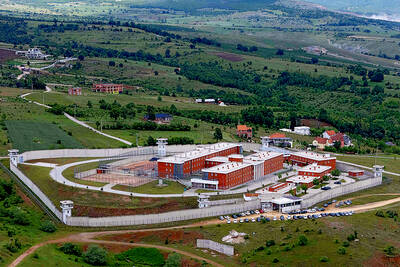
By 2027, Denmark would relocate its foreign convicts to a prison in Kosovo under a 200-million-euro (US$228.6 million) agreement that has raised concerns among non-governmental organizations (NGOs) and residents, but which could serve as a model for the rest of the EU. The agreement, reached in 2022 and ratified by Kosovar lawmakers last year, provides for the reception of up to 300 foreign prisoners sentenced in Denmark. They must not have been convicted of terrorism or war crimes, or have a mental condition or terminal disease. Once their sentence is completed in Kosovan, they would be deported to their home country. In

Brazil, the world’s largest Roman Catholic country, saw its Catholic population decline further in 2022, while evangelical Christians and those with no religion continued to rise, census data released on Friday by the Brazilian Institute of Geography and Statistics (IBGE) showed. The census indicated that Brazil had 100.2 million Roman Catholics in 2022, accounting for 56.7 percent of the population, down from 65.1 percent or 105.4 million recorded in the 2010 census. Meanwhile, the share of evangelical Christians rose to 26.9 percent last year, up from 21.6 percent in 2010, adding 12 million followers to reach 47.4 million — the highest figure

LOST CONTACT: The mission carried payloads from Japan, the US and Taiwan’s National Central University, including a deep space radiation probe, ispace said Japanese company ispace said its uncrewed moon lander likely crashed onto the moon’s surface during its lunar touchdown attempt yesterday, marking another failure two years after its unsuccessful inaugural mission. Tokyo-based ispace had hoped to join US firms Intuitive Machines and Firefly Aerospace as companies that have accomplished commercial landings amid a global race for the moon, which includes state-run missions from China and India. A successful mission would have made ispace the first company outside the US to achieve a moon landing. Resilience, ispace’s second lunar lander, could not decelerate fast enough as it approached the moon, and the company has


 RSS
RSS