


Inside the sunlit lobby with its polished marble floors and reception desk blanketed with pages of guest lists, the Santa Marta Residence looks like any other lavish hotel in the heart of Rome.
But a bronze bust of Pope John Paul II greeting visitors who enter through the hotel's sliding glass doors indicates that this is no ordinary inn.
The 117 cardinals arriving from all around the world to elect the pope's successor need a place to stay, so he had a US$20 million hotel built for them behind the Vatican's guarded gates. From the Santa Marta the cardinals have only a short stroll or ride behind St. Peter's Basilica to the Sistine Chapel, where the voting will take place.
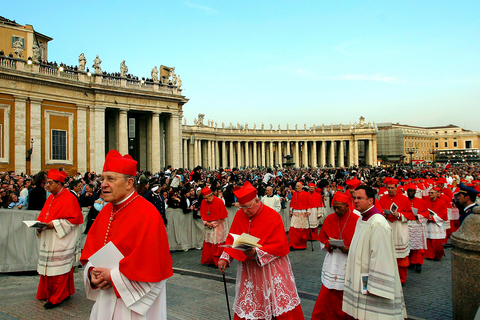
PHOTO: EPA
On Monday morning the pale brick five-story building seemed poised to receive its special guests. The antique tables with their gold-leaf legs were dusted and polished. A small elevator stood ready to serve the more elderly and infirm cardinals. A black placard indicated the dining room in three languages. The Vatican staff members who usually live there are moving out for the duration.
Yet for all its opulent touches and doting service -- chefs, doctors and priests to hear confessions are all on call -- the really revolutionary changes are tucked in the hotel's nearly 110 suites and score of single rooms.
"Miracle at the Conclave: The Cardinal Will Have a Shower," said a headline in the Italian magazine L'espresso last year, a reference to the shabby accommodations the last time a pope was selected.
The private bathrooms will surely be appreciated, but some people who follow the Vatican have raised the question of whether all of the hotel's conveniences might cause the cardinals to delay finishing the job of choosing a pope and checking out.
Under the rules, if two-thirds of the cardinals fail to agree on a single candidate by the end of the second week of the conclave, a simple majority will suffice. That may tempt some cardinals to stall until their preferred candidate gains enough support to win more than half of the vote and ascend the throne of Peter.
But others say that after years of having a pope in failing health at the helm of the Roman Catholic Church, the cardinals will want to move quickly so that his successor can tackle the raft of pressing issues facing the church.
In the past they needed plenty of prodding.
In 1271, after the papal throne was vacant for three years, anxious Catholics locked up the indecisive cardinals in a crumbling building and put them on a strict diet of bread and water until they made a decision. For an extra dose of motivation, the roof was removed. After enduring rain and harsh sunshine, the cardinals finally elected Pope Gregory X.
Conditions had improved by 1978, the year of the last conclave, but compared with the lifestyle that most cardinals are used to, the shelter was very modest. Beds were on loan from a local missionary college; the lamps were too weak to read by. The extent of the luxuries were a washbasin and some soap, some notepaper and a desk to write on.
Cardinal Giuseppe Siri, the archbishop of Genoa at the time, found much to be desired during his stay in Rome. He referred to his quarters during the brutal Rome summer of August 1978 as an "airless tomb."

‘CROSSING THE LINE’: China’s embassy in Seoul criticized US Forces Korea Commander General Xavier Brunson, asking if his ‘hostile’ remarks were authorized by Washington South Korea and the US are in talks over recent public remarks by the commander of US Forces Korea, Seoul’s presidential office said yesterday, after the comments drew sharp criticism from China. In a recent podcast interview, US Forces Korea Commander General Xavier Brunson described South Korea as “the dagger in the heart of Asia” from China’s east coast, prompting the Chinese embassy in Seoul to say that he had “truly crossed the line.” The interview came amid growing speculation that Washington might seek to expand the role of US Forces Korea in countering the growing regional influence of China, a key

Through the noise of rushing papers and whirring belts at a print factory in Kyoto, two creators watch their photo essay come to life in broadsheet form — part of an effort to win new audiences in the age of artificial intelligence (AI). Despite the decline of the publishing industry, self-publication and handmade “zine” magazines are growing in popularity in Japan, reflecting the nation’s enduring love of paper in the digital era. While speaking to Agence France-Presse at the plant, his hands black with ink, one of the creators, Kazuma Obara, said: “I think [paper] is a medium that engages all five

Australian researchers have trained lab-grown brain cells on a silicon computer chip to play the 1990s shooter game Doom and said they are just scratching the surface of what the neurons could be capable of doing. It is the science-fiction work of biotech boffins at Cortical Labs, who researched and developed the technology that harnesses the workings of the brain’s networking system. Each so-called “biological computer” contains about 200,000 living human brain cells, grown from stem cells that were harvested from blood donations. Having mastered the simple computer game Pong, where a paddle is moved up and down to send a ball
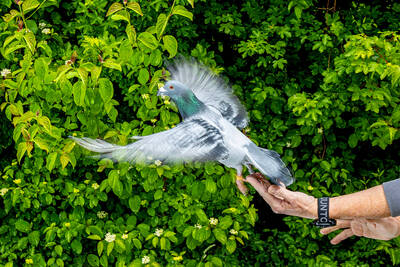
A surprising gut feeling may help pigeons find their way home. Animals use various techniques to navigate, including following the stars and remembering key landmarks. Birds, fish and turtles orient themselves using Earth’s magnetic field as a compass, but it is not yet clear how exactly they do this. Pigeons are a well-known group of frequent flyers that can traverse hundreds of kilometers in a single day. For thousands of years, humans have used them to carry news, notes and military messages. Scientists have long tried to untangle how pigeons travel without getting lost. Some think the birds detect magnetic cues using light-sensitive


 RSS
RSS