

Taiwan is reducing carbon emissions at an annual rate of about 2 percent and is continuing to phase out fossil fuels, Minister of Environment Peng Chi-ming (彭啟明) said yesterday after the COP31 climate talks in Turkey ended with no agreement.
The UN COP31 climate summit concluded in Antalya on Sunday following nearly 50 hours of prolonged negotiations. The talks failed to reach an agreement as member states of the UN Climate Change Conference could not find consensus on fossil fuel transition.
Nevertheless, many agenda items were agreed at the talks and the global climate governance would still be put into action.
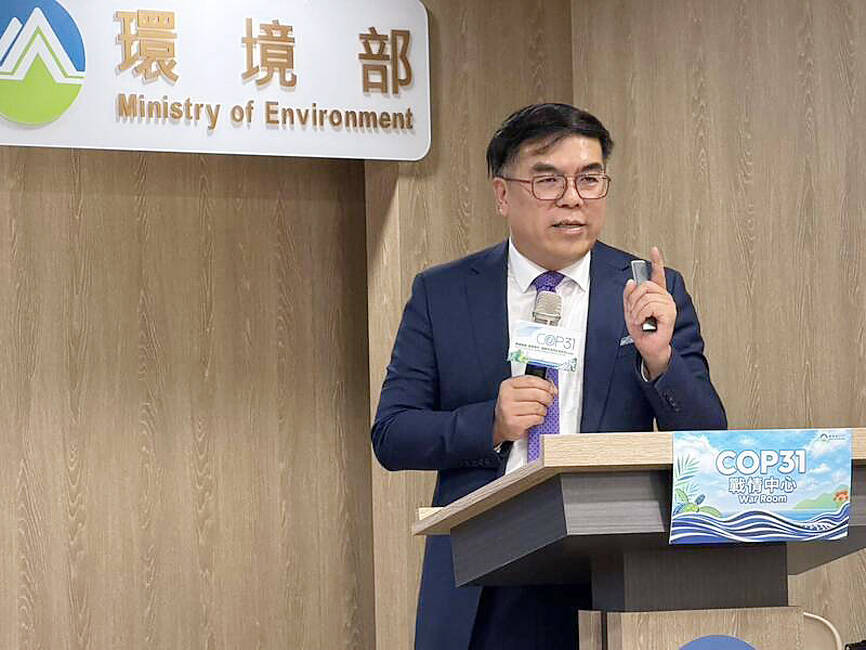
Photo: Yang Yuan-ting, Taipei Times
The Mom Loves Taiwan Association, Climate Era Catalyst and the Taiwan Youth Climate Coalition yesterday held a news conference urging the government to give equal importance to electrification and phasing out fossil fuels.
The COP31 host put forward a target of boosting electricity’s share of global energy consumption to 35 percent by 2035 — the “35 by 35” global electrification pledge — as electrification is considered a critical pathway to get rid of fossil fuels, the advocates said.
However, the 35 percent electrification benchmark measures only electricity’s share of total energy use, not how much oil and gas it actually replaces, they said.
While electricity accounted for more than 34 percent of Taiwan’s total energy consumption last year, putting it seemingly close to the target, heavy fossil fuel use continued in transportation, buildings and industrial heating, they said.
Peng said this year’s climate talks were not fully integrated, perhaps due to the Turkey-Australia copresidency, which was unprecedented.
That led to a misalignment between political agendas and negotiation rhythms, he said.
Oil-producing countries also became more sensitive about fossil fuel issues, given increased economic pressures due to Russia’s invasion of Ukraine and the Middle East conflicts, Peng said.
However, Taiwan will continue to transition away from fossil fuels toward net zero, he said.
Regarding the “35 by 35” target, Peng said Taiwan’s annual carbon reduction rate is about 2 percent and would continue to increase thanks to coal-to-gas switching.
Gas power plants could be replaced with hydrogen or ammonia facilities once such technology is fully developed, he said, adding that renewable energy use would also increase.
The nation’s overall grid emission factor could further be cut if the second and third nuclear power plants could be restarted after passing safety inspections, he added.
Taiwan plays a pivotal role in the global artificial intelligence supply chain, Peng said, calling on the international community to establish substantive partnerships with Taiwan.
Taiwan and Paraguay’s cooperation on a forest carbon sink project has entered the final agreement signing stage, he said.
Other allies and non-allied countries have also inquired about partnership opportunities with Taiwan’s carbon trading system, he said.
Additional reporting by CNA

Minister of Health and Welfare Shih Chung-liang (石崇良) yesterday praised fans of South Korean boy band BTS for turning chance encounters with their idols into charitable donations, while urging them to check that the charities receiving their donations are legally registered. Shih described the fan-driven charity trend as “a wonderful thing that deserves encouragement.” With BTS returning to Taiwan for concerts in Kaohsiung this past weekend, local fans have taken to social media to encourage one another to practice so-called “sea turtle-style stanning” — treating the idols like protected sea turtles by admiring them from a respectful distance rather than
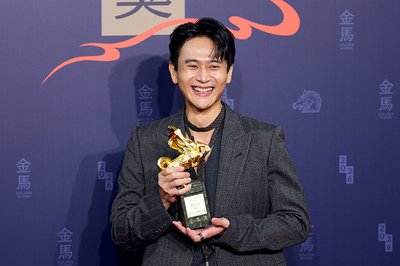
Taiwanese actor Liu Kuan-ting (劉冠廷) won best leading actor at the Golden Horse Awards yesterday for his portrayal of a groom attempting to stage two weddings in Double Happiness (雙囍). Liu, 38, beat four other nominees to win his first Golden Horse leading actor award on his second nomination in the category. The 63rd edition of the awards was held at the Taipei Music Center. The other nominees were Leon Dai (戴立忍) for Kung Fu (功夫), Yeung Wai-lun (楊偉倫) for We Are Born Good (善男信女), Ethan Juan (阮經天) for Arrested Memory (狂忘警探) and Jack Tan (陳澤耀) for Dead Tide
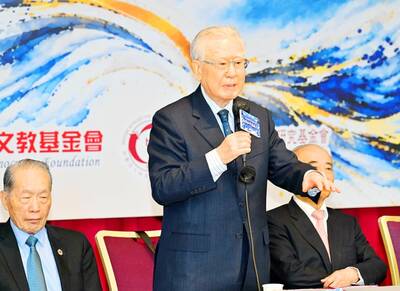
The Chinese Nationalist Party (KMT) yesterday denied that a 10-year plan for the “peaceful unification of Taiwan and China” circulating online represented its policy, saying the proposal had not been approved by the party’s leadership. The proposal, put forward at a forum earlier this month by former Straits Exchange Foundation deputy chairman Chiu Chin-yi (邱進益), suggests unifying the currencies used on either side of the Taiwan Strait by 2032 and beginning political negotiations in 2036 to discuss possible frameworks, including a federation, confederation or “one country, two systems.” After slides and other content with the KMT’s emblem explaining Chiu’s proposal began circulating
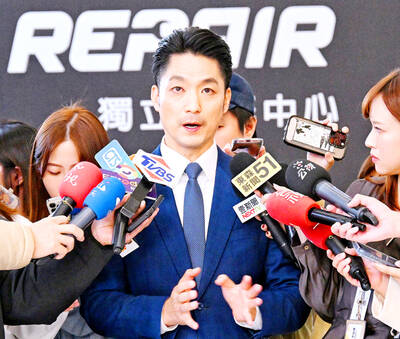
TAIPEI CANDIDATES: Puma Shen vowed to intervene ‘too much rather than too late’ over children’s safety, while Chiang Wan-an pledged expanded AI projects Taipei Mayor Chiang Wan-an (蔣萬安) of the Chinese Nationalist Party (KMT) and Democratic Progressive Party (DPP) Legislator Puma Shen (沈伯洋), who is Chiang’s main rival in Saturday’s mayoral election, yesterday clashed over the handling of child welfare and public health issues, including a child abuse case at a kindergarten, a deadly food poisoning incident and plans to install solar panels at a reservoir. Speaking at their second televised policy presentation ahead of the election, Shen accused the KMT-led Taipei City Government of responding too slowly to crises, citing an investigation that found two staff members mistreated 13 children at Charisse International


 RSS