

A political commentator and writer in Papua New Guinea (PNG) has criticized the government for favoring Beijing at Taiwan’s expense, raising concerns over the country’s diplomatic autonomy.
The Ministry of Foreign Affairs on Friday last week announced it would close Taiwan’s representative office in PNG and withdraw all personnel, in response to the country’s unilateral and unreasonable demands toward Taiwan.
The move is aimed at safeguarding Taiwan’s national dignity, diplomatic autonomy and national interests, the ministry said.
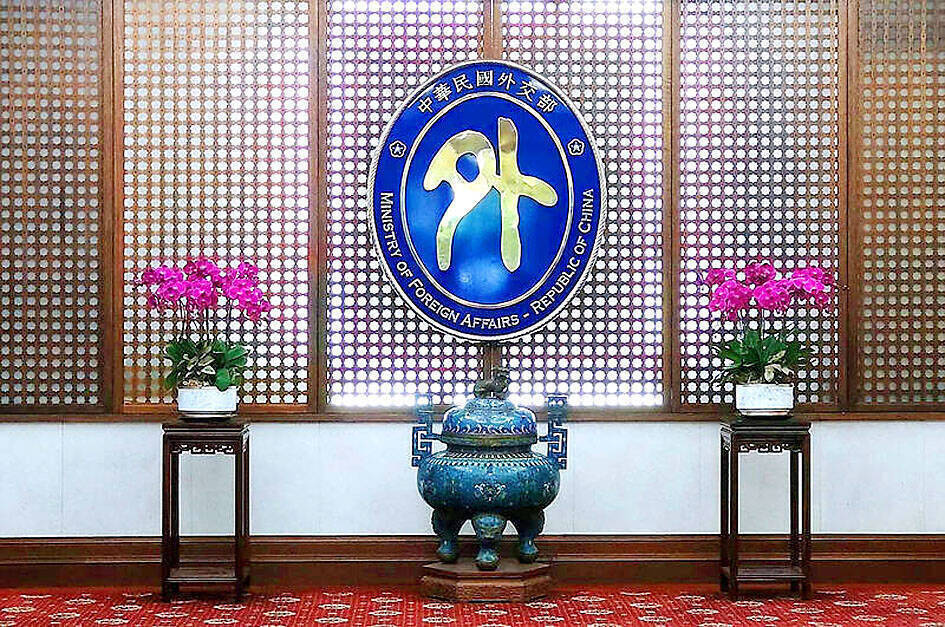
Photo: Taipei Times
PNGBlogs writer Paul L. Kebaija on Sunday in an opinion piece questioned the PNG government’s decisionmaking process. The official statements regarding the decision were inconsistent, lacked transparency and risked sacrificing a top trading partner in exchange for Beijing’s political goodwill, the article said.
PNG Minister of Foreign Affairs Justin Tkatchenko in July announced on Facebook the “immediate cessation of operations” of the Taipei Economic Office under PNG National Executive Council (NEC) Decision No. 144/2026, Kebaija wrote.
A few months later, the PNG ministry said the NEC allowed the Taiwanese office to continue operations for 12 months, then said that the 12-month window is not certain and gave two of the office’s three officials a week to leave the country, he wrote.
“Either the minister misstated a Cabinet decision to the world, or the government is rewriting that decision as it goes,” Kebaija wrote, adding that Taipei said there was no prior consultation.
However, Tkatchenko told foreign media that Taipei had been informed “weeks ago,” and PNG people deserve to know which is true, he wrote.
Taiwan is a long-term key trade partner of PNG, Kebaija wrote, citing Taipei’s statistics saying that about one-third of the country’s liquefied natural gas (LNG) exports are sold to Taiwan. LNG accounts for more than 40 percent PNG’s total exports, he wrote.
Although Tkatchenko in July said “that [Taiwan’s representative] office doesn’t do anything,” state-owned CPC Corp, Taiwan suspended spot purchases of PNG gas, about 500,000 tonnes, within a fortnight, Kebaija wrote.
Taipei went further in “closing the office, recalling its staff, signing no new spot contracts and ending its technical cooperation, medical missions and scholarships,” he wrote.
PNG released a statement saying that the closure “does not signify an end” to economic and people-to-people ties, which “can be pursued on other platforms,” he wrote, adding that the department should name them.
“The agriculture and fisheries technical missions are ending, the medical missions are ending, and the scholarship programme that had taken around 70 Papua New Guineans to Taiwan by 2022 is ending,” he added.
Kebaija indicated that PNG Prime Minister James Marape said the decision had not been made by pressure from any external power, but the Chinese embassy in PNG called it the “right decision,” while Washington said it was deeply concerned.
“Friends to all, enemies to none” is a foreign policy doctrine that Marape still recites, but in this case, it “turns a top-five trading partner into an aggrieved one for no visible return,” he wrote.
He urged the PNG government to publicize the text of NEC Decision 144/2026, the figure for the gas sales and foreign currency already lost, and the “other platforms” that would replace the scholarships and medical missions
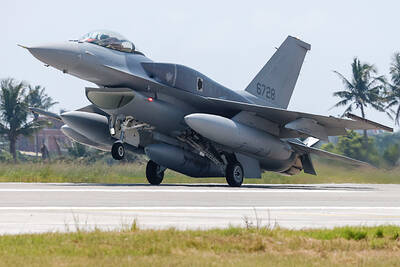
The second flight of F-16V jets from the US is expected to arrive at Chihhang Air Base in Taitung today. Minister of National Defense Wellington Koo (顧立雄) on Friday said that the new fighters would arrive in Taiwan soon. The Air Force Command yesterday issued a media notice for a filming session scheduled for today, effectively confirming the arrival. It is the second part of an order for 66 F-16Vs to arrive in Taiwan following the delivery of the first two aircraft last month. Three jets are expected this time, sources said. The three aircraft in the latest batch are single-seat models, bearing military serial
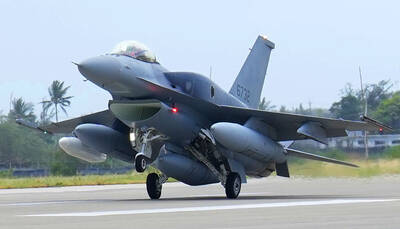
LONG WAIT: Deliveries of the 66 jets were expected to begin in 2023 and be completed by this year, but technical issues had pushed back the timetable The second batch of F-16V Block 70 jets purchased by Taiwan from the US, aircraft 6729, 6731 and 6732, arrived at Chihhang Air Base in Taitung County at about 11am yesterday, the air force said. The cockpit of the first aircraft to land, tail number 6732, displayed the Republic of China flag. The pilot of the last aircraft, tail number 6731, made a hand gesture representing the number “21” to the crowd. Airmen on the ground recognized it as the signature of the 21st Fighter Squadron. Sources said the pilot who made the gesture was Chiang Hui-yu (蔣惠宇), a graduate of the
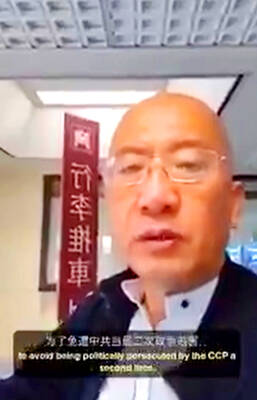
Former China Central Television (CCTV) talk show host Cheng Wanjun (程萬軍) yesterday sought political asylum in Taiwan, a day after arriving at Taiwan Taoyuan International Airport on a connecting flight from Thailand. In a video posted on X, Cheng said he was appealing to Taiwan to grant him temporary asylum on humanitarian grounds while he sought permanent resettlement in a third country. Cheng said he previously served as editor-in-chief of the journal Law and Life and hosted legal affairs programs on state-run CCTV. He said he ran afoul of Chinese authorities in 2019 after a video surfaced showing him discussing rulers whose actions
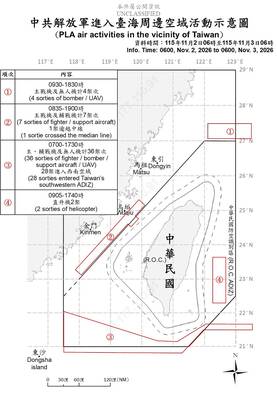
FORTY-NINE AIRCRAFT: The frequency and number of aircraft and ship sorties will likely continue to increase, but the important thing is vigilance, an analyst said Taiwan detected 49 sorties of military aircraft around Taiwan in the 24 hours leading up to 6am yesterday, in what analysts described as heightened “gray zone” activity. Aside from the 49 Chinese military aircraft, six warships and six government vessels were also detected around the nation during the period, the Ministry of National Defense said. Su Tzu-yun (蘇紫雲), director of the Institute for National Defense and Security Research’s Defense Strategy and Resources Division, said that the sudden surge in Chinese military aircraft and vessels around Taiwan was part of what he described as a “quiet exercise,” with Beijing maintaining high-intensity “gray zone”


 RSS