

The Central Election Commission (CEC) yesterday released a TV commercial warning people about artificial intelligence (AI)-generated content designed to influence Nov. 28 nine-in-one elections.
The commercial features CEC Minister Michael You (游盈隆) and actor Kevin Tai (戴凱文).
People turning 18 this year are allowed to vote in the referendum on the “no nuclear homeland” policy, while those turning 20 can vote in nine-in-one elections and referendum, You said.
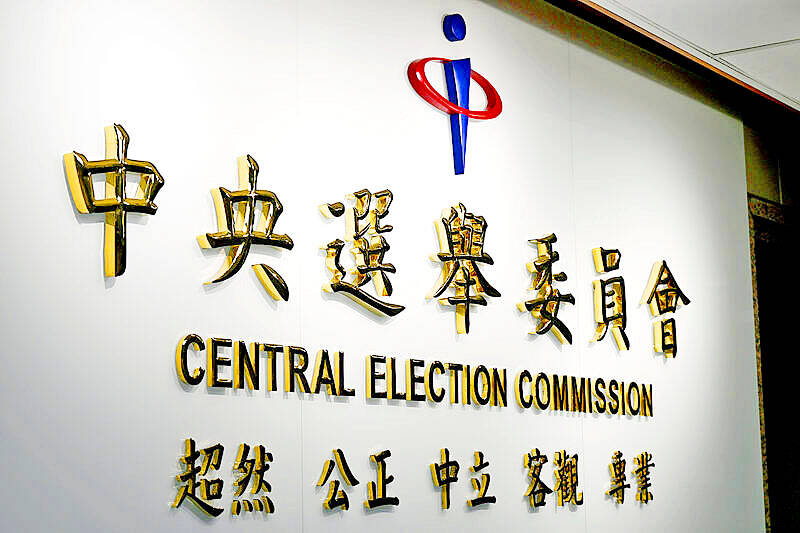
Photo: Taipei Times
“Through the election awareness commercial, we hope that all eligible citizens would go and vote, and participate in democracy,” he said.
The agency also reminded people to not share election-related information they receive without verifying it first, warning about AI-generated content.
Beijing’s use of deepfake videos to interfere in Taiwan’s local elections yesterday came under scrutiny at the legislature’s Transportation Committee.
Several deepfake videos online were aimed at vilifying DPP Taipei mayoral candidate Puma Shen (沈伯洋), including one claiming that Shen received commission for US arms sales to Taiwan, Democratic Progressive Party (DPP) Legislator Lin Chun-hsien (林俊憲) said.
Shen’s campaign on Oct. 30 informed the Ministry of the Digital Affairs about the videos, but they were not taken down until Thursday last week due to the criminal investigation launched by authorities and other legal procedures, Lin said.
Although the ministry was capable of getting deepfake videos removed in just 73 minutes, the falsified information had been widely disseminated for seven days before that happened, he said.
Minister of Digital Affairs Lin Yi-ching (林宜敬) said that many of such deepfake videos came from overseas accounts and, were liked and shared by bot accounts.
“Meta has required users to label AI-generated content. We have also asked Meta, Google and Line to regularly scan content on their platforms for AI-generated material that is not properly labeled as such. Users who did not label their AI-created content would face legal consequences,” he said.
Chinese Nationalist Party (KMT) Legislator Hung Meng-kai (洪孟楷) criticized CEC for its handling of the personal data leaks of candidates in local elections, saying that it was a serious cybersecurity breach.
Lin Yi-ching said the ministry would not classify the CEC incident as a cybersecurity breach, as its Web site was created with a very serious programming flaw.
Administration for Cybersecurity Director-General Tsai Fu-lung (蔡福隆) said that a third-party verification agency was tracking sources of 32 offshore IP addresses found in the CEC incident investigation, adding that the commission has adopted the latest AI-powered source code scanning tools to help identify and address vulnerabilities in its system.
Lin Yi-ching was also asked by lawmakers about the investigation into personal data leaks of 91 apps and other e-commerce platforms, as well as the cybersecurity incident involving Bank SinoPac.
The app data leaks affected 1,329 brands and about 4.79 million consumers, while the Bank SinoPac incident involved 427 suspicious transactions totaling NT$41.76 million (US$1.27 million), he said.
The app data leaks happened because the open-source software had not received security updates, he said.
Further investigation found that hackers used China-developed agentic AI software Artex to launch indiscriminate attacks on some apps and e-commerce platforms, he said, adding that the software was also used to damage financial institutions in Japan and South Korea.
Bank SinoPac uses a banking software that is used by many banks in other countries, he said.
“Administration for Cybersecurity is assisting the Financial Supervisory Commission in investigating why the Taiwanese bank was targeted and using AI tools to identify other potential vulnerabilities,” he added.
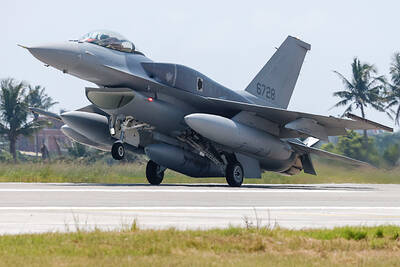
The second flight of F-16V jets from the US is expected to arrive at Chihhang Air Base in Taitung today. Minister of National Defense Wellington Koo (顧立雄) on Friday said that the new fighters would arrive in Taiwan soon. The Air Force Command yesterday issued a media notice for a filming session scheduled for today, effectively confirming the arrival. It is the second part of an order for 66 F-16Vs to arrive in Taiwan following the delivery of the first two aircraft last month. Three jets are expected this time, sources said. The three aircraft in the latest batch are single-seat models, bearing military serial
LONG WAIT: Deliveries of the 66 jets were expected to begin in 2023 and be completed by this year, but technical issues had pushed back the timetable The second batch of F-16V Block 70 jets purchased by Taiwan from the US, aircraft 6729, 6731 and 6732, arrived at Chihhang Air Base in Taitung County at about 11am yesterday, the air force said. The cockpit of the first aircraft to land, tail number 6732, displayed the Republic of China flag. The pilot of the last aircraft, tail number 6731, made a hand gesture representing the number “21” to the crowd. Airmen on the ground recognized it as the signature of the 21st Fighter Squadron. Sources said the pilot who made the gesture was Chiang Hui-yu (蔣惠宇), a graduate of the
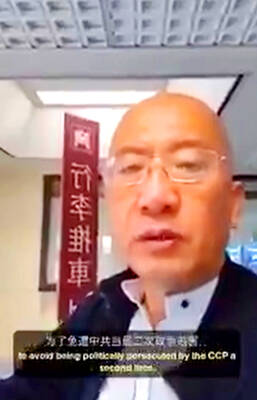
Former China Central Television (CCTV) talk show host Cheng Wanjun (程萬軍) yesterday sought political asylum in Taiwan, a day after arriving at Taiwan Taoyuan International Airport on a connecting flight from Thailand. In a video posted on X, Cheng said he was appealing to Taiwan to grant him temporary asylum on humanitarian grounds while he sought permanent resettlement in a third country. Cheng said he previously served as editor-in-chief of the journal Law and Life and hosted legal affairs programs on state-run CCTV. He said he ran afoul of Chinese authorities in 2019 after a video surfaced showing him discussing rulers whose actions
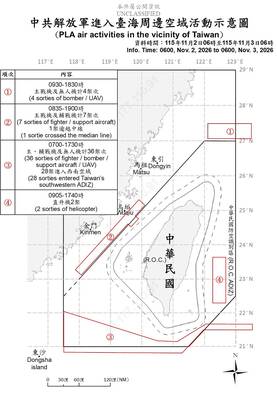
FORTY-NINE AIRCRAFT: The frequency and number of aircraft and ship sorties will likely continue to increase, but the important thing is vigilance, an analyst said Taiwan detected 49 sorties of military aircraft around Taiwan in the 24 hours leading up to 6am yesterday, in what analysts described as heightened “gray zone” activity. Aside from the 49 Chinese military aircraft, six warships and six government vessels were also detected around the nation during the period, the Ministry of National Defense said. Su Tzu-yun (蘇紫雲), director of the Institute for National Defense and Security Research’s Defense Strategy and Resources Division, said that the sudden surge in Chinese military aircraft and vessels around Taiwan was part of what he described as a “quiet exercise,” with Beijing maintaining high-intensity “gray zone”


 RSS