

The second satellite of the Formosat-8 constellation is expected to be launched in the first quarter of next year, the Taiwan Space Agency (TASA) said yesterday, as it released a documentary about the project.
Formosat-8 is Taiwan’s first domestically developed submeter resolution remote-sensing satellite constellation.
The first satellite — named after the late documentarian Chi Po-lin (齊柏林) and abbreviated FS-8A — was launched into space in November last year.

Photo courtesy of the Taiwan Space Agency
The constellation is to consist of eight satellites: six that could capture images with a resolution of 1m and two that are to capture images at a finer resolution.
The full constellation is expected to be deployed by 2031, with the goal of photographing the same location three times a day.
The quality of images from FS-8A released this year exceeded the original goals of the project, TASA said.
The second satellite of the constellation, FS-8B, has been assembled and has completed environmental testing, the agency said.
It would be shipped to the US by the end of this year and launched into orbit aboard a SpaceX rocket in the first quarter of next year, it said.
The agency yesterday held a special screening of a documentary about the Formosat-8 project, Eyes Over Formosa (守望之眼), at SPOT Huashan cinema in Taipei.
National Science and Technology Council (NSTC) Minister Wu Cheng-wen (吳誠文), TASA Director-General Wu Jong-shinn (吳宗信) and director Shen Ko-shang (沈可尚) attended, as well as members of the project team.
The documentary introduces the satellites’ development, following engineers through building and testing to launch.
It shows how the team overcame problems that affected Formosat-5 and developed FS-8A, with 84 percent of its key components made domestically.
FS-8A is now watching Taiwan from space, using highly advanced technology to capture clear images of Taiwan from 561km above the Earth’s surface, Wu Cheng-wen said.
Thanks to 30 years of hard work, Taiwan has caught up with other leading countries, he said.
In addition to optical remote-sensing satellites, Taiwan would continue developing weather satellites and low-orbit communications satellites, he added.
Formosat-8 has brought together TASA, NSTC researchers, academic teams and private enterprises, demonstrating Taiwan’s capabilities in space technology, Wu Cheng-wen said, adding that the nation’s space industry would expand into rockets as well as satellites.
NASA is formally cooperating with Taiwan, and the nation could play an important role in the US lunar program, he said.
TASA has two main goals: strengthening national security and promoting the space industry, Wu Jong-shinn said.
The Formosat-8 constellation shows Taiwan can independently develop high-resolution remote-sensing satellites, and would continuously collect data to monitor land and respond to disasters, becoming “eyes over Taiwan” protecting the nation, he said.
TASA said it signed contracts in July with three distributors for images from Formosat-8: Interactive Digital Technologies, National Central University’s Center for Space and Remote Sensing Research and ThinkTron Co.
The distributors would work to expand into global markets and speed up the commercialization of Taiwan’s satellite imagery, the agency said.
Additional reporting by Shelley Shan
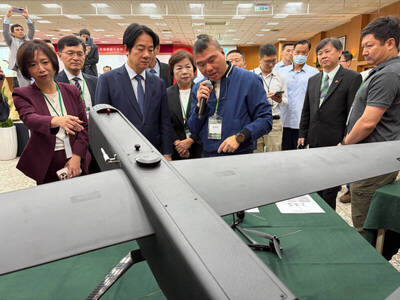
Two executives of drone supplier Jiin Ming Industry Co (錦明實業) have been detained and held incommunicado over the company's alleged use of prohibited China-made chips and camera lenses in drones supplied under recent military contracts, the Taoyuan District Prosecutors' Office said today. In a statement, prosecutors said they raided the offices of Jiin Ming — headquartered in Taoyuan — as well as those of its subsidiaries and its suppliers on Thursday last week. The raids followed a report that the company had breached its procurement contracts by putting the prohibited components into drones delivered to the military. During the raids, prosecutors summoned
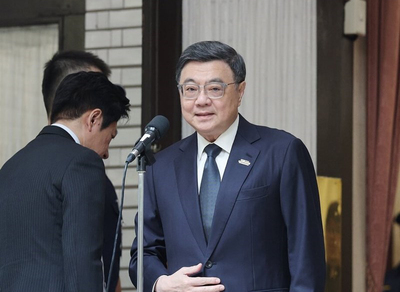
The government would continue monitoring online rumors that a pneumonic plague outbreak has spread from Russia into China and could enhance existing quarantine measures, Premier Cho Jung-tai (卓榮泰) said today. During a legislative meeting, Democratic Progressive Party Legislator Wang Ting-yu (王定宇) said rumors were circulating that the disease had spread across several Chinese provinces. He asked Cho whether the government was prepared to prevent the disease from spreading to Taiwan, given the frequent exchanges between Taiwan and China, and how concerned the government was about the alleged outbreak. The Ministry of Health and Welfare implemented border quarantine measures after briefing the Executive Yuan

South Korean boy band BigBang drew 120,000 fans to three concerts at Taipei Dome from Friday through yesterday, as the band thanked them for their support over their 20-year career. The Taipei Dome concerts were part of BigBang's "2026-2027 World Tour XX: Cosmos." Friday's concert was BigBang's first performance in Taiwan in 11 years. During the encore, group leader G-Dragon (GD) shouted "I love you" in Chinese and said he was especially happy to perform in Taiwan with bandmates Taeyang and Daesung. "Taipei, I'm very grateful to you all," GD said in Chinese, asking fans to wait for the band's return. Daesung thanked

MAYORAL RACE: Su Chiao-hui made gains by persuading undecided voters and winning over voters in KMT-leaning districts, a pollster said Legislator Su Chiao-hui (蘇巧慧), the Democratic Progressive Party’s (DPP) candidate for New Taipei City mayor, has a 13.1 percentage point lead over her Chinese Nationalist Party (KMT) rival Lee Shu-chuan (李四川), a poll released yesterday showed. The poll, commissioned by the Taipei Trust in Democracy Association, showed that 43.1 percent of respondents said they would vote for Su, up 7.9 percentage points from a poll conducted in late August, while support for Lee was at 30 percent, down 4.7 percentage points. It showed that 48.6 percent of respondents thought Su would make a suitable mayor, compared with 35.9 percent for Lee. Independent candidate


 RSS
RSS