

Twenty-four cases of illegal transportation of kitchen waste have been identified so far this year, the Central Emergency Operation Center for African swine fever (ASF) said on Thursday, calling on pig farmers to abide by epidemic prevention regulations.
The government continued to clamp down on the illegal use or transportation of kitchen waste by pig farms after the Mid-Autumn Festival break to prevent ASF, the center said.
As of Wednesday, 24 cases of illegal kitchen waste transportation had been detected so far this year, 22 of which resulted in fines, it said.
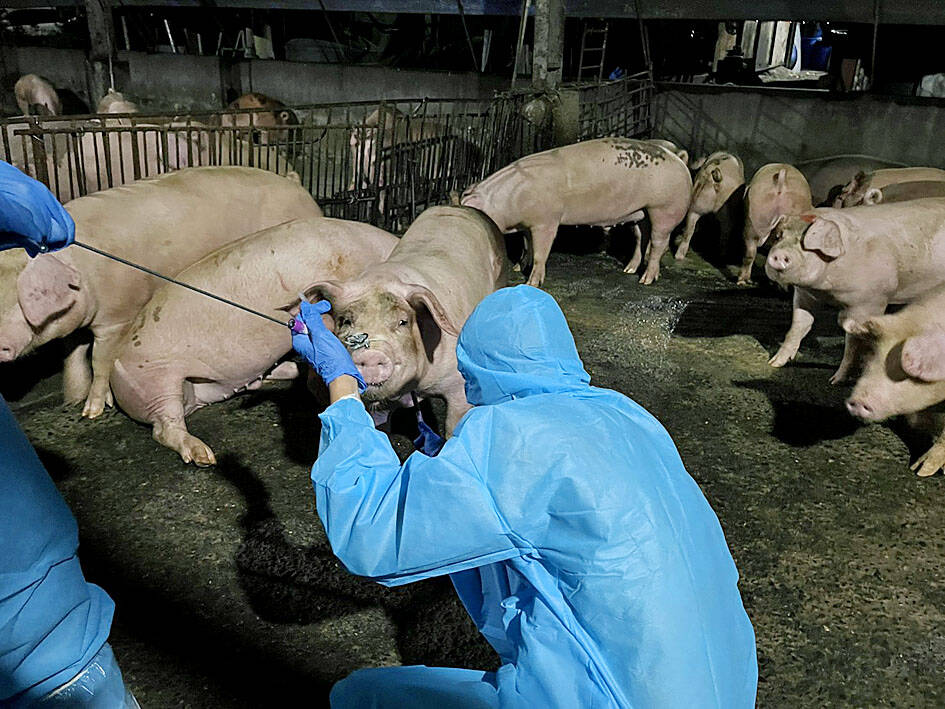
Photo courtesy of the Pingtung County Government
The two other cases — in Taichung and Miaoli County — are under investigation, it said, adding that penalties would be issued according to the results.
The 24 cases involved 23 pig farms, with one of the farms caught twice, the center said.
Of the 23 pig farms, six had 200 or more pigs, while 11 had 20 to 199, it said.
The six other farms had 19 pigs or fewer, the center said.
That means 17 non-compliant farms had 199 pigs or fewer, accounting for about 73.9 percent of all non-compliant farms, it said.
Eight non-compliant farms had 20 pigs or more without livestock farm registration, accounting for 34.8 percent, the center said.
The center said it would ask local authorities to conduct follow-up inspections and penalize the eight farms for failing to register in accordance with the Animal Industry Act (畜牧法).
Farms that are not big enough to register should be listed for epidemic prevention management, it said.
Registered pig farms with non-compliance records should be listed for high-risk site inspections based on their kitchen waste sources, transportation routes, operational scale and registration status, it said.
Real-time temperature and video monitoring systems have been installed at 243 pig farms that have permission to feed pigs with kitchen waste, the center said.
GPS trackers have also been installed on 453 vehicles to monitor kitchen waste disposal, it said.
The Taichung City Government during a joint inspection on Friday last week found that a farm with 23 pigs in Longjing District (龍井) was having kitchen waste illegally transported to it, the center said.
The farm also illegally mixed pig feed with rice, ham and large bones, it said.
The Taichung Animal Protection and Health Inspection Office has collected blood samples from three pigs at the farm and confirmed that the samples tested negative for ASF, the center said, adding that a 15-day movement ban has been imposed on the farm.
Since the beginning of this year, transporting kitchen waste to pig farms without prior approval has been subject to a fine of NT$200,000 (US$6,275) for the first offense, NT$500,000 for the second offense, and NT$1 million for the third offense and each subsequent offense as stipulated in revised penalty guidelines issued pursuant to the Act on the Prevention and Control of Infectious Animal Diseases (動物傳染病防治條例), it said.
Farms that feed pigs kitchen waste without prior approval would face fines of NT$200,000 for the first offense and increased fines for subsequent offenses, capped at NT$3 million, as stipulated by penalty guidelines for the Feed Control Act (飼料管理法), the center said.
Those who illegally transport kitchen waste to a pig farm and illegally feed it to pigs would be fined according to the two pieces of legislation, or NT$400,000 for the first offense up to a maximum of NT$4 million for subsequent offenses, it said.
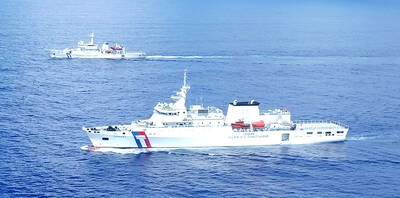
‘FRIENDSHIP FLEET’: A CGA official is scheduled to meet with the president of the Pacific nation, while one of the ships is to host a banquet and National Day event Two Coast Guard Administration (CGA) patrol vessels have docked at Malakal Harbor in Palau as part of an expedition exercise and diplomatic visit, during which a senior official is expected to meet with Palauan President Surangel Whipps Jr, the agency said yesterday. The two vessels, the 4,000-tonne-class Chiayi and the 1,000-tonne-class Penghu, set sail for Palau from Taiwan last week and arrived on Tuesday at Malakal Harbor, the CGA’s Fleet Branch said in a statement. The journey marks the second time the CGA has dispatched a “friendship fleet” to another country, after it sent its first-ever goodwill fleet, comprising the Hualien and
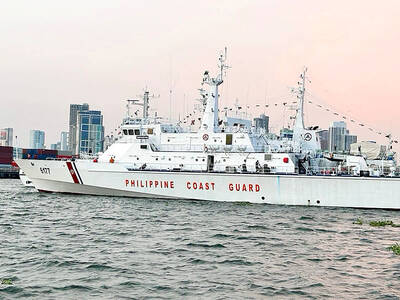
A patrol vessel donated by the Coast Guard Administration (CGA) to the Philippines was commissioned into the Philippine Coast Guard (PCG) on Friday, a Philippine non-governmental organization said. The CGA on Sept. 16 confirmed media reports that Taiwan had donated a retired 500-tonne patrol vessel to the Philippines. The Manila-based We Protect Our Seas (WPS) foundation, which served as an intermediary in the transfer, said that the vessel was formerly the CGA’s 500-tonne petrol vessel Kinmen (CG123). The WPS, in a statement issued on Friday, said the vessel, renamed as the BRP Sarangani, had been commissioned into the PCG the
The Coast Guard Administration (CGA) today said that two of its patrol vessels have docked at Palau's Malakal Harbor as part of an expedition exercise and diplomatic visit, during which a senior official is expected to meet with the Palauan president. The two vessels, the 4,000-tonne-class Chiayi (嘉義) and the 1,000-tonne-class Penghu (澎湖), set sail for Palau from Taiwan last week and arrived at Malakal Harbor yesterday, the CGA's Fleet Branch said in a statement. The journey marked the second time the CGA has dispatched a "Friendship Fleet" to another country, after it sent its first-ever goodwill fleet, comprising the Hualien (花蓮)
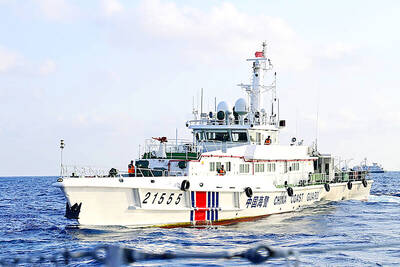
‘GRAY ZONE’ TACTICS: Beijing sent two China Coast Guard vessels to escort a ‘supposedly private research ship,’ a Philippine Coast Guard spokesman said The Coast Guard Administration (CGA) yesterday confirmed that it had recently deployed three patrol vessels to waters in Taiwan’s overlapping exclusive economic zone with the Philippines to monitor three Chinese vessels. CGA Deputy Director-General Hsieh Ching-chin (謝慶欽) said the agency regularly monitors Chinese vessels around Taiwan, and that the deployment south of Oluanpi (鵝鑾鼻), Taiwan proper’s southernmost point, was carried out in accordance with standard procedures. He added that the waters fall within the overlapping exclusive economic zones of Taiwan and the Philippines, which extend 200 nautical miles (370km) from their coastlines. Hsieh made the comments when asked about a


 RSS
RSS