

Taiwan’s laws lack comprehensive provisions to address transnational repression, Mainland Affairs Council (MAC) Deputy Minister Liang Wen-chieh (梁文傑) said yesterday.
The nation has seen a rise in cases of suspected transnational repression, including the assault on Taiwan-based Japanese political commentator Akio Yaita, a feces attack on the Comedy Club in Taipei, and the alleged surveillance of Democratic Progressive Party (DPP) Legislator Puma Shen (沈伯洋) and President William Lai’s (賴清德) son, who is in the US.
Asked whether the government plans to toughen sanctions against those involved in transnational repression, Liang said Taiwan has two laws that could be applied to such cases: the Anti-Infiltration Act (反滲透法) and the National Security Act (國家安全法).
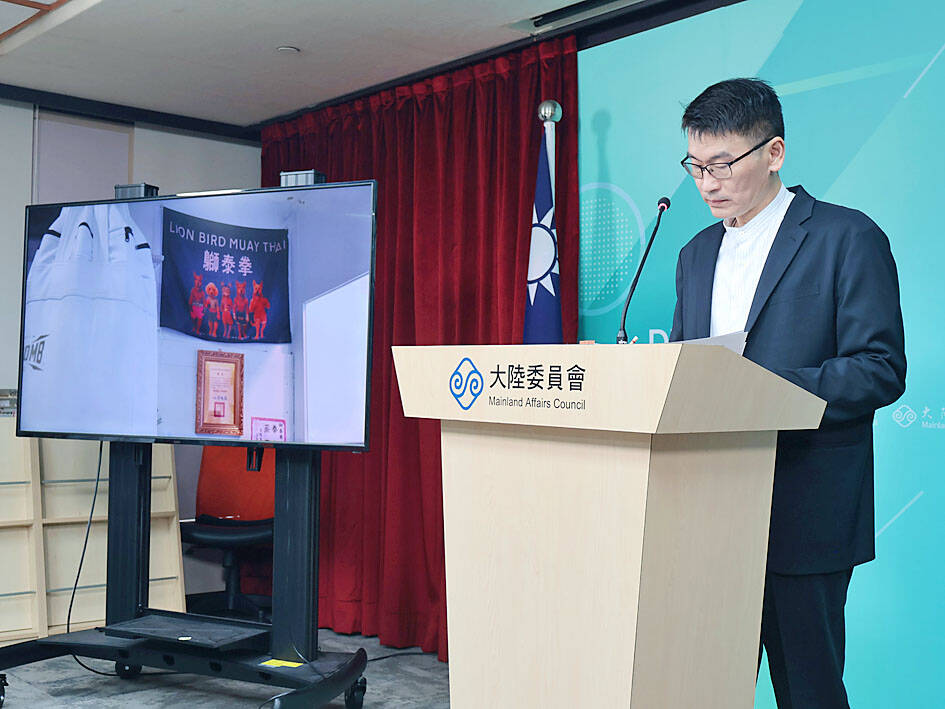
Photo: CNA
The Anti-Infiltration Act covers acts conducted at the direction of overseas hostile forces that violate provisions of the Public Officials Election and Recall Act (公職人員選舉罷免法), the Referendum Act (公投法), and the Assembly and Parade Act (集會遊行法), Liang said.
The National Security Act addresses offenses involving the establishment of organizations in Taiwan and the leaking of national secrets, he said.
“The problem is that we are seeing an increase in forms of transnational repression that are not punishable under either laws, including illegal surveillance, stalking and unauthorized filming, physical attacks, splashing paint and throwing feces at the direction of overseas hostile forces,” Liang said.
In Yaita’s case, the perpetrator could be prosecuted for assault under the Organized Crime Prevention Act (組織犯罪條例), while the Comedy Club case could be prosecuted under the Criminal Code’s property damage provisions, Liang added.
The perpetrators in Shen’s case could be prosecuted under the Personal Data Protection Act (個人資料保護法), he said.
However, none of these punishments are designed to deter transnational repression, Liang said.
By contrast, US law states that surveillance conducted at the direction of a foreign government can constitute a crime, with perpetrators facing a maximum prison sentence of 10 years, he said.
“We hope that any proposed amendments to the two acts will be passed by the legislature. Last year, we proposed an amendment to the National Security Act aimed at deterring transnational repression, but it has yet to be deliberated,” Liang said.
The council also produced a short film about Hong Konger Tong Wai-hung (湯偉雄), who is on Hong Kong’s wanted list after allegedly inciting people not to vote in the legislative election last year by questioning the fairness of the vote, he said.
Tong and his wife subsequently moved to Taiwan.
His Muay Thai studio in Taipei has been vandalized with paint twice by Hong Kongers posing as prospective customers.
The council has also met with other victims of transnational repression: Guan Jianzhong (管建忠), head of Lion Film and TV Culture Co, which distributed the documentary State Organs (國有器官) in Taiwan, as well as comedian Huang Yi-hao (黃逸豪), Liang said.
The council wanted the public to know that transnational repression exists and remind the government not to allow victims of such acts to feel isolated, he said.
“Ridiculing victims or dismissing them as delusional or overly self-important would only embolden perpetrators and make victims more fearful about their situation,” Liang said, adding that victims have demonstrated considerable courage.
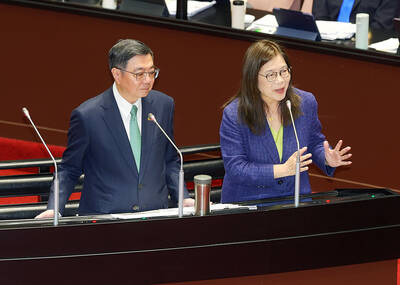
The donation of offshore patrol vessel Kinmen to the Philippines includes provisions that protect Taiwanese fishers and facilitate security cooperation across the First Island Chain, officials said yesterday. The comment was made during the Cabinet’s comprehensive administrative report at the legislature after Chinese Nationalist Party (KMT) Legislator Hsu Yu-chen (許宇甄) expressed concerns about the decision to give a ship to a country whose coast guard had in 2013 fired on a Taiwanese trawler and killed its captain without provocation. The Cabinet should lay out the safeguards that have been established to prevent the Philippine government from using the Kinmen to harass, expel
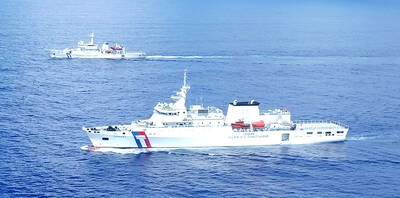
‘FRIENDSHIP FLEET’: A CGA official is scheduled to meet with the president of the Pacific nation, while one of the ships is to host a banquet and National Day event Two Coast Guard Administration (CGA) patrol vessels have docked at Malakal Harbor in Palau as part of an expedition exercise and diplomatic visit, during which a senior official is expected to meet with Palauan President Surangel Whipps Jr, the agency said yesterday. The two vessels, the 4,000-tonne-class Chiayi and the 1,000-tonne-class Penghu, set sail for Palau from Taiwan last week and arrived on Tuesday at Malakal Harbor, the CGA’s Fleet Branch said in a statement. The journey marks the second time the CGA has dispatched a “friendship fleet” to another country, after it sent its first-ever goodwill fleet, comprising the Hualien and
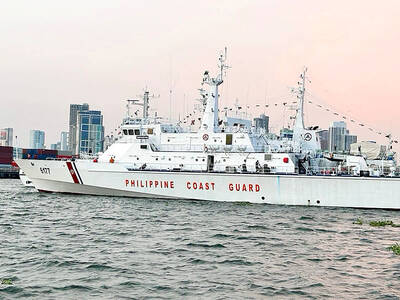
A patrol vessel donated by the Coast Guard Administration (CGA) to the Philippines was commissioned into the Philippine Coast Guard (PCG) on Friday, a Philippine non-governmental organization said. The CGA on Sept. 16 confirmed media reports that Taiwan had donated a retired 500-tonne patrol vessel to the Philippines. The Manila-based We Protect Our Seas (WPS) foundation, which served as an intermediary in the transfer, said that the vessel was formerly the CGA’s 500-tonne petrol vessel Kinmen (CG123). The WPS, in a statement issued on Friday, said the vessel, renamed as the BRP Sarangani, had been commissioned into the PCG the
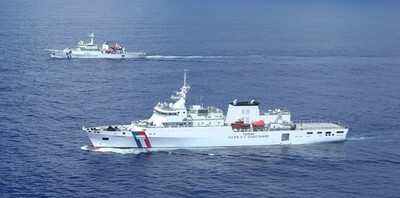
The Coast Guard Administration (CGA) today said that two of its patrol vessels have docked at Palau's Malakal Harbor as part of an expedition exercise and diplomatic visit, during which a senior official is expected to meet with the Palauan president. The two vessels, the 4,000-tonne-class Chiayi (嘉義) and the 1,000-tonne-class Penghu (澎湖), set sail for Palau from Taiwan last week and arrived at Malakal Harbor yesterday, the CGA's Fleet Branch said in a statement. The journey marked the second time the CGA has dispatched a "Friendship Fleet" to another country, after it sent its first-ever goodwill fleet, comprising the Hualien (花蓮)


 RSS
RSS