

The New Taipei District Prosecutors' Office today indicted 10 people for reselling US high-tech chips after obscuring their origin to skirt export controls on strategic semiconductors.
Prosecutors said their actions helped China strengthen its military capabilities, affected Taiwan's national security and damaged Taiwan's international reputation.
Investigators believe that Lypid Taiwan Co (優活科技) head Chen Chien-hsiung (陳建雄) and others had forged documents since 2017 and falsely claimed to represent the National Chung-shan Institute of Science and Technology (NCSIST).
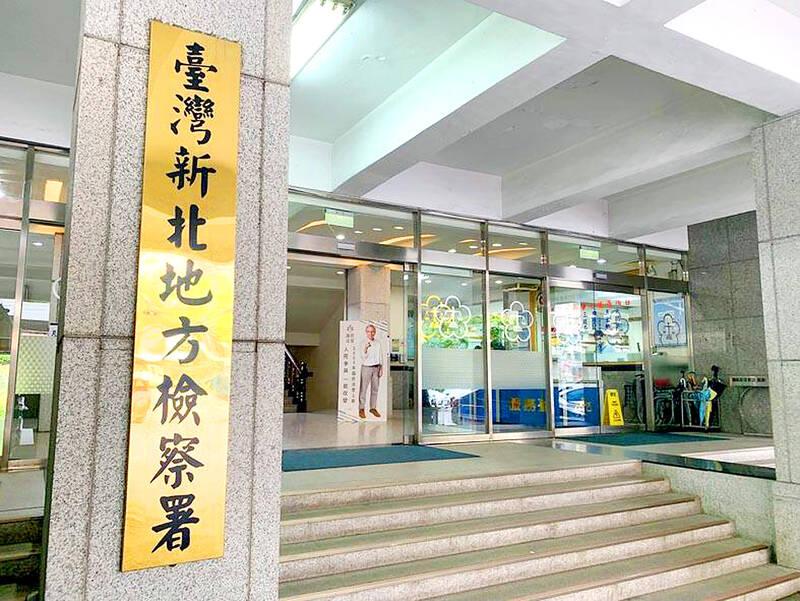
Photo: Taipei Times
They fraudulently purchased controlled chips for military use manufactured by Texas Instruments and Analog Devices from domestic distributors, prosecutors said.
They then allegedly disguised their country of origin to present them as non-controlled chips before illegally exporting them to China and Hong Kong, they said.
They are suspected to have generated NT$360 million (US$11.33 million) in illicit profit, they said.
Chen and nine other defendants were indicted on charges including aggravated fraud, document forgery and money laundering, they added.
Prosecutors said they are seeking prison sentences of between one and 10 years, with the maximum sought for Chen.
The defendants include Chen's younger brother, the former head of Lypid Taiwan and the heads of Stone Engine Technology Co (石擎科技) and WTG Technology (睿虎科技).
They also include the heads of KPlus Technology (凱盟資通), HGT Application Inc (洪巨科技), EcoLumina Technologies Inc (晟明科技) and ZKey Technology Inc (華謚科技), they said.
The defendants are suspected of illegally exporting more than 10 models of controlled chips originating in the US, the Philippines, Malaysia, South Korea and elsewhere that could be used for military applications such as radar, electronic systems, ultrasound equipment, antenna arrays and uncrewed aerial vehicles (UAVs), they said.
Purchasers must provide a statement confirming the end user, the intended use and the destination of the products, they said.
If the location is in China or a restricted foreign market, the original manufacturer or distributor would refuse the transaction, they added.
The group falsely claimed that the NCSIST was the end user and promised that the chips would not be exported or resold to parties subject to US sanctions, prosecutors said.
They repackaged the chips and changed model numbers to declare them as "made in Taiwan," then exported them to China or Hong Kong as non-controlled chips, they said.
A separate group run by Lai Chin-lan (賴金蘭) allegedly used similar methods to sell controlled chips certified to a US military specification to Hong Kong, earning about NT$130 million, they said.
A third suspected participant, Yuan Tung-tai (袁同台), allegedly sold chips involving applications for UAVs, earning more than NT$100 million in illicit proceeds, they added.
Additional reporting by CNA

The donation of offshore patrol vessel Kinmen to the Philippines includes provisions that protect Taiwanese fishers and facilitate security cooperation across the First Island Chain, officials said yesterday. The comment was made during the Cabinet’s comprehensive administrative report at the legislature after Chinese Nationalist Party (KMT) Legislator Hsu Yu-chen (許宇甄) expressed concerns about the decision to give a ship to a country whose coast guard had in 2013 fired on a Taiwanese trawler and killed its captain without provocation. The Cabinet should lay out the safeguards that have been established to prevent the Philippine government from using the Kinmen to harass, expel
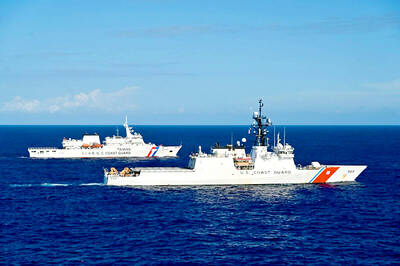
GROWING TIES: The CGA is planning a goodwill mission to the Philippines, in what would be the first time since 1975 a Taiwanese paramilitary vessel has visited the country The Coast Guard Administration (CGA) plans to significantly expand its participation in international security cooperative frameworks and its operational capabilities, a budget proposal for next year showed. The budget indicates a transformation of the CGA from a maritime law enforcement arm into a national defense and intelligence gathering entity capable of tackling larger regional security matters. The proposal showed that personnel from the coast guard’s Intelligence Division and Special Action Support Center are to participate in high-level national security talks with the US. As the CGA has dealt with China’s rising “gray zone” threats around Taiwan, it has become a valuable asset to
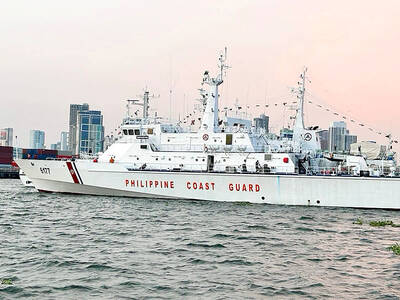
A patrol vessel donated by the Coast Guard Administration (CGA) to the Philippines was commissioned into the Philippine Coast Guard (PCG) on Friday, a Philippine non-governmental organization said. The CGA on Sept. 16 confirmed media reports that Taiwan had donated a retired 500-tonne patrol vessel to the Philippines. The Manila-based We Protect Our Seas (WPS) foundation, which served as an intermediary in the transfer, said that the vessel was formerly the CGA’s 500-tonne petrol vessel Kinmen (CG123). The WPS, in a statement issued on Friday, said the vessel, renamed as the BRP Sarangani, had been commissioned into the PCG the
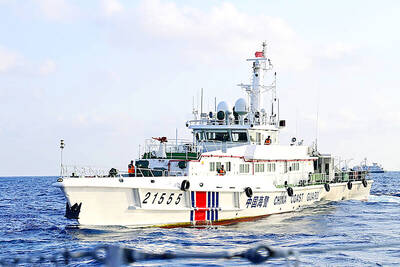
‘GRAY ZONE’ TACTICS: Beijing sent two China Coast Guard vessels to escort a ‘supposedly private research ship,’ a Philippine Coast Guard spokesman said The Coast Guard Administration (CGA) yesterday confirmed that it had recently deployed three patrol vessels to waters in Taiwan’s overlapping exclusive economic zone with the Philippines to monitor three Chinese vessels. CGA Deputy Director-General Hsieh Ching-chin (謝慶欽) said the agency regularly monitors Chinese vessels around Taiwan, and that the deployment south of Oluanpi (鵝鑾鼻), Taiwan proper’s southernmost point, was carried out in accordance with standard procedures. He added that the waters fall within the overlapping exclusive economic zones of Taiwan and the Philippines, which extend 200 nautical miles (370km) from their coastlines. Hsieh made the comments when asked about a


 RSS
RSS