

Patients who spent less time in the emergency room (ER) were less likely to return within three days, a China Medical University Hospital study found, despite concerns that quick assessments could mean inadequate treatment.
A team from the hospital analyzed 28,803 adult patients who sought emergency care for uncomplicated, nontraumatic abdominal pain between 2021 and 2023 to examine how the length of stay in the ER impacts recovery.
They found that patients who spent less than 96 minutes in the ER had significantly lower rates of returning within 72 hours and being hospitalized after returning than those who spent more than 210 minutes in the ER.
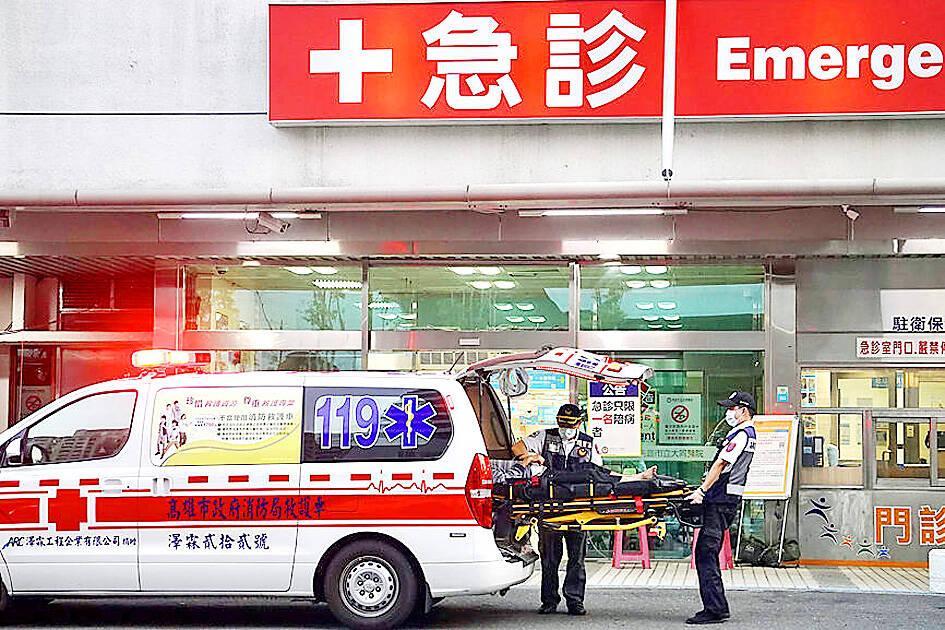
Photo: CNA
This suggests that speeding up emergency care does not increase the risk of patients returning for further treatment and may reflect recent improvements in clinical workflows, the research team said.
Patients whose symptoms cannot be quickly resolved or whose underlying causes are difficult to diagnose typically require more tests and evaluations, resulting in longer stays, the team said, adding that a longer stay does not mean a lower likelihood of returning to the ER after discharge.
Future research should focus on developing clinical decision-making tools to effectively identify patients who can be safely discharged early, it said.
As Taiwan has highly accessible medical care, many people tend to visit the ER when they feel unwell, even if their symptoms are not serious enough to warrant emergency treatment, said Wei Chih-wei (魏智偉), director of the Tungs’ Taichung MetroHarbor Hospital emergency department.
Emergency physicians are often busy treating critical cases, meaning patients with minor conditions may face long waits before being evaluated and then quickly advised to go home, leaving them feeling they did not get the care they deserved, Wei said.
However, a doctor being able to do a quick assessment is good, Wei said, adding that those who leave within 90 minutes usually do not have serious issues.
On the other hand, patients who spend two to three hours or longer in the ER typically need additional tests to determine the cause of their symptoms, he said.
In addition, emergency physicians and patients may meet only once, making it difficult to build a relationship through long-term interaction as outpatient doctors do, Wei said.
Emergency physicians may come across as stern or impatient due to their busy schedules and focus on critical patients, which can create a lack of trust that may lead to disputes, he said.
It is important to educate people on symptoms and health issues, but the overall healthcare environment makes it difficult for doctors to do this, as they have little time with each patient, Wei said.
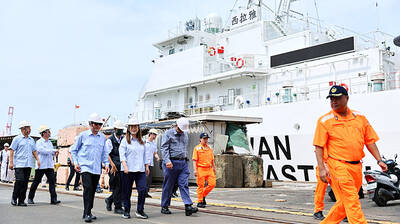
Ocean Affairs Council (OAC) Minister Kuan Bi-ling (管碧玲) on Wednesday said decommissioned coast guard vessels were given to the Philippines to enhance regional rescue capacity and would not affect Taiwanese fishers’ rights and benefits. Kuan made the remarks after confirmation on Tuesday that a 500-tonne Coast Guard Administration (CGA) patrol and rescue vessel would be given to the Philippine Coast Guard. The donation ceremony was reportedly done in Manila, but whether the vessel — previously numbered “CG123” and named Kinmen (金門) — has been handed over has yet to be confirmed. China’s Taiwan Affairs Office (TAO) on Wednesday criticized the donation for “taking
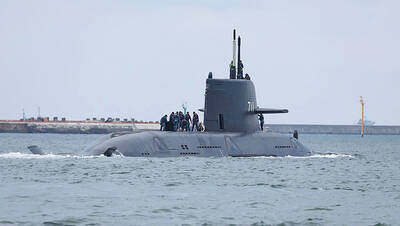
UPDATE: The submarine would need to undergo combined systems testing and crew training for navy personnel before it is ready for mission, an expert said Taiwan’s first domestically built submarine, the Hai Kun (Narwhal, 海鯤), could be delivered to the navy as early as next month, military expert and Taiwan Association for Security and Development chairman Chi Tung-yun (紀東昀) said yesterday. The submarine was yesterday morning observed departing for its 21st sea trial and its 15th submerged test. The vessel missed the initial delivery deadline of November last year due to “testing delays,” its primary contractor, shipbuilder CSBC Corp, Taiwan, said in June. The contractor also cited “political pressure from China” in procuring critical equipment. All testing operations are in the final stages, with the
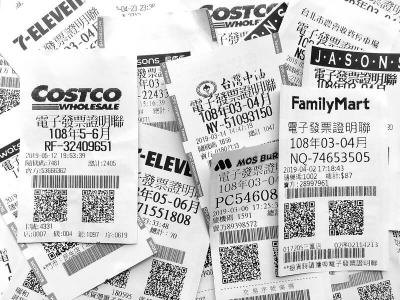
Six NT$10 million (US$315,527) special prizes and seven NT$2 million grand prizes in Taiwan's May-June uniform invoice lottery remained unclaimed as of today, including one NT$10 million winner who spent only NT$10 on an Uber Eats delivery order, the Ministry of Finance said. The ministry said the 13 winners need to claim their prizes by Nov. 5. The eight-digit serial number that won the NT$10 million special prize for May-June was 38548029, with 18 winning receipts in total. The NT$2 million grand prize number was 10138845, of which there were 22 winning receipts, the ministry said. In addition to the receipt issued for an
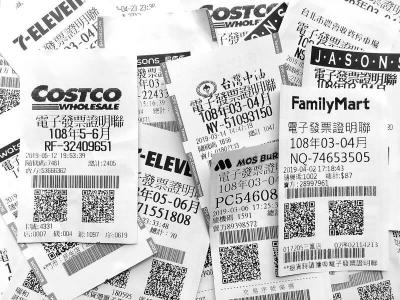
The Ministry of Finance today announced the winning numbers for the July-August uniform invoice lottery. The winning number for the NT$10 million (US$314,663) special prize is 89996565, while the winning number for the NT$2 million grand prize is 91098182. Three numbers were drawn for the NT$200,000 first prize: 54348835, 44991397 and 06595111. Those with receipts matching the last seven digits of any of the first-prize numbers can claim the NT$40,000 second prize, while those matching the last six digits qualify for the NT$10,000 third prize. Those whose receipts match the last five digits of the first-prize numbers are eligible for the NT$4,000 fourth prize,


 RSS
RSS