

Taiwanese students have over the past few years ranked among the top five in the world in four major international assessments, taking first place in civic knowledge and computational thinking.
The evaluations spanned mathematics, science, reading, civic knowledge, computer and information literacy, computational thinking and computational problem-solving.
In the 2022 International Civic and Citizenship Education Study (ICCS), Taiwan rose from second place in the previous survey to first in civic knowledge.
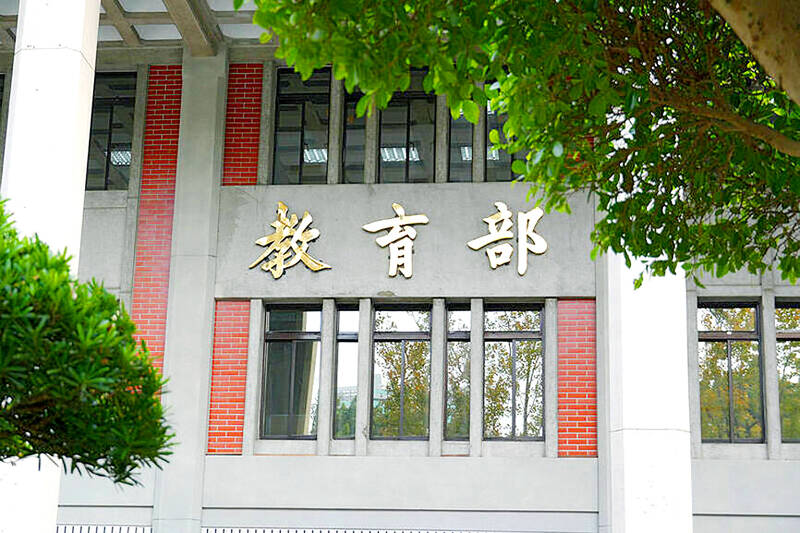
Photo: Rachel Lin, Taipei Times
In 2023, Taiwan ranked first in computational thinking and fourth in computer and information literacy in the International Computer and Information Literacy Study. In the Trends in International Mathematics and Science Study, Taiwanese fourth-grade students ranked second worldwide in mathematics and third in science, while eighth-grade students placed second in both subjects.
In last year’s Programme for International Student Assessment, Taiwan placed fourth in science, third in reading, fourth in mathematics and fifth in computational problem-solving, a new category.
Minister of Education Cheng Ying-yao (鄭英耀) said the nation is proud of the students’ outstanding performances in reading, science, mathematics, civic literacy and technological literacy.
Cheng thanked elementary and secondary-school teachers for their professionalism and dedication, as well as parents for their support.
Society should have greater confidence in Taiwan’s education system, Cheng said.
Teachers the unsung heroes behind the talent pipeline that supports the nation’s technology industry and development, he added.
Taiwan has maintained a leading global position in three key areas — academic achievement, digital literacy and civic literacy — demonstrating a comprehensive advantage in talent cultivation rather than excellence in a single subject, said Tseng Feng-lan (曾芬蘭), deputy director of Research Center for Psychological and Education Testing at National Taiwan Normal University .
Taiwan’s success stems from a stable basic education system, a solid foundation in mathematics and science, literacy-oriented curriculum reforms, and long-term investment in reading, information technology and civic education, she said.
The 12-Year Basic Education Curriculum has enabled most students to receive relatively balanced educational opportunities, while the “108 Curriculum Guidelines” implemented in 2019 further bolstered inquiry-based learning, interdisciplinary studies and problem-solving skills, she said.
Taiwan’s mathematics and science education emphasizes logical reasoning, problem analysis and mastery learning, while reading remains the foundation for understanding information, evaluating evidence and developing critical thinking, she added.
As international assessments increasingly emphasize the application of knowledge in real-world contexts, civic judgement and digital problem-solving, Taiwan’s high rankings reflect the success of the nation’s literacy-oriented reforms, she said.
Deputy Minister of Education Chang Liao Wan-chien (張廖萬堅) attributed the results to the long-term efforts of teachers and the outcomes of curriculum reforms promoting literacy orientation, hands-on inquiry and cross-disciplinary learning.
International evaluations are critical references for curriculum and policies, as they help identify students’ strengths and areas that need improvement, he said.
National Chinan University honorary chair professor Wu Ching-shan (吳清山) said Taiwan’s strong performance showed that its elementary and secondary education system has a more solid foundation than the US and Europe.
However, there remains room for improvement, particularly in fostering student interest in learning, and addressing systemic and structural disparities within the education system that affect students from low-income families and rural areas, he said.
He suggested improving teacher training, including helping educators integrate artificial intelligence (AI) into instruction and using technology to develop more innovative teaching.
He also called for cross-ministerial cooperation to address factors affecting student learning, including population decline in rural areas, weakened family support systems, and limited social and cultural stimulation.
He proposed a comprehensive program to boost learning motivation and interest among elementary and secondary-school students, helping lower-achieving students build confidence through positive learning experiences while encouraging schools to improve curricula, teaching methods and assessments.
National Chung Cheng University vice president Chan Sheng-ju (詹盛如) suggested the establishment of stronger support mechanisms to channel resources to disadvantaged groups, and adopting more targeted educational strategies at different stages of schooling — focusing on language and numeracy foundations in elementary school, and expanding to problem-solving and civic participation skills in junior-high school, for example.
National Taiwan Normal University professor Liu Mei-hui (劉美慧) said next year’s ICCS would include more questions related to evaluating AI-generated information, so Taiwan should continue to enhance students’ analytical and critical thinking skills.
Additional reporting by Yang Mien-chieh
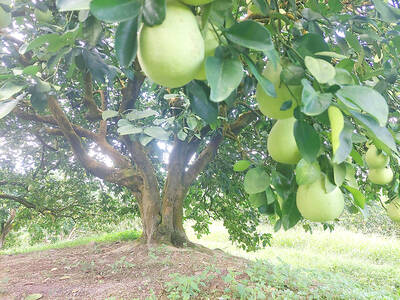
A Hualien pomelo farmer refused to sell to China after the country announced it would permit more Taiwanese pomelo imports, prompting widespread support from Taiwanese consumers, who rallied to buy his fruit. China’s Taiwan Affairs Office last month said that China’s General Administration of Customs registered an additional 79 Taiwanese pomelo orchards and packing facilities in Hualien County, allowing more Taiwanese producers to export pomelos to China. “I am a Hualien fruit farmer and I refuse to sell to China,” Liu Tzu-hao (劉子豪) from Ruisui Township (瑞穗) said in an online post. Liu is a well-known farmer in the community and has served
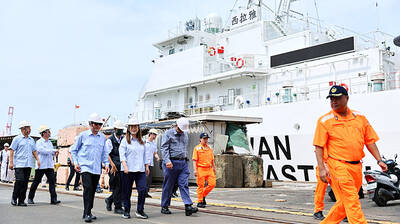
Ocean Affairs Council (OAC) Minister Kuan Bi-ling (管碧玲) on Wednesday said decommissioned coast guard vessels were given to the Philippines to enhance regional rescue capacity and would not affect Taiwanese fishers’ rights and benefits. Kuan made the remarks after confirmation on Tuesday that a 500-tonne Coast Guard Administration (CGA) patrol and rescue vessel would be given to the Philippine Coast Guard. The donation ceremony was reportedly done in Manila, but whether the vessel — previously numbered “CG123” and named Kinmen (金門) — has been handed over has yet to be confirmed. China’s Taiwan Affairs Office (TAO) on Wednesday criticized the donation for “taking
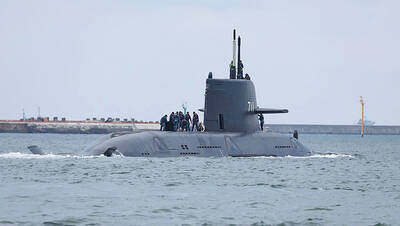
UPDATE: The submarine would need to undergo combined systems testing and crew training for navy personnel before it is ready for mission, an expert said Taiwan’s first domestically built submarine, the Hai Kun (Narwhal, 海鯤), could be delivered to the navy as early as next month, military expert and Taiwan Association for Security and Development chairman Chi Tung-yun (紀東昀) said yesterday. The submarine was yesterday morning observed departing for its 21st sea trial and its 15th submerged test. The vessel missed the initial delivery deadline of November last year due to “testing delays,” its primary contractor, shipbuilder CSBC Corp, Taiwan, said in June. The contractor also cited “political pressure from China” in procuring critical equipment. All testing operations are in the final stages, with the
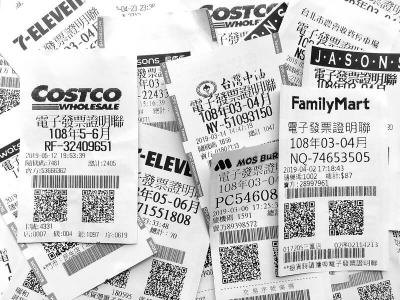
Six NT$10 million (US$315,527) special prizes and seven NT$2 million grand prizes in Taiwan's May-June uniform invoice lottery remained unclaimed as of today, including one NT$10 million winner who spent only NT$10 on an Uber Eats delivery order, the Ministry of Finance said. The ministry said the 13 winners need to claim their prizes by Nov. 5. The eight-digit serial number that won the NT$10 million special prize for May-June was 38548029, with 18 winning receipts in total. The NT$2 million grand prize number was 10138845, of which there were 22 winning receipts, the ministry said. In addition to the receipt issued for an


 RSS
RSS