

The Ministry of Environment yesterday said it is proposing revisions to the Indoor Air Quality Management Act (室內空氣品質管理法), including stricter regulations for facilities serving young children and older adults, standardized monitoring requirements and adjusted requirements for dedicated indoor air quality personnel according to the size of a facility.
The ministry is to hold discussions with local environmental protection bureaus on the proposed changes next month.
The eighth annual Taiwan Indoor Air Quality Week, organized by the Taiwan Indoor Environment Quality Management Association, opened yesterday. Events are being held in Taipei, Taichung and Kaohsiung, focusing on indoor air quality management and healthy living.
Photo: CNA
Department of Atmospheric Environment Director-General Huang Wei-ming (黃偉鳴) said the ministry had begun work on revising the act, which took effect in 2012.
The ministry held three meetings with experts and academics last month and plans to consult local environment protection bureaus with practical enforcement experience next month.
The timeline for completing the draft amendments remains uncertain, Huang said.
The ministry would consider tightening indoor air quality standards for facilities serving vulnerable groups, such as older adults and young children, he said.
However, the would be on improving air quality rather than simply tightening standards, he said.
If conditions cannot be improved and standards are simply tightened, the effect would be limited, Huang added.
The ministry aims to establish standards by the end of this year for simplified continuous automatic devices to help monitor air quality in indoor facilities, he said.
The thresholds for requiring facilities to appoint dedicated indoor air quality management personnel would also be revised and adjusted based on the characteristics and size of each facility, he added.
The ministry has finished an initiative started last year to help kindergartens improve indoor air quality, Huang said, adding that the results would be announced as soon as possible.
Taiwan Indoor Environment Quality Management Association chairwoman Chou Nan-chun (周南君) said that the theme of this year’s Indoor Air Quality Week is clean air as a basic human right.
People in Taiwan spend more than 80 percent of their time indoors, she said.
Amid the growing combination of risks posed by extreme heat and emerging infectious disease, it is essential to establish scientifically based management system, she added.
In France, where air-conditioning penetration is only about 20 percent, vulnerable groups were exposed to heat-related harm amid heat waves in Europe this summer, Deputy Minister of Environment Hsieh Yen-ju (謝燕儒) said.
Although air-conditioning is common in Taiwan, keeping doors and windows closed for extended periods while running air-conditioners makes indoor air quality an issue that must be taken seriously, he said.
The UN has discussed epidemic-prevention issues, saying that following the COVID-19 pandemic, disease prevention should be considered comprehensively, she said.
Indoor air quality is an important part of that effort, she said, citing the need for disinfection and sanitation at airports and maintaining air quality at large-scale gatherings.
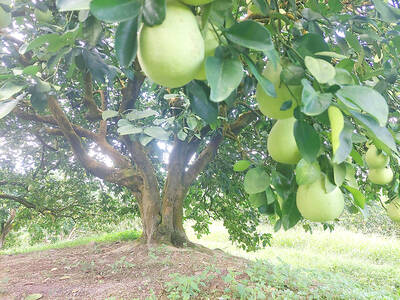
A Hualien pomelo farmer refused to sell to China after the country announced it would permit more Taiwanese pomelo imports, prompting widespread support from Taiwanese consumers, who rallied to buy his fruit. China’s Taiwan Affairs Office last month said that China’s General Administration of Customs registered an additional 79 Taiwanese pomelo orchards and packing facilities in Hualien County, allowing more Taiwanese producers to export pomelos to China. “I am a Hualien fruit farmer and I refuse to sell to China,” Liu Tzu-hao (劉子豪) from Ruisui Township (瑞穗) said in an online post. Liu is a well-known farmer in the community and has served
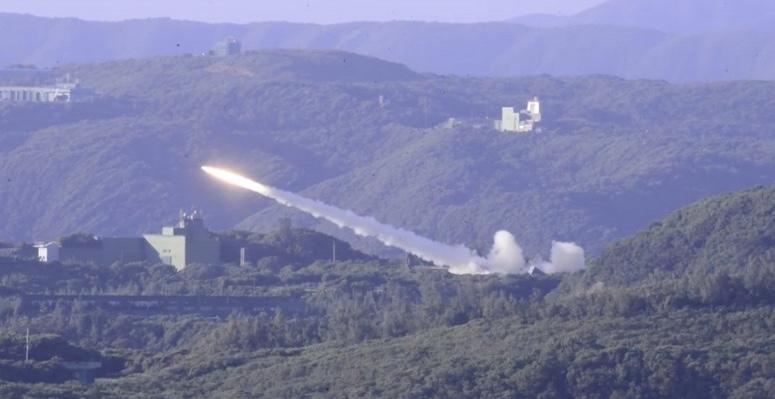
A Chinese military drone was spotted conducting reconnaissance off Taitung County as President William Lai (賴清德) visited Pingtung County this morning to inspect a drill of the armed forces’ precision-strike capabilities, prompting the military to closely monitor its actions. Today was the final day of a three-day military exercise at Jioupeng Base (九鵬基地) to test the joint combat capabilities of the armed forces and coast guard. The exercise began on Wednesday simulating air defense interception and yesterday tested long-range strike capabilities and new air defense weapons. This morning, the military conducted a final exercise involving air defense, anti-ship and drone operations. Military sources said

OCT. 31: The antiviral drugs Tamiflu and Eraflu have been distributed to about 4,000 medical facilities nationwide for people in seven groups who develop flu-like symptoms As the domestic influenza epidemic enters its peak season and continues to escalate, the Centers for Disease Control (CDC) yesterday announced that publicly funded influenza antiviral drugs for seven eligible groups have been extended to Oct. 31, allowing those who develop flu-like symptoms to receive the medication without undergoing a rapid influenza test. The CDC has extended the expanded use of flu antiviral drugs to seven groups: healthcare and influenza-prevention personnel; residents and staff at nursing homes, long-term care facilities and similar institutions; kindergarten and daycare workers and home-based caregivers; students from kindergarten through high school, vocational high school and the

Taiwanese Tsai Chin-shu (蔡金樹), who had been imprisoned in China for engaging in activity that “endangers national security,” said on Facebook on Friday that he has returned to Taiwan. Tsai, chairman of the Southern Taiwan Union of Cross-strait Relations Associations, had traveled frequently between Taiwan and China for years, and at one time ran a trading company in China’s Pingtan. In July 2018, he traveled to Quanzhou, Fujian Province, to attend a cross-strait food trade fair and stayed at a hotel in Xiamen. He checked out the following day and then disappeared. His family had made repeated appeals to the authorities


 RSS
RSS