

Mainland Affairs Council Deputy Minister Shen Yu-chung (沈有忠) yesterday said that the government was not surprised by a YouTuber’s recent claim that some Taiwanese working in China have obtained Chinese identification cards.
Shen declined to comment on individual cases, saying that the government has a comprehensive understanding of the situation and that the vast majority of cases would enter the judicial process.
Shen made the remarks in response to media queries for comment on claim made by Taiwanese influencer Wen Tzu-yu (溫子瑜), who said that some Taiwanese working in China have allegedly obtained Chinese identity cards.
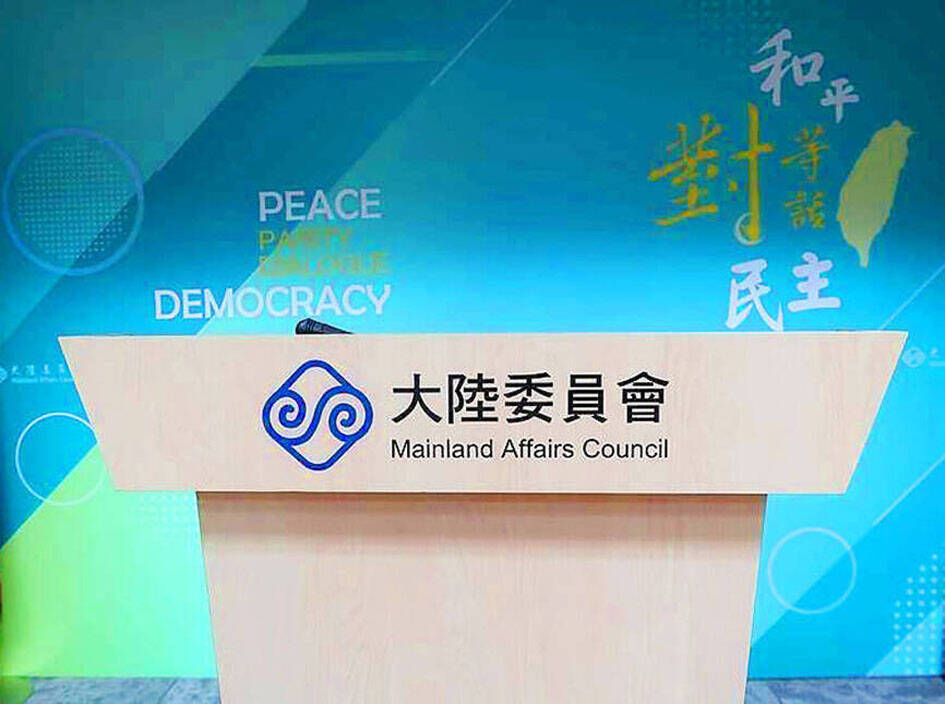
Photo: Chung Li-hua, Taipei Times
Wen, better known as Pa Jung (八炯), recently posted a video on his YouTube channel about Chinese efforts to recruit sympathetic Taiwanese to make videos for Douyin, China’s version of TikTok. The video alleged cases involving Taiwanese who became Chinese citizens and gave up their Taiwanese household registration.
He also said intermediaries allegedly help other Taiwanese privately apply for Chinese IDs in exchange for profits of up to 6 million yuan (US$896,060).
He said he went to the National Immigration Agency to report a large number of Taiwanese who said on social media that they obtained Chinese ID cards, with some posting videos or photos displaying the documents.
Shen yesterday said the government was not surprised by the allegations of a structure in which certain channels in Taiwan help the Chinese government obtain documents or promote activities.
“We have a comprehensive understanding of the situation,” he said.
Shen said the Chinese Communist Party has been expanding and diversifying its efforts to promote integration and infiltration in Taiwan and organize various “united front” activities.
Government agencies would work closely with judicial authorities to monitor the situation, he said.
Democratic Progressive Party Legislator Chung Chia-pin (鍾佳濱) yesterday said that according to the Act Governing Relations Between the People of the Taiwan Area and the Mainland Area (臺灣地區與大陸地區人民關係條例) and the Additional Articles of the Constitution, Republic of China (中華民國憲法增修條文), citizens are not permitted to simultaneously hold Taiwan and People’s Republic of China citizenship.
If a Taiwanese citizen establishes household registration in China, the person could lose Taiwanese household registration and status, and be treated as a resident of the mainland area, Chung said.
Rights arising from the person’s status as a Taiwanese citizen could consequently also be lost, he said.
Chung urged the public to exercise caution when engaging in exchanges with China and not to be tempted or pressured by others.
If people carelessly obtain a Chinese identity card, their existing citizenship status and associated rights could be lost permanently, he added.

A Hualien pomelo farmer refused to sell to China after the country announced it would permit more Taiwanese pomelo imports, prompting widespread support from Taiwanese consumers, who rallied to buy his fruit. China’s Taiwan Affairs Office last month said that China’s General Administration of Customs registered an additional 79 Taiwanese pomelo orchards and packing facilities in Hualien County, allowing more Taiwanese producers to export pomelos to China. “I am a Hualien fruit farmer and I refuse to sell to China,” Liu Tzu-hao (劉子豪) from Ruisui Township (瑞穗) said in an online post. Liu is a well-known farmer in the community and has served
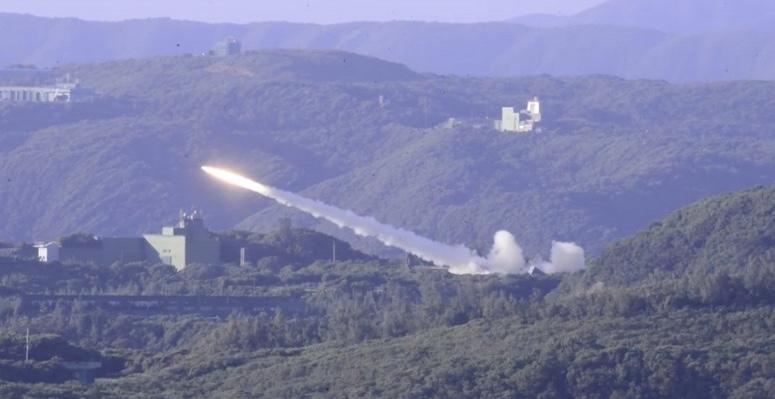
A Chinese military drone was spotted conducting reconnaissance off Taitung County as President William Lai (賴清德) visited Pingtung County this morning to inspect a drill of the armed forces’ precision-strike capabilities, prompting the military to closely monitor its actions. Today was the final day of a three-day military exercise at Jioupeng Base (九鵬基地) to test the joint combat capabilities of the armed forces and coast guard. The exercise began on Wednesday simulating air defense interception and yesterday tested long-range strike capabilities and new air defense weapons. This morning, the military conducted a final exercise involving air defense, anti-ship and drone operations. Military sources said

OCT. 31: The antiviral drugs Tamiflu and Eraflu have been distributed to about 4,000 medical facilities nationwide for people in seven groups who develop flu-like symptoms As the domestic influenza epidemic enters its peak season and continues to escalate, the Centers for Disease Control (CDC) yesterday announced that publicly funded influenza antiviral drugs for seven eligible groups have been extended to Oct. 31, allowing those who develop flu-like symptoms to receive the medication without undergoing a rapid influenza test. The CDC has extended the expanded use of flu antiviral drugs to seven groups: healthcare and influenza-prevention personnel; residents and staff at nursing homes, long-term care facilities and similar institutions; kindergarten and daycare workers and home-based caregivers; students from kindergarten through high school, vocational high school and the

Taiwanese Tsai Chin-shu (蔡金樹), who had been imprisoned in China for engaging in activity that “endangers national security,” said on Facebook on Friday that he has returned to Taiwan. Tsai, chairman of the Southern Taiwan Union of Cross-strait Relations Associations, had traveled frequently between Taiwan and China for years, and at one time ran a trading company in China’s Pingtan. In July 2018, he traveled to Quanzhou, Fujian Province, to attend a cross-strait food trade fair and stayed at a hotel in Xiamen. He checked out the following day and then disappeared. His family had made repeated appeals to the authorities


 RSS
RSS