

Two New Zealand naval ships transited the Taiwan Strait late last week, New Zealand's Defence Force said today, amid tension over the waterway claimed by China and regarded by Taiwan and the US as international waters.
Like most countries, New Zealand has no formal diplomatic ties with Taiwan, but Taipei sees it as an important like-minded democratic partner and both maintain de facto embassies in each other's capitals.
The transits on Friday last week, by naval frigate Te Mana and oiler Aotearoa, were part of a three-month deployment in the Indo-Pacific, a Defence Force spokesperson said.
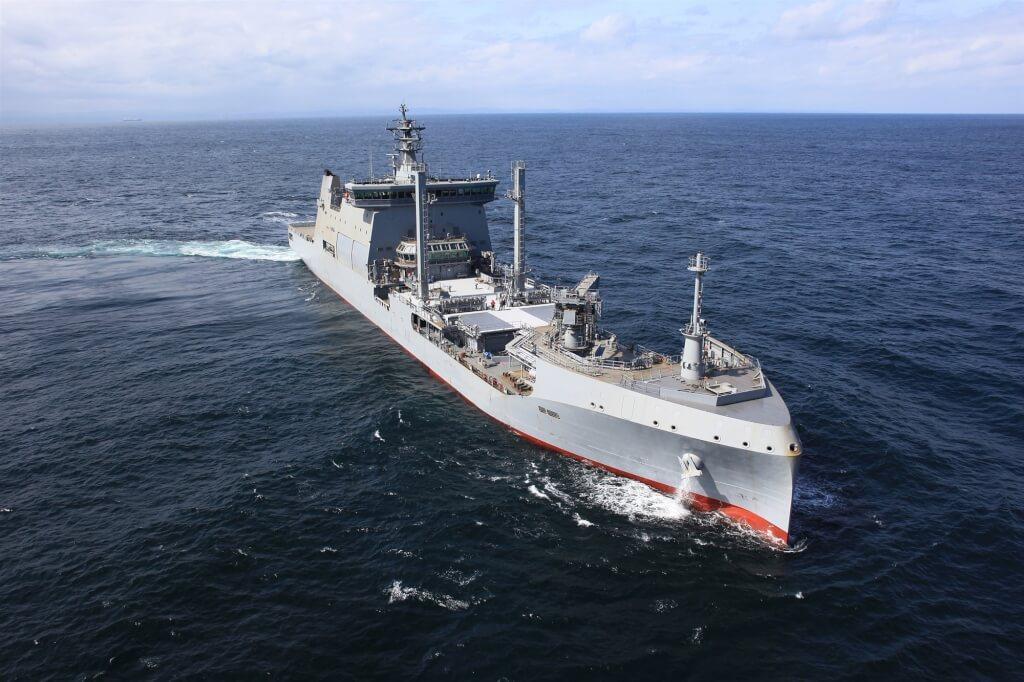
Photo: Screen grab from Royal New Zealand Navy’s X account
"New Zealand Defence Force deployments to the region demonstrate our continued interest and commitment to the region," the spokesperson added in a statement.
New Zealand Prime Minister Christopher Luxon called it "a routine activity" and said he was not expecting any backlash from China, the country's top trading partner.
"It's conducted in a safe and professional way. It's conducted under international law, it's in international waters," Luxon told reporters in Wellington.
China's Ministry of National Defense did not immediately respond to a request for comment.
China claims it alone exercises sovereignty and jurisdiction over the strait, though Taiwan rejects Beijing's claims.
Both the US and Taiwan say the strait, a major trade route for about half of global container ships, is an international waterway. New Zealand is one of just two major countries, along with Singapore, to have a free trade pact with Taiwan.
Taiwan's Ministry of National Defense said that as the strait is an international waterway, all countries enjoy freedom of navigation.
The ministry “would not proactively disclose the activities of friendly allied nations' aircraft and vessels,” it said in a statement.
The Aotearoa was tracked and followed by Chinese forces when it last transited the strait in November last year, a source familiar with the matter told Reuters.
During that transit, Chinese ships and aircraft monitored the Aotearoa, with Chinese jets carrying out simulated attacks, the source said.
US warships sail through the strait every few months, provoking criticism from Beijing, and some US allies, such as Canada and Britain, also make occasional transits.
China has stepped up military activities in the strait over the past five years, including staging war games.

A Hualien pomelo farmer refused to sell to China after the country announced it would permit more Taiwanese pomelo imports, prompting widespread support from Taiwanese consumers, who rallied to buy his fruit. China’s Taiwan Affairs Office last month said that China’s General Administration of Customs registered an additional 79 Taiwanese pomelo orchards and packing facilities in Hualien County, allowing more Taiwanese producers to export pomelos to China. “I am a Hualien fruit farmer and I refuse to sell to China,” Liu Tzu-hao (劉子豪) from Ruisui Township (瑞穗) said in an online post. Liu is a well-known farmer in the community and has served
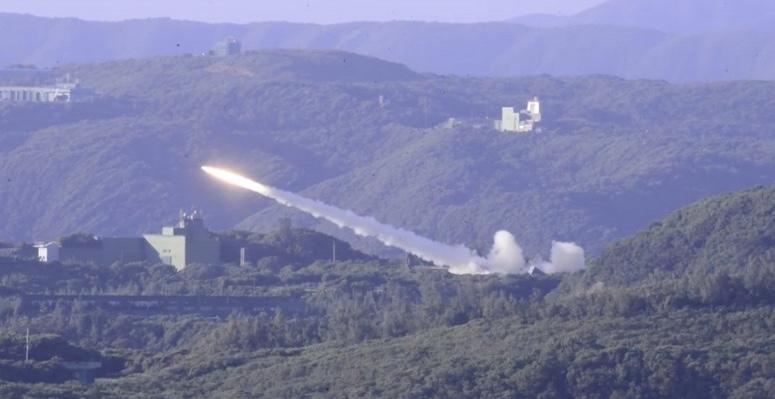
A Chinese military drone was spotted conducting reconnaissance off Taitung County as President William Lai (賴清德) visited Pingtung County this morning to inspect a drill of the armed forces’ precision-strike capabilities, prompting the military to closely monitor its actions. Today was the final day of a three-day military exercise at Jioupeng Base (九鵬基地) to test the joint combat capabilities of the armed forces and coast guard. The exercise began on Wednesday simulating air defense interception and yesterday tested long-range strike capabilities and new air defense weapons. This morning, the military conducted a final exercise involving air defense, anti-ship and drone operations. Military sources said

OCT. 31: The antiviral drugs Tamiflu and Eraflu have been distributed to about 4,000 medical facilities nationwide for people in seven groups who develop flu-like symptoms As the domestic influenza epidemic enters its peak season and continues to escalate, the Centers for Disease Control (CDC) yesterday announced that publicly funded influenza antiviral drugs for seven eligible groups have been extended to Oct. 31, allowing those who develop flu-like symptoms to receive the medication without undergoing a rapid influenza test. The CDC has extended the expanded use of flu antiviral drugs to seven groups: healthcare and influenza-prevention personnel; residents and staff at nursing homes, long-term care facilities and similar institutions; kindergarten and daycare workers and home-based caregivers; students from kindergarten through high school, vocational high school and the

Taiwanese Tsai Chin-shu (蔡金樹), who had been imprisoned in China for engaging in activity that “endangers national security,” said on Facebook on Friday that he has returned to Taiwan. Tsai, chairman of the Southern Taiwan Union of Cross-strait Relations Associations, had traveled frequently between Taiwan and China for years, and at one time ran a trading company in China’s Pingtan. In July 2018, he traveled to Quanzhou, Fujian Province, to attend a cross-strait food trade fair and stayed at a hotel in Xiamen. He checked out the following day and then disappeared. His family had made repeated appeals to the authorities


 RSS
RSS