

The Central Weather Administration (CWA) yesterday warned the public of potentially deadly hazards posed by swells, known locally as “crazy dog waves,” which have claimed more than 770 lives in the past 25 years.
From 2000 to November last year, the CWA recorded 445 incidents involving freak waves along Taiwan’s coasts, resulting in 778 people falling into the sea.
Offshore abnormal wave events were also reported, with 206 incidents recorded from 2000 to June 2023 involving 936 people, CWA data showed.
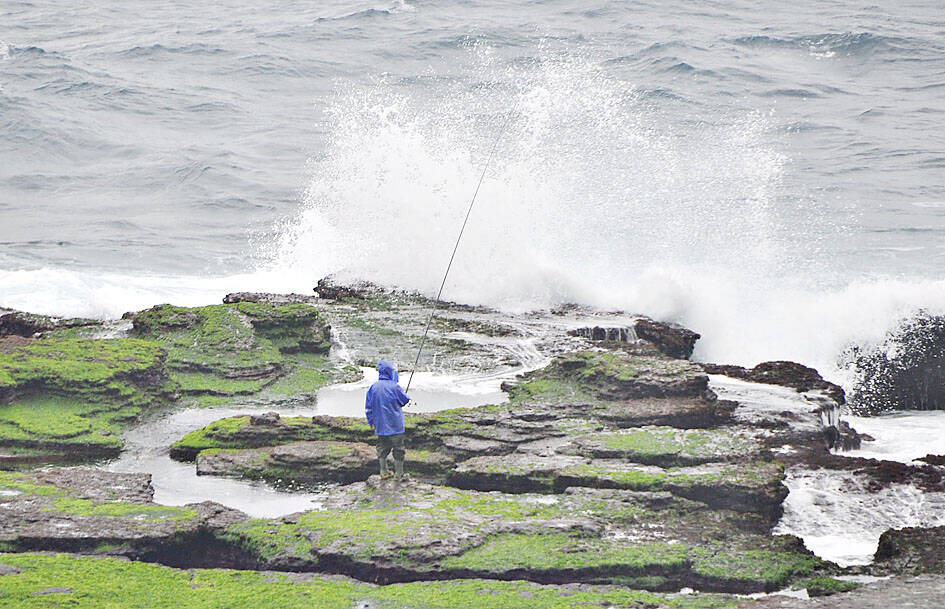
Photo: CNA
Lin Fang-ju (林芳如), a specialist in marine meteorological technology at the CWA’s Marine Meteorology and Climate Division, said long-period waves, or swells, can sometimes become hazardous.
The CWA has established separate warning systems for abnormal waves in coastal waters and the open ocean.
Wave conditions are primarily affected by wind speed, the size of the area over which the wind blows and the duration of the wind, Lin said.
Stronger winds blowing over a wider area for a longer period produce larger waves with greater energy, she said.
Wind waves are generated locally by winds blowing across the sea surface, while swells are generated by strong winds farther away and continue to travel after leaving the area affected by the winds, she added.
Swells are also known as long-period waves, Lin said.
Because swells have longer periods and travel faster than normal waves, they can reach speeds of more than 100kph, she said.
By comparison, typhoons generally move at about 5kph to 20kph. As a result, swells generated by a distant typhoon can reach Taiwan’s shores one or two days before the storm itself, she added.
When swells enter shallow waters, coastal topography can cause high waves that break and crash, creating dangerous conditions, she said, adding that unusually large waves despite calm local winds could indicate severe weather systems offshore.
The CWA provides real-time swell information when wave heights reach at least 1.5m and periods are eight seconds or longer, except during typhoon warnings.
In cooperation with National Cheng Kung University’s Coastal Hydraulics Center, the CWA has developed a Coastal Abnormal Wave Warning System to improve warnings of dangerous waves near shore.
The Ocean Abnormal Wave Warning System uses nonlinear wave theory and wave models to provide the probability of abnormal waves occurring in the following 24, 36 and 48 hours.
The CWA also uses data from buoys to monitor waves, currents, water temperatures, wind, air temperatures and atmospheric pressure.
The solar-powered buoys generally collect observations hourly when sufficient power is available, although fishing nets, ship collisions and ropes tied to the buoys can affect data quality.
In cooperation with Kenting National Park, the CWA provides warnings when forecast wave heights reach specified levels, and forecasts of high and low tide lines to help prevent people from becoming stranded on beaches or sandbars.

The donation of offshore patrol vessel Kinmen to the Philippines includes provisions that protect Taiwanese fishers and facilitate security cooperation across the First Island Chain, officials said yesterday. The comment was made during the Cabinet’s comprehensive administrative report at the legislature after Chinese Nationalist Party (KMT) Legislator Hsu Yu-chen (許宇甄) expressed concerns about the decision to give a ship to a country whose coast guard had in 2013 fired on a Taiwanese trawler and killed its captain without provocation. The Cabinet should lay out the safeguards that have been established to prevent the Philippine government from using the Kinmen to harass, expel
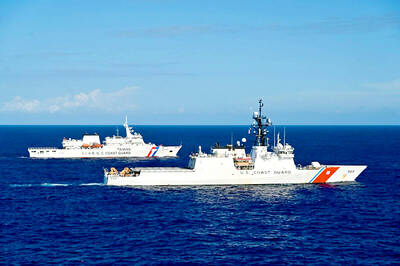
GROWING TIES: The CGA is planning a goodwill mission to the Philippines, in what would be the first time since 1975 a Taiwanese paramilitary vessel has visited the country The Coast Guard Administration (CGA) plans to significantly expand its participation in international security cooperative frameworks and its operational capabilities, a budget proposal for next year showed. The budget indicates a transformation of the CGA from a maritime law enforcement arm into a national defense and intelligence gathering entity capable of tackling larger regional security matters. The proposal showed that personnel from the coast guard’s Intelligence Division and Special Action Support Center are to participate in high-level national security talks with the US. As the CGA has dealt with China’s rising “gray zone” threats around Taiwan, it has become a valuable asset to
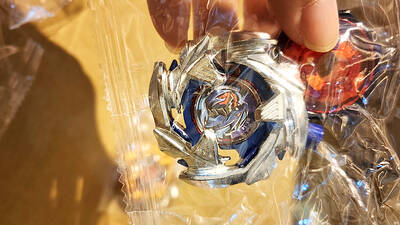
The National Police Agency’s Third Special Police Corps yesterday said that from May to July, it intercepted five smuggling operations from China, seizing more than 70,000 counterfeit Beyblades with an estimated infringement value of NT$34.45 million (US$1.08 million). It added that any bootleg unit that reached the local market could present hidden health hazards to players. Beyblades, a line of spinning toy tops used in competitive gaming and developed in Japan by toy company Takara Tomy, have become popular in Taiwan, making them a target for fraudsters. The Third Special Police Corps, dedicated to safeguarding maritime borders and trade lines,
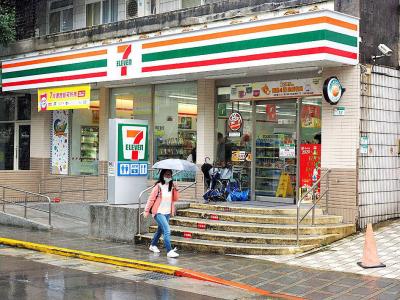
Five customers who made purchases at 7-Eleven stores across Taiwan won the top NT$10 million (US$313,716) special prize in the July-August uniform invoice lottery, including one who spent just NT$27 on photocopying, the convenience store chain said today. The five special prize winners made their purchases at stores in Taoyuan, Taipei, Taichung and Kaohsiung, 7-Eleven operator President Chain Store Corp said. The five winning purchases included NT$29 spent on snacks at a store in Taoyuan's Zhongli District (中壢), NT$27 on photocopying at a store in Taipei's Zhongzheng District (中正), NT$139 on City Cafe coffee and daily necessities at a store in Taipei's


 RSS
RSS