

While ocean and air transport workers pocketed the highest salaries in Taiwan’s transportation sector last year, public bus drivers faced the worst working conditions, enduring nearly 200 total hours of work per month, official data showed.
The Ministry of Transportation and Communications released data collected last year in a report on the overview of production and employment in the transportation and warehousing sector, which was published in June.
Employees in Taiwan’s transportation and warehousing sector earned an average monthly salary of NT$67,793 last year, up NT$2,609, or 4 percent, from the previous year and marking a record high, ministry data showed.
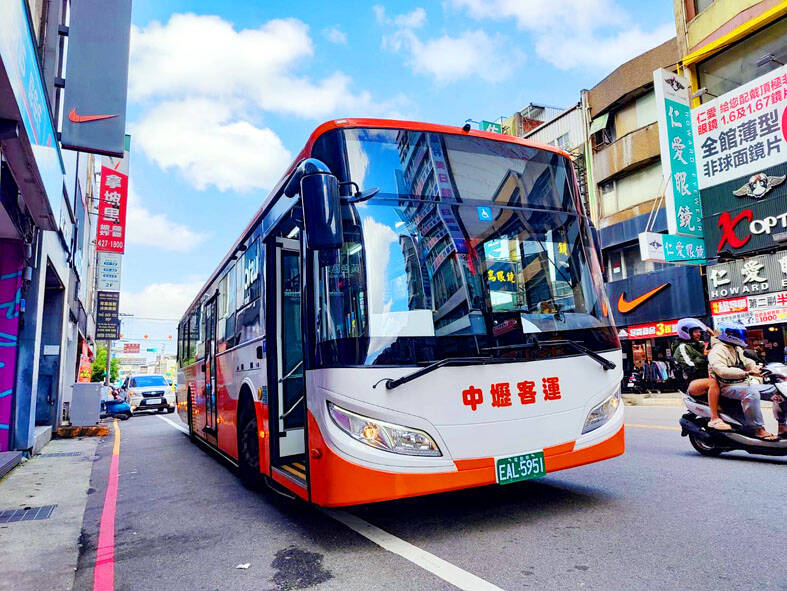
Photo courtesy of the Taoyuan Department of Transportation
The figure was about 1.1 times the average monthly salary of NT$63,383 earned by employees across all industrial and service sectors.
Among transportation-related industries, maritime transport workers received the highest average monthly pay at NT$138,446, retaining the top spot for the sixth consecutive year. Airline transport ranked second at NT$123,804.
Compared with the previous year, average pay in the maritime transport sector fell by NT$1,054, or 0.8 percent, due to a decline in non-regular compensation.
Salaries in all other transportation sectors increased, with airline transport posting the largest gain of NT$6,753, or 5.8 percent.
During the past decade, average monthly earnings in the transportation and warehousing sector have risen by nearly 30 percent, the ministry said.
With the exception of a slight decline in 2020 amid the COVID-19 pandemic, the average salary has increased every year and has exceeded NT$60,000 annually since 2022, it said.
The ministry attributed the growth primarily to steady increases in regular wages, which have risen by more than NT$1,000 per year, as well as non-regular compensation remaining above NT$12,000 since 2021.
Among individual industries, maritime transport recorded the largest increase over the past decade, with average pay rising 77.1 percent, the ministry said.
Warehousing, bus transportation and airline transportation also posted increases of more than 30 percent, it said.
The ministry’s statistics also showed that employees in the industrial and service sectors worked an average of 168.9 hours per month last year, while those in the transportation and warehousing sector worked 169.3 hours, about 0.4 hours longer.
Bus transportation employees recorded the longest working hours among all transportation industries, averaging 199.7 hours per month — nearly 30 hours more than the overall average.
They also logged 35.7 hours of overtime per month, the highest in the transportation and warehousing sector, and an increase of 2.8 hours from a year earlier, the largest increase among all industries.
The delivery services sector ranked second, with employees working an average of 188 hours per month and 20.9 hours of overtime.
Workers in the railway and metro sector averaged 15.5 hours of overtime per month, up 0.6 hours from the previous year, also placing them among the industries with relatively long working hours.
Over the past decade, last year was the only year in which average monthly working hours fell below 170 hours, the ministry said. Overtime averaged about nine hours per month in most years, except from 2020 to 2022, when it remained below 8.5 hours due to the impact of the pandemic.

The first batch of individual income tax refunds for this tax season is to be deposited on Friday, covering more than 3.65 million cases and totaling NT$61.24 billion (US$1.89 billion), with an average refund of NT$16,745 per case, the National Taxation Bureau of Kaohsiung said. After the annual individual income tax filing deadline, regional tax bureaus process refunds in three batches based on the filing method used by taxpayers, the bureau said, adding that the three batches are scheduled for Friday, Oct. 30, and Jan. 20 next year. The first batch covers taxpayers who completed online filing before June 1, those who

NEW AND IMPROVED: The N700ST is based on Japan’s N700S Shinkansen, and features a lighter design, better energy efficiency and upgraded accessibility facilities The first set of N700ST high-speed rail carriages, scheduled to arrive in Taiwan next month, would begin service on July 1 next year, Taiwan High Speed Rail Corp (THSRC) said yesterday. THSRC chairman Shih Che (史哲) made the remarks during a ceremony in Hitachi Ltd’s Kasado Works in Yamaguchi Prefecture, Japan, where he and Hitachi Railway Systems Business Unit CEO Giuseppe Marino unveiled the locomotive of the first N700ST train. More than 200 guests attended the unveiling. “The first set of N700ST trains will soon be shipped to Taiwan from the prefecture’s Kasado Port. Hopefully, all the required tests will be completed successfully
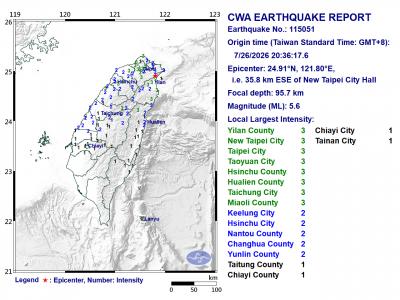
A magnitude 5.6 earthquake struck New Taipei City in northern Taiwan at 8:36pm today, the Central Weather Administration said. There were no immediate reports of damage or injuries. The epicenter was about 35.8km east-southeast of New Taipei City Hall, at a depth of 95.7km, the agency said. The earthquake's intensity was highest in Yilan County, New Taipei City, Taipei, Taoyuan, Hsinchu County, Hualien County, Taichung and Miaoli County, where it measured 3 on Taiwan's 7-tier intensity scale. The quake also measured an intensity of 2 in Keelung, Hsinchu City, Nantou County, Changhua County and Yunlin County, the agency said.
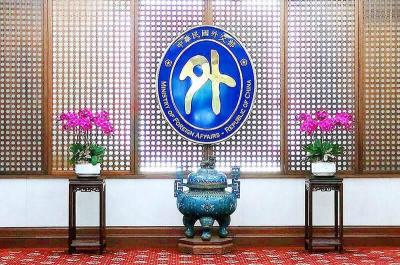
Taiwan has suspended visa processing for Moroccan nationals in response to Morocco halting visa applications for Taiwanese travelers worldwide, the Ministry of Foreign Affairs said today. The Moroccan embassy in Japan on Thursday last week informed Taiwanese travel agencies that it would suspend its visa confirmation letter application service for Taiwanese seeking to travel to Morocco, the ministry said in a statement. Taiwanese are required to obtain a visa confirmation letter before traveling to Morocco, the Bureau of Consular Affairs Web site says. Applications are submitted through the Moroccan Embassy in Japan, which forwards them to authorities in Morocco for review. Once approved,


 RSS
RSS