

Taiwanese armed forces are to simulate fighting a Chinese invasion of Taiwan proper and spreading weapons manufacturing across different locations to sustain combat operations in next month’s annual Han Kuang military exercises, the Ministry of National Defense said yesterday.
Han Kuang 41, this year’s large-scale drills, is to take place from Wednesday next week to Aug. 14, Major General Lu Wen-yuan (呂文元), head of the Joint Operations Division, told a news conference in Taipei.
The exercise would be comprised of computer-assisted command exercises, the simulated mobilization of troops and key civilian assets, and joint field drills involving all branches of the military and coast guard, he said.
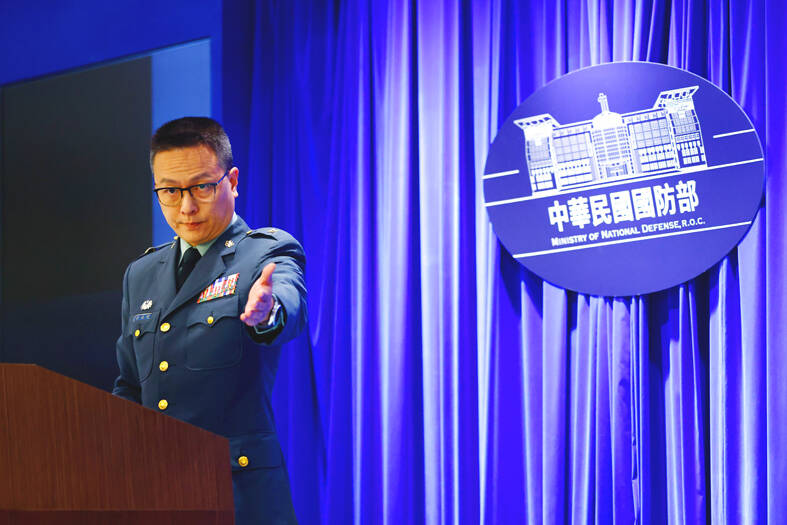
Photo: Ritchie B. Tongo, EPA
The exercises are to progress through four phases with distinct focuses: prepositioning and deployment of units, force protection and survivability, counter-amphibious assault operations, and defense in sustained conflict, Lu said.
As with recent iterations of the drills, this year’s Han Kuang is unscripted, he said.
The initial phase assumes the Chinese People’s Liberation Army (PLA) gathered its forces under the guise of a large-scale exercise, triggering Taiwanese mobilization, retraining, access denial preparations, infrastructure hardening and distribution of materiel, he said.
This stage tests Taiwan’s capability to rapidly transition from peacetime to a war footing, Lu said.
The exercise further assumes that the PLA would not commit to an invasion unless it has achieved a sea and air blockade of Taiwan and, by implication, the ability to conceal a buildup of amphibious assault forces, he said.
During this phase, Taiwanese forces would focus on breaking China’s blockade, mobilizing troops, laying mines and other access-denial measures, hardening infrastructure, and preparing to defend key military and political sites, Lu said.
The navy and coast guard would conduct joint drills using troops, equipment and firepower to simulate operations aimed at keeping sea lanes open and protecting shipments of critical materiel, including by convoy, he said.
Strategically valuable infrastructure including airports, harbors and road hubs would be hardened or destroyed should they prove impossible to defend to deny the enemy their use, he said.
That part of the drill would also include relocating the Armaments Bureau’s 202nd Arsenal in Taipei and mobilizing civilian factories for war production after issuing an emergency order, he said.
The counter-amphibious assault phase of the exercise would simulate PLA joint fire strikes and the use of coordinated naval and airborne forces in amphibious attacks, Lu said.
Taiwanese forces aim to achieve local air superiority, coordinate the use of air defense and coastal defense systems, contest landing sites, and employ destructive fires in strategically crucial areas, he said.
The goal is to test the military’s ability to exercise joint warfare command and control, and coordinate firepower across unit boundaries, Lu said.
The final phase of the exercise presumes that the PLA would break out of their beachheads.
Taiwanese forces would then conduct a layered defense designed to slow and wear down advancing forces while sustaining a prolonged resistance, Lu said.
That would involve judicious use of terrain, disruption and attrition tactics, and employing civilians’ capabilities to support military operations, he said.
Taiwanese forces would train to maneuver in a contested environment in which the threat of enemy fire and special operations attacks are ever-present, he said.
The Taipei Reserve Brigade and 137 Infantry Brigade would be fully committed to the exercise, progressing from mobilization, formation assembly, pre-combat refresher training and force regeneration, Lu said.
Hsia Chen-kuo (夏振國), deputy head of the All-Out Defense Mobilization Agency, said that the two brigades’ number about 5,000 military service members, all of whom would be deployed during the exercises.
Additional reporting by Reuters
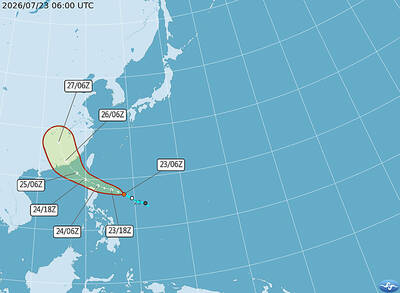
BRACE FOR WET DAYS: Heavy rain is expected in Hualien, Taitung and the Hengchun Peninsula, and northern areas would see localized showers, it said A tropical depression east of the Philippines is expected to strengthen into Typhoon Noul, and a sea warning was likely to be issued as early as 11:30pm last night, the Central Weather Administration (CWA) said yesterday. The storm would be closest to Taiwan tomorrow, and bring heavy rain to Hualien and Taitung counties, as well as the Hengchun Peninsula (恆春半島), it said. If the storm strengthens into a typhoon, it would be the 12th this year. As the storm has maintained a steady speed, it is expected to cross the Bashi Channel relatively quickly, CWA forecaster Tseng Chao-cheng (曾昭誠) said. The storm is forecast
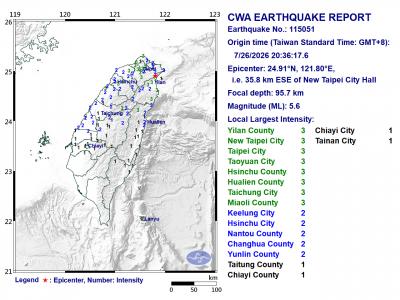
A magnitude 5.6 earthquake struck New Taipei City in northern Taiwan at 8:36pm today, the Central Weather Administration said. There were no immediate reports of damage or injuries. The epicenter was about 35.8km east-southeast of New Taipei City Hall, at a depth of 95.7km, the agency said. The earthquake's intensity was highest in Yilan County, New Taipei City, Taipei, Taoyuan, Hsinchu County, Hualien County, Taichung and Miaoli County, where it measured 3 on Taiwan's 7-tier intensity scale. The quake also measured an intensity of 2 in Keelung, Hsinchu City, Nantou County, Changhua County and Yunlin County, the agency said.
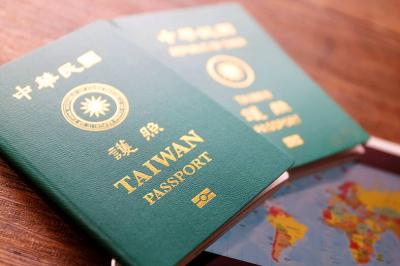
Taiwanese planning trips to Morocco should carefully assess their travel plans, the Ministry of Foreign Affairs (MOFA) said today, following reports that a travel agency had suspended its visa authorization letter application service for people visiting the country. Lion Travel yesterday said in a notice on its Web site that the Moroccan embassy in Japan had stopped accepting visa applications, prompting the company to suspend its visa authorization letter application service for people visiting Morocco. Taiwanese are required to obtain an entry visa authorization letter before traveling to Morocco, the Bureau of Consular Affairs Web site says. Applications are submitted through the Moroccan

BOUNDARIES: The ALP’s decision to make it clear Taiwanese officials could stay was the right response and parties are not bound by Australia’s ‘one China’ policy, an expert said Chinese diplomats on Thursday walked out of the Australian Labor Party’s (ALP) national conference after complaining about the presence of Taiwanese officials, the Australian Broadcasting Corp (ABC) reported. Three Chinese diplomats observing the conference approached ALP National Secretary Paul Erickson and demanded that two officials from the Taipei Economic and Cultural Office in Australia — Taiwan’s de facto embassy — be removed from the venue, the report said. The Taiwanese officials were attending as general observers rather than as “international observers,” a category that includes foreign diplomats and representatives of political parties from many countries, it said. Erickson “made it clear” that the


 RSS
RSS