

Next month’s urban resilience exercises would involve deliberately slowing down mobile networks on Aug. 10 and Aug. 23, the National Communications Commission (NCC) said yesterday, urging people to avoid handling important tasks on their mobile phones during the drills.
The first exercise would take place in central Taiwan from 2:30pm to 3pm on Aug. 10, covering, Chiayi City, Taichung, and Changhua, Chiayi, Miaoli, Nantou and Yunlin counties, the NCC said.
The second exercise would be held in northern Taiwan from 2:30pm to 3pm on Aug. 13, covering Hsinchu City, Keelung, Taipei, New Taipei City, Taoyuan, and Hsinchu and Yilan counties, it said.

Photo: Taipei Times file photo
Voice calls, including emergency calls to 110 and 119, text messaging services and the receipt of Public Warning Cell Broadcast Service alerts would remain unaffected, the commission said.
People are advised to use fixed-line Internet connections where possible and reduce non-essential online activity, NCC said.
The commission urged people with important online tasks to complete them before or after the drills, and recommended downloading important files and finishing online transactions or mobile payment activities in advance to avoid disruptions.
Separately, Taiwan Digital Diplomacy Association founder Chiayo Kuo (郭家佑) said that the 30-minute exercise could be treated as an opportunity for the public to participate in resilience training.
He suggested that people do seven things during the drill: avoid scheduling important work during the exercises, try to use ways other than Line to contact family members, visit the nearest designated shelter, check whether important data stored on mobile devices can be accessed offline, conduct a data backup exercise at the office, try not to rely on mobile payment services and practice refraining from forwarding information before it can be independently verified.

SOUTHBOUND POLICY: Agencies said Thailand, Brunei and the Philippines would benefit from continuation of the program, but Cambodia was rebuffed over rhetoric Conditional visa waiver programs for holders of Thai, Bruneian and Philippine passports are to be extended to July 31 next year to help implement Taiwan’s New Southbound Policy, the Bureau of Consular Affairs said on Friday. The decision was a result of cross-ministry meetings chaired by the Ministry of Foreign Affairs since April 21 for a comprehensive review of the ministry’s visa waiver program for Thai, Brunei and Philippine nationals, the Ministry of the Interior’s Travel Authorization Certificate (TAC), and the Ministry of Transportation and Communication’s Guanhong Project (觀宏專案), also known as the Project for Simplifying Visa Regulations for High-end Group
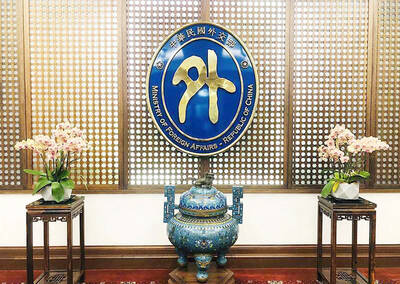
Taiwan will remove Cambodia from two visa facilitation programs on Aug. 1, while extending eased entry arrangements for Thailand, India and several other Southeast and South Asian countries, the Ministry of Foreign Affairs said Friday. Cambodian nationals will no longer be eligible for the Guanhong Project, which eases visa requirements for certain tour groups, or the Travel Authorization Certificate program, which offers conditional visa-free entry, MOFA said. In a news release, the ministry said Cambodia had failed to reciprocate Taiwan’s goodwill and had instead echoed China in statements undermining Taiwan’s sovereignty. MOFA also accused Cambodia of appearing to support Beijing’s possible use of
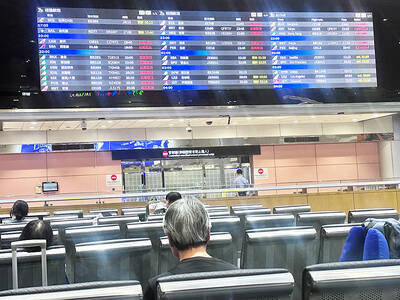
Travel agencies and hotels offering airport pickup services face fines beginning next month if they continue to hold space in arrival halls with placards, luggage or other personal items, Taoyuan International Airport Corp (TIAC) said in a letter to operators. As the number of visitors to Taiwan continues to grow, many travel agencies and hotels provide meet-and-greet services that allow arriving travelers to head directly to their hotels or begin their itineraries upon landing. However, some pickup personnel have been occupying the wall near the exit of the arrival hall with signs, luggage and personal items, obstructing passenger flow, disrupting terminal
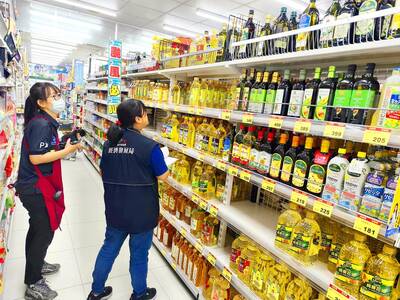
The Food and Drug Administration (FDA) yesterday said that two additional batches of cooking oil produced by Central Union Oil Corp had been found to contain excessive levels of the carcinogen benzopyrene. The contamination was traced to two tainted downstream products, bringing the total number of affected soybean-based cooking oil batches to seven of the 30 batches produced by the company from April to June, the agency said. The tainted oil has affected a total of 1,322 businesses, it added. As of 11am yesterday, 2,584.4 tonnes of contaminated oil products had been removed from shelves, while another 5,126.7 tonnes had been preemptively withdrawn


 RSS
RSS