

Many of the Chinese Nationalist Party’s (KMT) state assets that the government has been trying to reclaim were registered under nominees’ names and became unrecoverable due to political changes and the deaths of those nominees, former KMT treasurer Liu Tai-ying (劉泰英) yesterday said.
Liu, who headed the KMT’s Investment and Business Management Committee from 1993 to 2000, said that before he took over, KMT-run businesses generated about NT$2 billion (US$62.64 million) in annual profits.
During Liu’s tenure, profits rose to more than NT$10 billion, but fell back to about NT$2 billion after he stepped down, with most gains ending up in private hands, he said.

Photo: Taipei Times
Assets recovered by the government’s Ill-gotten Party Assets Settlement Committee — set up in 2016 — represented only “the tip of the iceberg,” he said.
The KMT long lacked legal entity status, requiring assets to be registered under nominees’ names, Liu said.
After he advised then-president Lee Teng-hui (李登輝) to register the party as a legal entity, the KMT began recovering assets using inventories and written agreements with nominees, Liu said.
The largest holdings, which were registered under former premier Hau Pei-tsun (郝柏村), were eventually recovered despite initial difficulties, Liu said.
Party assets recovered at the time from nominees were valued at more than NT$100 billion at market prices, he said.
“The worst situation was when a nominee died, because then the assets could no longer be recovered,” he said, adding that heirs often refused to recognize the agreements, leaving the KMT without legal grounds to reclaim the property.
After Lee stepped down as chairman in 2000, much of the KMT’s assets flowed into private hands, making it difficult, if not impossible, to find where they went, Liu said.
Liu said he also tried to recover KMT assets in China, including an interest in Tsingtao Brewery, which he described as one of the party’s earliest holdings.
Chinese authorities initially agreed to assess the KMT’s entitlement as an original shareholder, but the effort ended after he left office, he said.
An official with the Ill-gotten Party Assets Settlement Committee said that the agency invited Liu to submit evidence or leads about the assets’ current whereabouts.
A KMT official said that chapter of the party’s history had long since closed.
“If there are still any KMT assets that can legally be recovered, we would welcome Liu to disclose them publicly, because the KMT is genuinely short of money now,” they said.
The official, who asked not to be named, said the party has faced severe financial strain since the Democratic Progressive Party (DPP) government froze its assets, forcing the KMT to rely on election subsidies and donations under the Political Donations Act (政治獻金法).
The official said the DPP was using transitional justice and the judicial system to dismantle the KMT and deepen social divisions.
Additional reporting by Lin Hsin-han

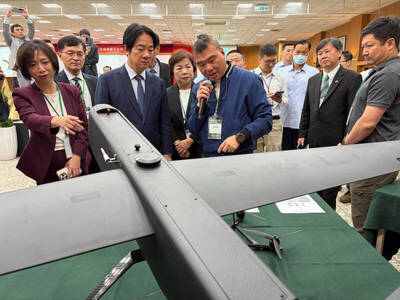
Two executives of drone supplier Jiin Ming Industry Co (錦明實業) have been detained and held incommunicado over the company's alleged use of prohibited China-made chips and camera lenses in drones supplied under recent military contracts, the Taoyuan District Prosecutors' Office said today. In a statement, prosecutors said they raided the offices of Jiin Ming — headquartered in Taoyuan — as well as those of its subsidiaries and its suppliers on Thursday last week. The raids followed a report that the company had breached its procurement contracts by putting the prohibited components into drones delivered to the military. During the raids, prosecutors summoned

South Korean boy band BigBang drew 120,000 fans to three concerts at Taipei Dome from Friday through yesterday, as the band thanked them for their support over their 20-year career. The Taipei Dome concerts were part of BigBang's "2026-2027 World Tour XX: Cosmos." Friday's concert was BigBang's first performance in Taiwan in 11 years. During the encore, group leader G-Dragon (GD) shouted "I love you" in Chinese and said he was especially happy to perform in Taiwan with bandmates Taeyang and Daesung. "Taipei, I'm very grateful to you all," GD said in Chinese, asking fans to wait for the band's return. Daesung thanked
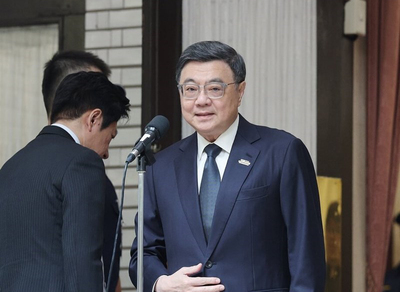
The government would continue monitoring online rumors that a pneumonic plague outbreak has spread from Russia into China and could enhance existing quarantine measures, Premier Cho Jung-tai (卓榮泰) said today. During a legislative meeting, Democratic Progressive Party Legislator Wang Ting-yu (王定宇) said rumors were circulating that the disease had spread across several Chinese provinces. He asked Cho whether the government was prepared to prevent the disease from spreading to Taiwan, given the frequent exchanges between Taiwan and China, and how concerned the government was about the alleged outbreak. The Ministry of Health and Welfare implemented border quarantine measures after briefing the Executive Yuan
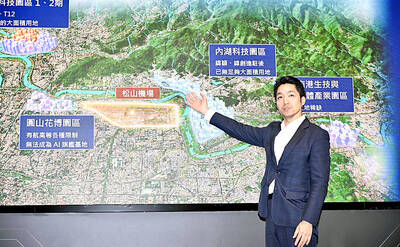
DETAILED PLAN NEEDED: Relocating the airport would affect not just travelers, but also undermine national defense and emergency medical services, a legislator said Taipei Mayor Chiang Wan-an (蔣萬安) yesterday proposed relocating Taipei International Airport (Songshan airport) and turning the site into an artificial intelligence (AI) park, drawing opposition from politicians across party lines. Chiang’s plan would turn the 300 hectares into an AI park featuring tech clusters, residential communities and green space. The industrial cluster would host 200 domestic enterprises, generate NT$12 trillion (US$376.47 billion) in output, and accommodate 65,000 jobs and 35,000 residents, he said. Cabinet spokeswoman Michelle Lee (李慧芝) said the Executive Yuan was surprised by the announcement, as the Taipei City Government did not discuss the proposal with the central government before making


 RSS