

Lawmakers yesterday launched the Legislative Yuan Association for the Promotion of International Investment to strengthen Taiwan’s cooperation with allies in technology and trade.
The group was announced at a news conference in the legislature, where members said Taiwan could leverage its technological strengths to work with partners in coordinated efforts to expand strategic industries and deepen economic ties.
Democratic Progressive Party (DPP) Legislator Ngalim Tiunn (張雅琳) was named chair of the association, while Chinese Nationalist Party (KMT) Legislator Ko Ju-chun (葛如鈞) and DPP Legislator Michelle Lin (林楚茵) will serve as deputy chairs.
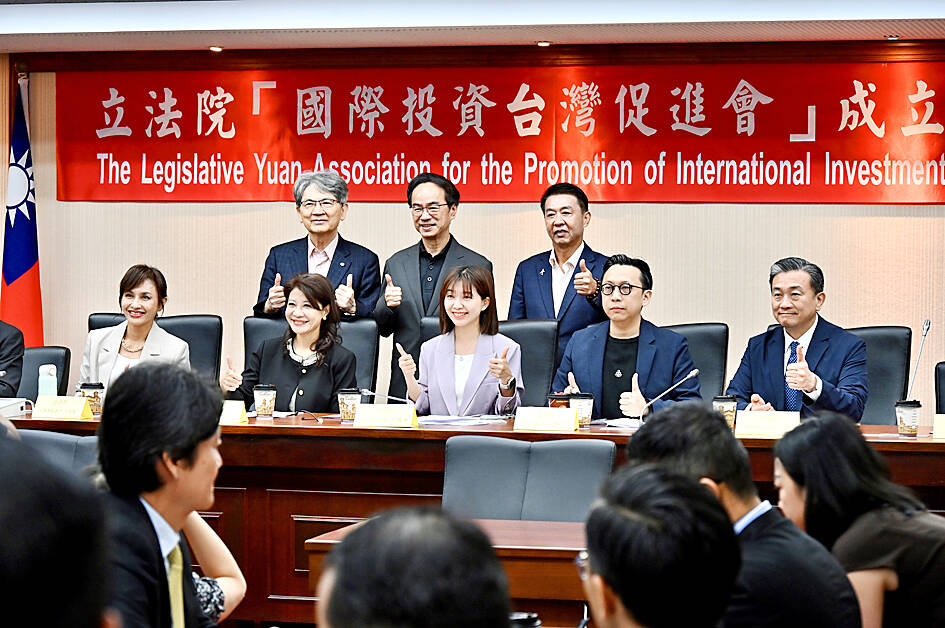
Photo: George Tsorng, Taipei Times
Ko said technology and investment transcend party lines, adding that both the pan-green and pan-blue camps share a common goal of strengthening Taiwan’s economic power and resilience.
He noted that Taiwan Semiconductor Manufacturing Co (TSMC)—now widely regarded as Taiwan’s most important economic and national security asset—was originally established through cooperation between the Taiwanese government, Dutch-based Philips and other investors.
Through that partnership, Ko said, Taiwan combined its manufacturing capacity, talent and democratic system to produce chips that now underpin global industries such as artificial intelligence (AI), energy and unmanned systems.
Koh Sangwook, acting representative of the South Korean mission to Taiwan, praised Taiwan’s strong economic performance, noting its record 14.5 percent growth rate and its position as the world’s fifth-largest equity market by value.
He said the restructuring of global supply chains and the rise of the AI industry are driving Taiwan and South Korea toward closer partnership rather than competition.
Citing trade data, Koh added that Taiwan is South Korea’s third-largest trading partner, while South Korea ranks fifth for Taiwan, underscoring the importance of bilateral economic cooperation.
He said the two economies are deeply integrated and mutually dependent in semiconductors, electronic components and information technology.
Legislative Yuan Deputy Secretary-General Chang Yu-jung (張裕榮), attending on behalf of Legislative Speaker Han Kuo-yu (韓國瑜), said Taiwan’s tech industry plays a critical role in global supply chains.
He added that the legislature has an important role as a platform for dialogue between international investors and the government, and in ensuring that laws and regulations keep pace with economic needs.
DPP Legislator Wang Ting-yu (王定宇) said the launch of the association reflects a confident Taiwan that is also a highly attractive partner for international cooperation.
He said Taiwan’s key advantages lie in its democratic system governed by the rule of law, technological sophistication and trustworthiness.
International cooperation with Taiwan, Wang added, will contribute to global prosperity and make the world better.

A Hualien pomelo farmer refused to sell to China after the country announced it would permit more Taiwanese pomelo imports, prompting widespread support from Taiwanese consumers, who rallied to buy his fruit. China’s Taiwan Affairs Office last month said that China’s General Administration of Customs registered an additional 79 Taiwanese pomelo orchards and packing facilities in Hualien County, allowing more Taiwanese producers to export pomelos to China. “I am a Hualien fruit farmer and I refuse to sell to China,” Liu Tzu-hao (劉子豪) from Ruisui Township (瑞穗) said in an online post. Liu is a well-known farmer in the community and has served
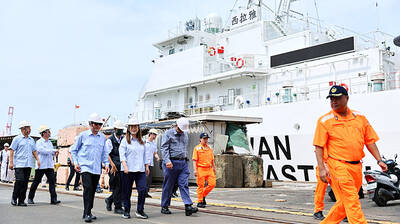
Ocean Affairs Council (OAC) Minister Kuan Bi-ling (管碧玲) on Wednesday said decommissioned coast guard vessels were given to the Philippines to enhance regional rescue capacity and would not affect Taiwanese fishers’ rights and benefits. Kuan made the remarks after confirmation on Tuesday that a 500-tonne Coast Guard Administration (CGA) patrol and rescue vessel would be given to the Philippine Coast Guard. The donation ceremony was reportedly done in Manila, but whether the vessel — previously numbered “CG123” and named Kinmen (金門) — has been handed over has yet to be confirmed. China’s Taiwan Affairs Office (TAO) on Wednesday criticized the donation for “taking
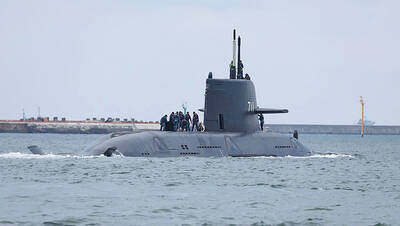
UPDATE: The submarine would need to undergo combined systems testing and crew training for navy personnel before it is ready for mission, an expert said Taiwan’s first domestically built submarine, the Hai Kun (Narwhal, 海鯤), could be delivered to the navy as early as next month, military expert and Taiwan Association for Security and Development chairman Chi Tung-yun (紀東昀) said yesterday. The submarine was yesterday morning observed departing for its 21st sea trial and its 15th submerged test. The vessel missed the initial delivery deadline of November last year due to “testing delays,” its primary contractor, shipbuilder CSBC Corp, Taiwan, said in June. The contractor also cited “political pressure from China” in procuring critical equipment. All testing operations are in the final stages, with the

OCT. 31: The antiviral drugs Tamiflu and Eraflu have been distributed to about 4,000 medical facilities nationwide for people in seven groups who develop flu-like symptoms As the domestic influenza epidemic enters its peak season and continues to escalate, the Centers for Disease Control (CDC) yesterday announced that publicly funded influenza antiviral drugs for seven eligible groups have been extended to Oct. 31, allowing those who develop flu-like symptoms to receive the medication without undergoing a rapid influenza test. The CDC has extended the expanded use of flu antiviral drugs to seven groups: healthcare and influenza-prevention personnel; residents and staff at nursing homes, long-term care facilities and similar institutions; kindergarten and daycare workers and home-based caregivers; students from kindergarten through high school, vocational high school and the


 RSS
RSS