

A Taipei-based think tank yesterday urged the government to fix loopholes in regulations governing chip exports to China, after Super Micro executives were indicted by the US Department of Justice for allegedly smuggling Nvidia chips into China via Taiwan.
The indictment alleged that three people — two Taiwanese and one Taiwanese American — placed an order with Super Micro to purchase servers equipped with export-control chips made by Nvidia through a Southeast Asian firm, Taiwan Economic Democracy Union researcher Huang Cheng-han (黃承翰) told a news conference in Taipei.
To circumvent US export control regulations, the servers were allegedly assembled in the US and shipped to Taiwan before being re-exported to a Southeast Asian firm, Huang said, citing the indictment.
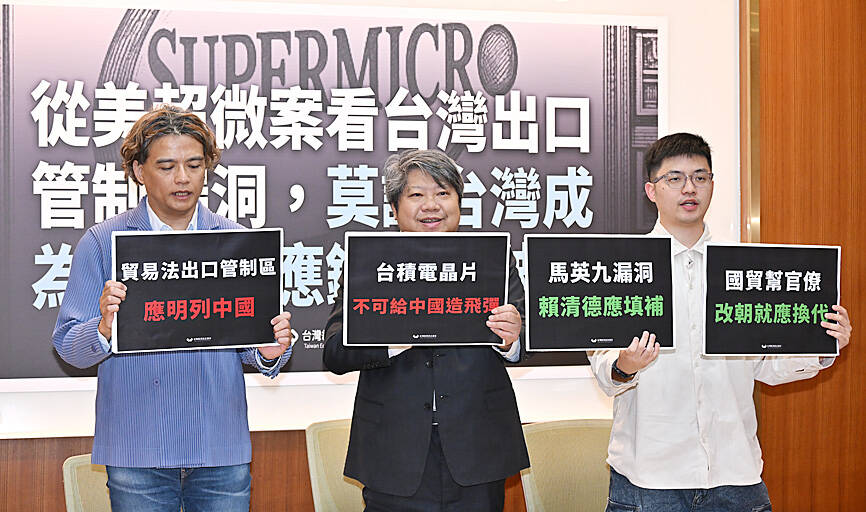
Photo: Liu Hsin-de, Taipei Times
From there, they were allegedly routed through multiple intermediaries and ultimately delivered to China, he said.
Transactions recorded since 2024 have exceeded US$2.5 billion, he added.
“Advanced chips such as H100, H200 and B200 would help China expand its [artificial intelligence] AI industry and hurt Taiwan’s competitiveness in this sector. They could also be used to empower the Chinese military and threaten Taiwan. However, relevant agencies in Taiwan appeared to have been weak in rectifying the situation,” Huang said.
Taiwan Economic Democracy Union convener Lai Chung-chiang (賴中強) said that the government is in an awkward position, as the people involved are Taiwanese and the case occurred in Taiwan.
“Ministry of Economic Affairs officials and prosecutors did nothing to address the problem and cannot do anything about it either, as Taiwan has yet to list China as a restricted export-controlled region for high-end chips used by the military and civilians,” Lai said.
Although the three are accused of contravening export control regulations stipulated in the Foreign Trade Act (貿易法), the offense does not constitute criminal behavior and they would only need to pay a fine, Lai said.
Currently, Taiwan only lists Iran, Iraq, North Korea, Sudan and Syria as export-controlled regions for high-end chips.
The Foreign Trade Act classifies advanced chips as a strategic high-technology commodity (SHTC).
However, selling such a commodity is not considered a criminal offense unless it can be proven that the seller knowingly intended them to be used in the development of military weapons, Lai said.
“Compared with the US, Japan, the Netherlands and France, Taiwan does not impose criminal punishment on those illegally exporting chips to China. It is just ridiculous,” he said.
Loopholes in the chip export regulations were created during the administration of former president Ma Ying-jeou (馬英九), when the Ministry of Economic Affairs issued an administrative order removing China from the list of the export-controlled regions for SHTC, Lai said.
President William Lai’s (賴清德) administration should tackle this issue by listing China as an export-controlled region, he said.
“What happened at Super Micro could make other countries question Taiwan’s capability in controlling the exports of high-end chips to China. To avoid undermining Taiwan’s status in democratic high-tech supply chains as well as trust from our allies, the Executive Yuan and economic ministry should amend the regulations and explain the government’s position on the case,” Lai Chung-chiang said.
Those contravening the US’ Export Control Reform Act face up to 20 years imprisonment, while those in Japan face up to 10 years in prison, he said.

Starbucks Taiwan’s decision to charge for drink customization, which had been free, has sparked consumer backlash, highlighting the challenge of raising prices without making customers feel they are losing value, experts said. Since Oct. 12, customers who order drinks with less or no ice and ask to have the volume topped up with milk or other liquid have been charged an additional NT$15. Topping off drinks without ice was previously free, and disgruntled customers posted photos on social media showing that iced drinks ordered without ice were only half full if the extra NT$15 was not paid. The posts drew tens of thousands
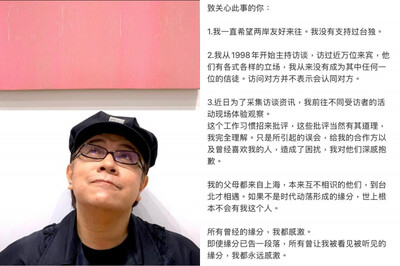
EXPLANATION: Tsai said he attended events featuring various interviewees to observe them firsthand as part of his interview research Television host Kevin Tsai (蔡康永) last night broke his silence over a controversy surrounding his appearance at a campaign event for Democratic Progressive Party Taipei mayoral candidate Puma Shen (沈伯洋), saying he had never supported Taiwan independence. “I have always hoped for friendly cross-strait relations. I have never supported Taiwan independence,” Tsai wrote in a post on the Chinese social media platform Sina Weibo. Tsai, who has hosted television shows in China, attended the opening of Shen’s campaign headquarters on Oct. 4, drawing criticism from Chinese social media users and prompting some Chinese companies to distance themselves from him. China’s Taiwan Affairs Office

Major department stores across Taiwan, including Taipei 101, Shin Kong Mitsukoshi, Far Eastern SOGO, Breeze and Honhui Plaza, are closed today due to Typhoon Champi, while major supermarkets remain open. Taipei 101 said its shopping mall, observatory and restaurants on higher floors are closed for the day, with future hours to be adjusted based on the storm's status. Shin Kong Mitsukoshi has closed all 16 of its branches nationwide, as well as its Taipei Railway Station mall and SKM Park Outlets in Kaohsiung. Far Eastern SOGO said it has closed all of its branches nationwide, including Garden City in Taipei, citing the safety
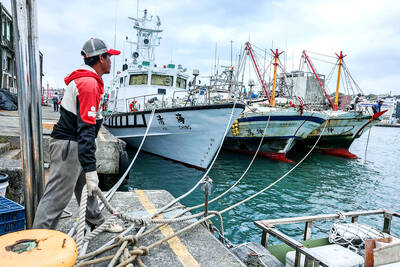
DOUBLE-CHECK: Mandarin Airlines said that it would adjust its schedule according to weather conditions, while high-speed rail services are to remain undisrupted Airlines, ferry services, railways and national parks announced cancelations and closures yesterday, as Typhoon Champi bore down on Taiwan. The Central Weather Administration yesterday issued land warnings for most of Taiwan proper, as Champi is forecast to come closest to the nation today. Taiwan Railway Corp (TRC) has canceled all express trains on its western and eastern trunk lines today, while the high-speed rail system would continue to operate normally. For non-reserved TRC services, trains on the Coast Line, Chengzhui Line, Yilan Line and North Link Line are fully suspended. Services between Hualien and Taitung counties, as well as other unsuspended routes, would operate


 RSS
RSS