


A key figure behind Taiwan-Vietnam literary exchanges said he hopes mutual understanding can be reinforced through "people-to-people diplomacy," as Taiwan marked Taiwanese Poetry Day on Saturday with an event promoting literary dialogue.
Taiwanese Poetry Day was established to commemorate the death of Ong Iok-lim (王育霖), a Tainan-born poet and prosecutor who was killed during the 228 Incident in 1947. This year's event was held along with the Taiwan-Vietnam Literary Festival at National Cheng Kung University (NCKU) in Tainan.
The gathering brought together more than a dozen Taiwanese writers and five Vietnamese academics to discuss Taiwan's history and culture, and featured poetry readings in Hoklo (commonly known as Taiwanese) and Vietnamese.
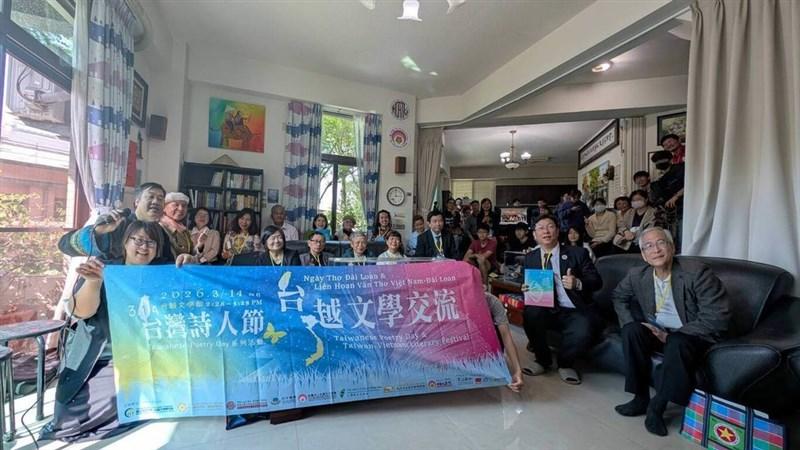
Photo courtesy of Chiung Wi-vun via CNA
Such interactions help foster closer ties outside official channels, Chiung Wi-vun (蔣為文), director of the Center for Vietnamese Studies at NCKU, said in a telephone interview.
Non-governmental diplomacy is essential because official exchanges often face pressure from China, while civil-level cultural activities allow participants to speak about Taiwan more freely, he said.
Chiung said that he helped establish the Association for Taiwanese and Vietnamese Cultural Exchange in 2009 after observing that exchanges between the two sides largely focused on trade, with limited opportunities for deeper cultural engagement.
Since then, writers, academics and students have taken part in visits, seminars and workshops, while native Taiwanese works have been translated into Vietnamese and modern Vietnamese literature has been translated into Mandarin and Hoklo, he said.
The exchanges have also drawn attention in Vietnam.
Poet Tran Dang Khoa has written about his experiences in Taiwan, helping introduce the nation to a wider Vietnamese audience, Chiung said.
Among the visiting writers at this year's event was Kieu Bich Hau of the Vietnam Writers' Association.
She said that learning about Taiwan's White Terror period — an era of political repression from 1949 to 1992 — resonated with Vietnam's own colonial history.
After hearing about poet Lin Tsung-yuan (林宗源), who insisted on writing in Hoklo despite restrictions during the authoritarian era, Kieu said she wrote a poem titled White Terror in tribute.
While she previously knew Taiwan mainly as a travel destination, literary exchanges helped her better understand its history and its people's pursuit of democracy and freedom, she said.
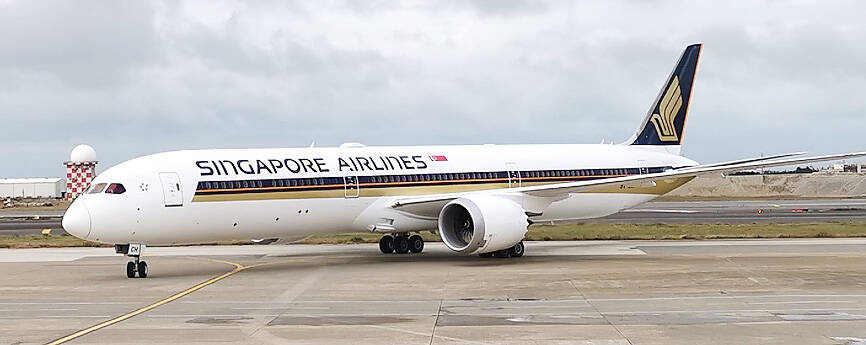
INCREASED CAPACITY: The flights on Mondays, Wednesdays, Fridays and Sundays would leave Singapore in the morning and Taipei in the afternoon Singapore Airlines is adding four supplementary flights to Taipei per week until May to meet increased tourist and business travel demand, the carrier said on Friday. The addition would raise the number of weekly flights it operates to Taipei to 18, Singapore Airlines Taiwan general manager Timothy Ouyang (歐陽漢源) said. The airline has recorded a steady rise in tourist and business travel to and from Taipei, and aims to provide more flexible travel arrangements for passengers, said Ouyang, who assumed the post in July last year. From now until Saturday next week, four additional flights would depart from Singapore on Monday, Wednesday, Friday
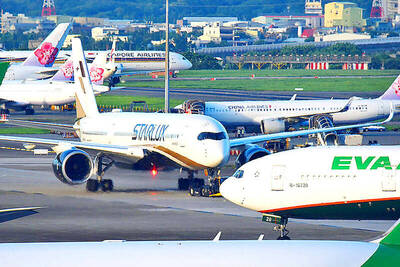
Taiwan’s three major international carriers are increasing booking fees, with EVA Airways having already increased the charge to US$28 per flight segment from US$25, while China Airlines (CAL) and Starlux Airlines are set to follow suit. Booking fees are charged by airlines through a global distribution system (GDS) and passed on to passengers. Carriers that apply the fees include CAL, EVA, Starlux and Tigerair Taiwan. A GDS is a computerized network operated by a company that connects airlines with travel agents and ticketing platforms, allowing reservations to be made and processed in real time. Major players include Amadeus, Sabre and Travelport. EVA Air began
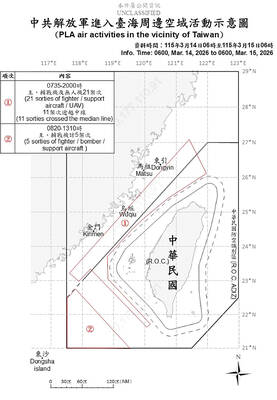
The Ministry of National Defense yesterday reported the return of large-scale Chinese air force activities after their unexplained absence for more than two weeks, which had prompted speculation regarding Beijing’s motives. China usually sends fighter jets, drones and other military aircraft around the nation on a daily basis. Interruptions to such routine are generally caused by bad weather. The Ministry of National Defense said it had detected 26 Chinese military aircraft in the Taiwan Strait over the previous 24 hours. It last reported that many aircraft on Feb. 25, when it spotted 30 aircraft, saying Beijing was carrying out another “joint combat
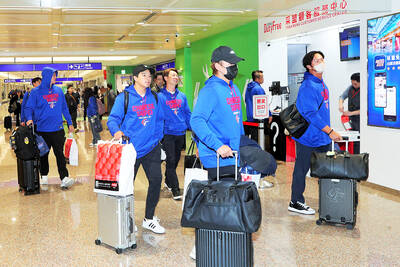
WATCH FOR HITCHHIKERS: The CDC warned those returning home from Japan to be alert for any contagious diseases that might have come back with them People who have returned from Japan following the World Baseball Classic (WBC) games during the weekend are recommended to watch for symptoms of infectious gastroenteritis, flu and measles for two weeks, the Centers for Disease Control (CDC) said. Flu viruses remain the most common respiratory pathogen in Taiwan in the past four weeks and the influenza B virus accounted for 55.7 percent of the tested cases, exceeding the percentage of influenza A (H3N2) infections and becoming the local dominant strain, CDC Epidemic Intelligence Center Deputy Director Lee Chia-lin (李佳琳) said at a news conference on Tuesday. There were 82,187 hospital visits for


 RSS
RSS