


Burning substandard incense containing lead-based pigments risks raising blood lead levels, doctors warned.
Paying respects to ancestors and praying for blessing at temples are traditional Lunar New Year activities, but using incense that is not domestically certified or not sourced from a reputable supplier significantly increases the risk of lead poisoning, especially among vulnerable groups such as children, said Yang Chen-chang (楊振昌), director of occupational medicine and clinical toxicology at the Taipei Veterans General Hospital.
Asia University Hospital nephrologist Lin Hsuan-jen (林軒任) in a recent Facebook post cited as an example a 65-year-old woman, who had long been burning poor-quality incense.
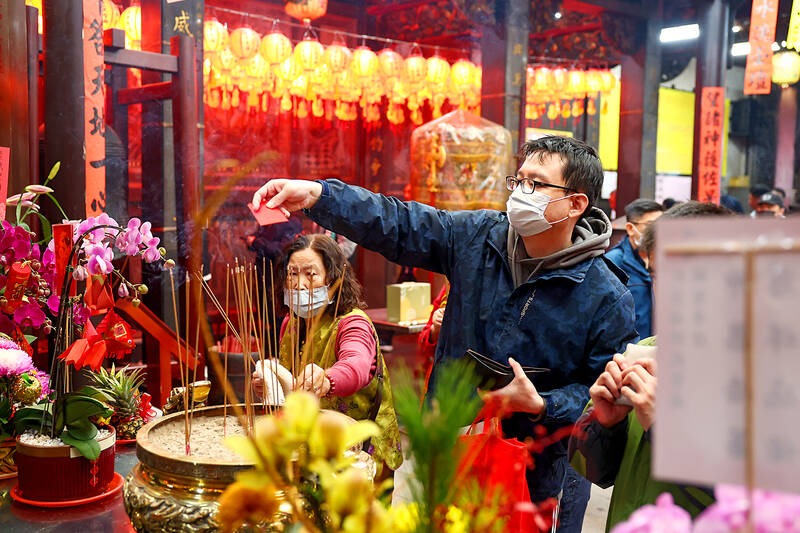
Photo: CNA
She and her family across three generations were found to have lead poisoning, Lin said.
The woman sought medical attention for severe anemia, leg edema, unexplained pain in her bones and abdomen, and shortness of breath, he said.
A preliminary examination showed that her hemoglobin levels were down to 5.8g per deciliter, which was initially considered a symptom of malnutrition, but further blood tests showed that her blood lead levels were at a surprisingly high 59 micrograms per deciliter (mcg/dL), he said.
An investigation found that the woman used to burn lead-containing incense at home, Lin said, adding that her husband, son, daughter-in-law and four grandchildren all had extremely high levels of lead in their blood, ranging from 30mcg/dL to more than 80mcg/dL.
Studies have found that children from families that frequently burn incense had slightly higher blood lead levels than their peers, but not to the extent of lead poisoning, Yang said, adding that lead poisoning caused purely by burning incense was rare.
What is of more concern is the use of substandard incense with more lead-based pigments, he said.
Lead-containing incense produce fine dust or suspended particulate matter when burned, which might be inhaled or consumed through hand-to-mouth contact, such as when people touch incense residue and then eat food without washing their hands first, Yang said.
Given that children’s lead absorption rate is about 40 to 50 percent, much higher than adults’ 10 to 15 percent, the same amount of lead exposure would adversely impact children more than adults, he said.
Measuring lead levels through blood tests is the most straightforward way to find out whether a person is at risk of lead poisoning, he said.
Although the US Centers for Disease Control and Prevention’s blood lead reference value has been lowered to 3.5mcg/dL, blood lead levels have no safe range, with “the lower, the better,” Yang said.
Acute lead poisoning symptoms include abdominal cramps, anemia or limb weakness, and could affect the nervous system in serious cases, which requires chelation therapy once diagnosed, he added.
People should avoid burning incense unless necessary, he said.
Those who frequently burn incense for religious reasons should also reduce incense amounts and enhance ventilation, and people should wash their hands after touching incense and before eating, as well as refrain from using unreliable products, he added.

The Ministry of Finance this afternoon announced the winning numbers for the March-April uniform invoice lottery. The winning number for the NT$10 million (US$318,060) special prize is 19531471, and the winning number for the NT$2 million grand prize is 85941329. Three numbers were drawn for the NT$200,000 first prize: 07225810, 20231230 and 83518781. Those with receipts matching the last seven digits of any of the first-prize numbers will win the NT$40,000 second prize, while those matching the last six digits will win the NT$10,000 third prize. Those whose receipts match the last five digits of the first-prize numbers can claim the NT$4,000 fourth prize,

NATIONAL SECURITY: Authorities are working to confirm the identities of the military personnel involved and investigating possible illegal conduct and regulatory violations Authorities are probing possible national security implications after Kinmen police and immigration officers on Sunday found a Chinese woman allegedly posing as a tourist while engaging in prostitution involving more than 10 military personnel. The woman, surnamed Chen (陳), has since been deported, authorities said, adding that investigators are still working to confirm the identities of those implicated, as the records only listed code names and aliases. The case stemmed from a report received by the Kinmen District Prosecutors’ Office on Friday last week from the Jinhu Precinct of the Kinmen County Police Bureau. On Sunday, police, along with the National Immigration
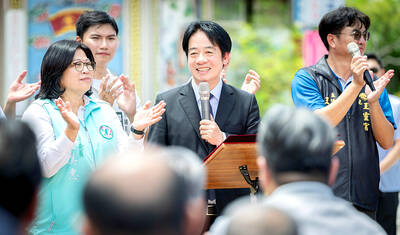
SIX SUBSIDIES: The monthly allowance for older farmers is to increase to NT$10,000, and NT$5,000 is to be given to homemakers under the national pension system, Lai said The government is to implement major welfare policies for disadvantaged groups, including raising the monthly allowance for older farmers to NT$10,000 and providing homemakers with NT$5,000 per month, President William Lai (賴清德) said yesterday. Lai made the remarks during a visit to Wangling Temple in Chiayi County, saying that the planned increases were being introduced amid economic growth and an increase in tax revenue. Touting a policy, in which the government plans to provide a monthly allowance of NT$5,000 for every child under the age of 18 in a bid to address Taiwan’s low birthrate, Lai said that if received for the
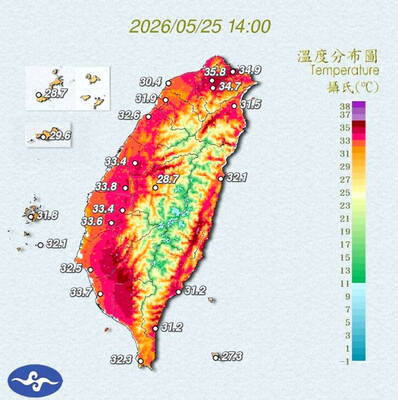
STAY COOL: The HPA recommended that people stay hydrated, use air-conditioning or fans while indoors, wear loose-fitting clothes and walk in the shade while outdoors Employers must implement measures such as installing cooling equipment, and providing drinking water and rest breaks for outdoor workers starting from Monday next week, the Taipei Department of Labor said on Sunday. Employers who fail to comply could face fines of NT$30,000 to NT$300,000 under the Occupational Safety and Health Act (職業安全衛生法), the department said. Businesses in Taipei employing fewer than 100 workers, as well as registered self-employed workers with labor insurance coverage, could receive on-site assessments and guidance from occupational safety consultants to help them apply for central government subsidies to implement or improve heat-protection measures, it said. Under the Ministry of


 RSS
RSS