


China’s digital authoritarian model has reached its limit and is now trapped in a loop, the Mainland Affairs Council (MAC) said in the latest issue of its quarterly publication on the situation in China (大陸情勢季報).
The classification by Chinese authorities of actor Alan Yu’s (于朦朧) death after falling from a building in Beijing on Sept. 11 as an “accidental fall after drinking” drew widespread skepticism, which is indicative of the cracks forming in its digital authoritarian model, the MAC said.
Audio and video posted online that were purportedly recorded during the incident, as well as rumors linking the actor to Cai Qi (蔡奇), a member of the Chinese Communist Party’s (CCP) Central Politburo Standing Committee, prompted a flurry of speculation, the report said.

Photo: Screen grab from social media
Chinese authorities immediately initiated “stability maintenance” measures, deleting information and posts, and prohibiting further inquiries into the matter, it said.
The Cyberspace Administration of China summoned executives from social media platforms including Sina Weibo, Kuaishou and Douyin, the report said.
The agency fined the companies, ordered them to strictly manage trending topics and set a deadline to rectify the situation to ensure a “clear and bright cyberspace,” the MAC said.
China’s entertainment industry lacks autonomy, as artists can rapidly rise to stardom or be stripped of their influence by political players, the report said.
The reaction to Yu’s death has highlighted how the CCP’s attempts to stifle speech have backfired, with strict censorship only fueling the rapid dissemination of rumors, exposing persistent vulnerabilities in the digital authoritarian framework, it said.
In similar cases, police bureaus have rushed to close investigations and forbidden further probes, leading to a loss of trust in official reports among the Chinese public, it said.
The CCP is caught in a feedback loop — the stricter the censorship, the more prevalent the rumors, it said, paraphrasing a Sept. 30 article in Foreign Policy magazine — “The Chinese public is obsessing over a perceived celebrity cover-up,” by Kevin Hsu, a researcher at the Massachusetts Institute of Technology.
“Censors are so reactive that stories can be buried for any number of reasons... Sometimes, the censorship itself becomes the story, sparking any number of conspiracies to explain why the news is being covered up,” Hsu wrote.
Many commenters on the Yu situation, as well as other censored issues, are bypassing Beijing’s controls by posting on social media platforms outside China, the MAC said, adding that some have organized protests in other countries to demand that the truth be reported, which has prompted reporting in international media.
The CCP’s digital authoritarianism is facing a severe resource strain and it is struggling to cover every front at once, the MAC said, adding that the same sort of situation is arising over its suppression of protests.
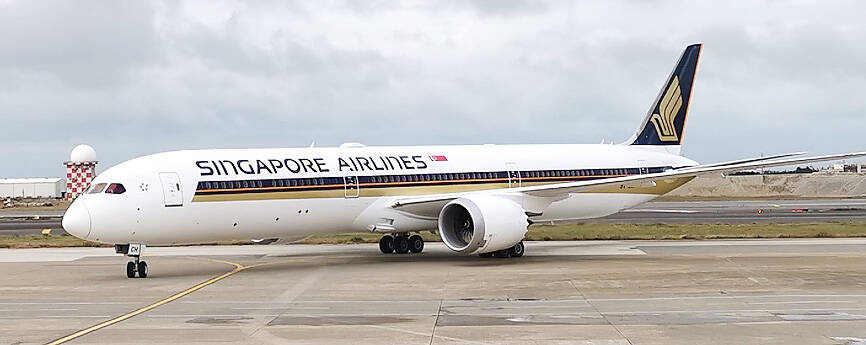
INCREASED CAPACITY: The flights on Mondays, Wednesdays, Fridays and Sundays would leave Singapore in the morning and Taipei in the afternoon Singapore Airlines is adding four supplementary flights to Taipei per week until May to meet increased tourist and business travel demand, the carrier said on Friday. The addition would raise the number of weekly flights it operates to Taipei to 18, Singapore Airlines Taiwan general manager Timothy Ouyang (歐陽漢源) said. The airline has recorded a steady rise in tourist and business travel to and from Taipei, and aims to provide more flexible travel arrangements for passengers, said Ouyang, who assumed the post in July last year. From now until Saturday next week, four additional flights would depart from Singapore on Monday, Wednesday, Friday

Taiwan’s three major international carriers are increasing booking fees, with EVA Airways having already increased the charge to US$28 per flight segment from US$25, while China Airlines (CAL) and Starlux Airlines are set to follow suit. Booking fees are charged by airlines through a global distribution system (GDS) and passed on to passengers. Carriers that apply the fees include CAL, EVA, Starlux and Tigerair Taiwan. A GDS is a computerized network operated by a company that connects airlines with travel agents and ticketing platforms, allowing reservations to be made and processed in real time. Major players include Amadeus, Sabre and Travelport. EVA Air began

WATCH FOR HITCHHIKERS: The CDC warned those returning home from Japan to be alert for any contagious diseases that might have come back with them People who have returned from Japan following the World Baseball Classic (WBC) games during the weekend are recommended to watch for symptoms of infectious gastroenteritis, flu and measles for two weeks, the Centers for Disease Control (CDC) said. Flu viruses remain the most common respiratory pathogen in Taiwan in the past four weeks and the influenza B virus accounted for 55.7 percent of the tested cases, exceeding the percentage of influenza A (H3N2) infections and becoming the local dominant strain, CDC Epidemic Intelligence Center Deputy Director Lee Chia-lin (李佳琳) said at a news conference on Tuesday. There were 82,187 hospital visits for

Alumni from Japan’s Kyoto Tachibana Senior High School marching band, widely known as the “Orange Devils,” staged a flash mob performance at the Grand Hotel in Taipei yesterday to thank Taiwan for its support after the Great East Japan Earthquake. The show, performed on the earthquake’s 15th anniversary, drew more than 100 spectators, some of whom arrived two hours before the show to secure a good viewing spot. The 26-member group played selections from “High School Musical,” “Beauty and the Beast,” and their signature piece “Sing Sing Sing” and shouted “I love


 RSS
RSS