


The Central Election Commission (CEC) yesterday announced campaigning prohibitions starting from midnight tonight in the lead-up to tomorrow’s recall referendums.
The announcement came at a news conference to remind the public of voting laws as polls are to open across Taiwan to decide the fate of 24 lawmakers from the Chinese Nationalist Party (KMT), as well as suspended Hsinchu mayor Ann Kao (高虹安) of the Taiwan People's Party.
Voters should remember to bring their national ID card, personal seal and voting notice to their designated polling station, Central Election Committee Deputy Chairman Chen Chao-chien (陳朝建) said.
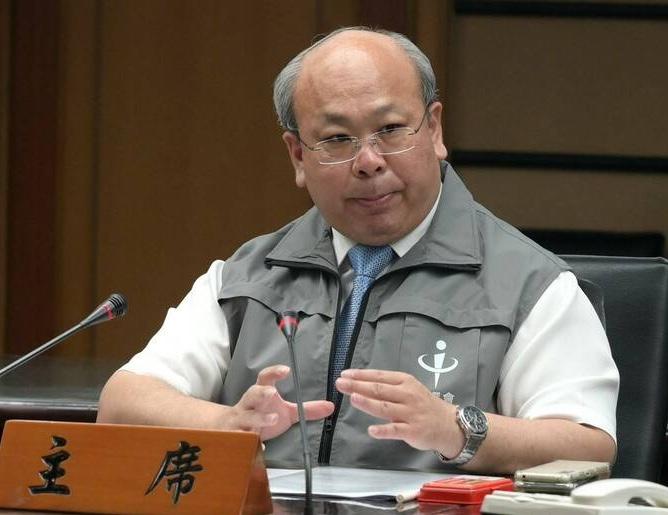
Photo: Wang Yi-sung, Taipei Times
The five major restrictions are: a ban on campaigning, including on social media; noise or disturbances around polling stations; bringing recording equipment into the polling booth; tearing up ballots and taking the ballot out of the polling station.
For anybody who campaigns after midnight tonight, the penalty is between NT$100,000 to NT$1 million (US$3,397 to US$33,977), doubled for those working on behalf of candidates or campaigns, Chen said.
Those who disturb the area around a polling booth or seek to persuade people to vote a certain way can be sentenced to up to a year in prison or receive a fine of up to NT$15,000, Chen added.
Those who record the inside of the polling booth can face fines of between NT$30,000 to NT$300,000, he added.
The penalty for tearing or destroying ballots is between NT$5,000 and NT$50,000, while carrying them out of the voting location would result in a fine of up to NT$15,000 or one year in prison, Chen said.
Neither the pro-recall side or the anti-recall side are allowed to encourage the public to vote actively, Chen said, adding that any reports would be investigated.
Responding to online rumors about voters bringing their own ink pads and selection tools, the CEC said those rumors were false and that not only would their use invalidate the ballot, but refusal to follow instructions could see violators punished for contravening the Public officials Election And Recall Act (公職人員選舉罷免法).
Regarding online rumors that some polling locations were moved to remote areas, Premier Cho Jung-tai (卓榮泰) today said that the CEC has asked local election committees to provide explanations as to why the changes were made.
There should be no further changes, he added.
The location of polling stations is managed by local entities, Chen said.
Some change is normal between elections, but the CEC has taken measures to promote new locations such as radio and social media advertisements, and assigning personnel to redirect voters from old voting sites to the new ones, he added.
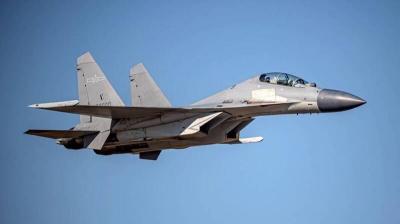
Eight Chinese naval vessels and 24 military aircraft were detected crossing the median line of the Taiwan Strait between 6am yesterday and 6am today, the Ministry of National Defense said this morning. The aircraft entered Taiwan’s northern, central, southwestern and eastern air defense identification zones, the ministry said. The armed forces responded with mission aircraft, naval vessels and shore-based missile systems to closely monitor the situation, it added. Eight naval vessels, one official ship and 36 aircraft sorties were spotted in total, the ministry said.
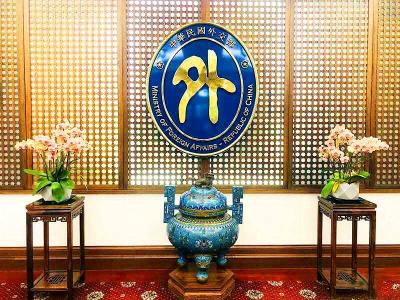
The Ministry of Foreign Affairs (MOFA) today said that if South Korea does not reply appropriately to its request to correct Taiwan’s name on its e-Arrival card system before March 31, it would take corresponding measures to alter how South Korea is labeled on the online Taiwan Arrival Card system. South Korea’s e-Arrival card system lists Taiwan as “China (Taiwan)” in the “point of departure” and “next destination” fields. The ministry said that it changed the nationality for South Koreans on Taiwan’s Alien Resident Certificates from “Korea” to “South Korea” on March 1, in a gesture of goodwill and based on the

Taiwanese officials were shown the first of 66 F-16V fighter jets purchased by Taiwan from the United States, the Ministry of National Defense said yesterday, adding the aircraft has completed an initial flight test and is expected to be delivered later this year. A delegation led by Deputy Minister of National Defense Hsu Szu-chien (徐斯儉) visited Lockheed Martin’s F-16 C/D Block 70 (also known as F-16V) assembly line in South Carolina on March 16 to view the aircraft. The jet will undergo a final acceptance flight in the US before being delivered to Taiwan, the
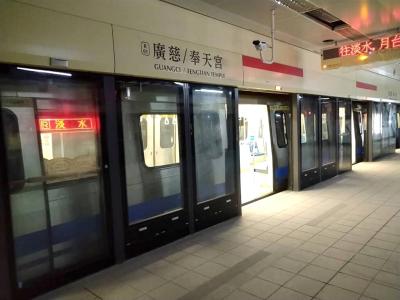
The New Taipei Metro's Sanyin Line and the eastern extension of the Taipei Metro's Tamsui-Xinyi Line (Red Line) are scheduled to begin operations in June, the National Development Council said today. The Red Line, which terminates at Xiangshan Station, would be connected by the 1.4km extension to a new eastern terminal, Guangci/Fengtian Temple Station, while the Sanyin Line would link New Taipei City's Tucheng and Yingge stations via Sanxia District (三峽). The council gave the updates at a council meeting reviewing progress on public construction projects for this year. Taiwan's annual public infrastructure budget would remain at NT$800 billion (US$25.08 billion), with NT$97.3


 RSS
RSS