


The government needs a multipronged approach to dealing with rising temperatures based on the needs of different groups, and should also increase tree shade coverage in highly populated urban areas, academics said on Sunday.
The Ministry of Environment is today to announce the establishment of the High Temperature Response Alliance, along with action plans and criteria to address rising temperatures in fields such as healthcare, labor, transportation, education, sports, agriculture, forestry, fishery and animal husbandry.
National Cheng Kung University architecture professor Lin Tzu-ping (林子平) said the government’s plans should be diverse and based on the influence of high temperatures on economic productivity and people’s lives in different fields.
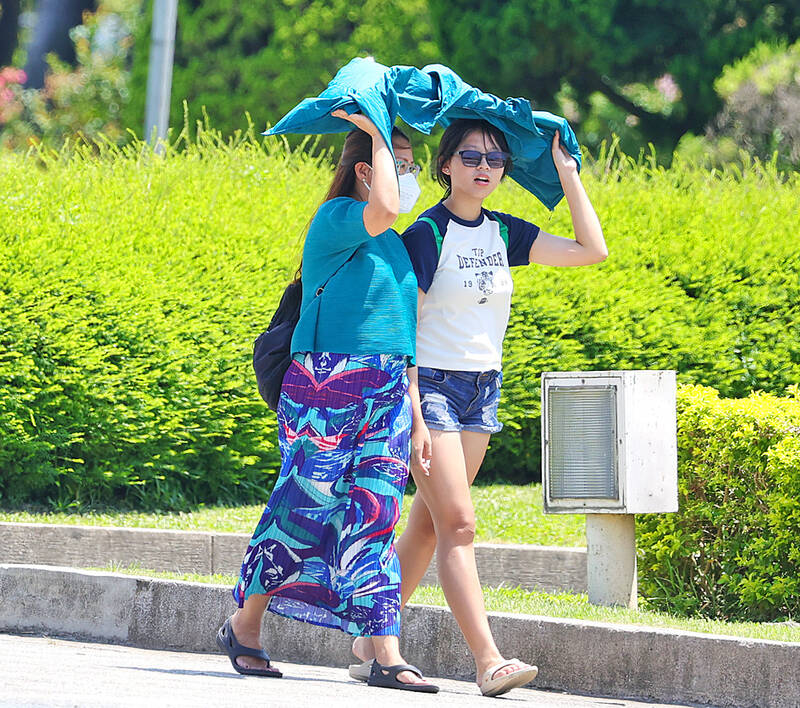
Photo: CNA
“Setting criteria is difficult,” he said, pointing to the differences between “heat warnings” and “adaptive actions.”
Heat warnings are based on established meteorological parameters, including temperatures and humidity, he said.
For example, the Central Weather Administration has stipulated 36°C as a high-temperature threshold, so a “yellow warning” would be issued if temperatures rise above that threshold.
On the other hand, adaptive actions require parameters to be created differentially to properly address issues in different fields, Lin said.
The feeling and effects of high temperatures on students, indoor and outdoor workers, animals and ecosystems are not all the same, he said.
For example, animal husbandry could need high air temperature rules to prevent heat stress, which could reduce the milk yield from dairy cows, while the guidelines for fisheries might be based on marine or fish farm temperatures, he said.
Adaptive actions should not be taken without answering the questions “who to protect in what activities?” and “what heat risks are they facing?” he added.
Lin suggested formulating adaptive actions by following a three-step model.
First, the authorities should identify the places that have reached the highest temperatures and the groups that are the most susceptible to heat based on historical climate data, he said.
Next, they should conduct real-time monitoring to understand the locations and intensity of heat risks, he said.
Finally, the authorities can anticipate the regions likely to face heat hazards based on data analysis and climate simulations, he said.
Lin advised against a uniform high-temperature policy, adding that various protective measures would be better as the degree of heat exposure varies widely with each individual.
The Ministry of Labor has promulgated guidelines on preventing heat hazards for outdoor workers under high temperatures, which were tailored to outdoor workers’ situations, he said.
Other people with distinctive needs, such as students, or special situations such as melted tarmac on airport runways or train rail buckling, also required responsible agencies to set heat response guidelines, Lin said.
Many laws, such as restrictions on the floor area ratio or building coverage ratio of terraces, street porticos or school facilities stipulated by architectural regulations, might become obstacles to climate adaption actions such as providing sun shades or green space, he said, urging the government to amend such laws.
Meanwhile, the ministry is to publish a digital “cool map” next month, which would show areas where people could avoid high outdoor temperatures.
However, an academic cautioned that the cool map should be more than “a map of air-conditioned spots.”
Simply providing more air-conditioned space without introducing anti-heat measures might deprive young people of the ability to adapt to high temperatures and the opportunity to engage in outdoor activities, they said.
The government should increase shade coverage using trees, especially in highly populated urban areas to encourage people to go outside, the academic said.

The military has spotted two Chinese warships operating in waters near Penghu County in the Taiwan Strait and sent its own naval and air forces to monitor the vessels, the Ministry of National Defense (MND) said. Beijing sends warships and warplanes into the waters and skies around Taiwan on an almost daily basis, drawing condemnation from Taipei. While the ministry offers daily updates on the locations of Chinese military aircraft, it only rarely gives details of where Chinese warships are operating, generally only when it detects aircraft carriers, as happened last week. A Chinese destroyer and a frigate entered waters to the southwest
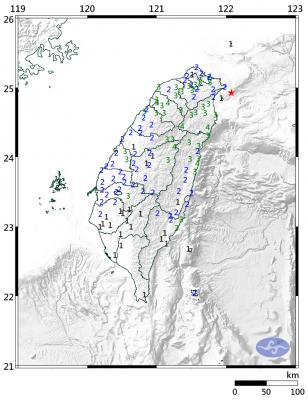
A magnitude 6.1 earthquake struck off the coast of Yilan County at 8:39pm tonight, the Central Weather Administration (CWA) said, with no immediate reports of damage or injuries. The epicenter was 38.7km east-northeast of Yilan County Hall at a focal depth of 98.3km, the CWA’s Seismological Center said. The quake’s maximum intensity, which gauges the actual physical effect of a seismic event, was a level 4 on Taiwan’s 7-tier intensity scale, the center said. That intensity level was recorded in Yilan County’s Nanao Township (南澳), Hsinchu County’s Guansi Township (關西), Nantou County’s Hehuanshan (合歡山) and Hualien County’s Yanliao (鹽寮). An intensity of 3 was

Japanese Prime Minister Sanae Takaichi’s comment last year on Tokyo’s potential reaction to a Taiwan-China conflict has forced Beijing to rewrite its invasion plans, a retired Japanese general said. Takaichi told the Diet on Nov. 7 last year that a Chinese naval blockade or military attack on Taiwan could constitute a “survival-threatening situation” for Japan, potentially allowing Tokyo to exercise its right to collective self-defense. Former Japan Ground Self-Defense Force general Kiyofumi Ogawa said in a recent speech that the remark has been interpreted as meaning Japan could intervene in the early stages of a Taiwan Strait conflict, undermining China’s previous assumptions
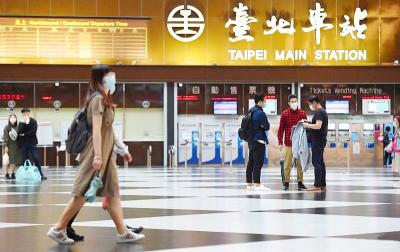
Taiwan Railways Corp (TRC) today announced that Shin Kong Mitsukoshi has been selected as the preferred bidder to operate the Taipei Railway Station shopping mall, replacing the current operator, Breeze Development Co Ltd. Among eight qualified firms that delivered presentations and were evaluated by a review committee, Shin Kong Mitsukoshi was ranked first, while Breeze was named the runner-up, the rail company said in a statement. Contract negotiations are to proceed in accordance with regulations, it said, adding that if negotiations with the top bidder fail, it could invite the second-ranked applicant to enter talks. Breeze in a statement today expressed doubts over


 RSS
RSS