


A Taiwan delegation would depart for the World Health Assembly (WHA) in Geneva, Switzerland on Friday evening next week, Minister of Health and Welfare Chiu Tai-yuan (邱泰源) said today.
The WHA’s 78th annual assembly is to be held from May 19 to May 27.
Taiwan has not received an official invitation, as with the previous eight years, and instead would send a WHA Action Team, led by Chiu, that would adopt a “half protest, half appeal” stance this year to advocate for Taiwan’s full participation in future assemblies, he said.
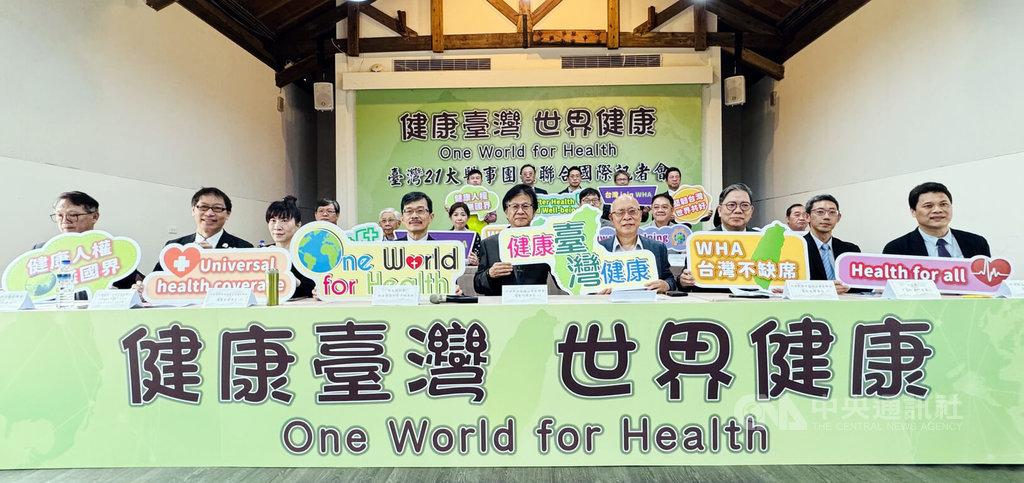
Photo: CNA
This year also saw a 60-percent cut to the Ministry of Health and Welfare’s overseas travel budget, which would reduce the WHA Action Team by about one-third to 20 members, he added.
The delegation would proceed as with previous years to actively engage with like-minded countries and ensure Taiwan has a visible and active presence on the international stage, he said.
Twenty-one medical associations representing over 500,000 medical professionals today held a media conference titled “One World for Health” to urge the World Health Organization (WHO) and the international community to allow Taiwan to officially participate in global health affairs.
The associations said that countries around the world must work together to face global issues including climate change, new strains of infectious disease, chronic diseases and the effects of aging populations.
Taiwan’s exclusion from the WHA contradicts the WHO’s goal of “One World for Health,” they said.
US President Donald Trump in January signed an executive order to withdraw the US from the WHO.
When asked if US withdrawal could affect the WHA, Director of the Department of Health’s Bureau of International Cooperation Shih Chin-shui (施金水) said in an interview ahead of the conference that the US was just one of 194 countries within the WHO.
Though it would have a significant impact on finances, manpower and ongoing programs, the WHA would still assemble as it does every year to discuss critical issues, he said.
The main focus of the WHA is expected to be the Pandemic Agreement, he added.
The Pandemic Agreement is a proposed international accord to strengthen pandemic prevention, preparedness and response, which reached a consensus by WHO member states last month following two and a half years of negotiations.
Last year, the WHO published the Global Health Strategy for 2025-2028 which aimed to increase health coverage worldwide, though Taiwan has “already achieved what many countries are only just setting out to achieve,” Taiwan Medical Association chairman Chou Ching-ming (周慶明) said.
Taiwan has had a National Health Insurance system for 30 years, which boasts a 99.9-percent coverage rate and public satisfaction rate of over 90 percent, eliminating the cycle of health-based poverty, an important global health achievement, he said.
Since the COVID-19 pandemic, Taiwan has also offered international humanitarian aid and continued to contribute to world health, he added.
Taiwan’s medical professionals therefore cannot be sidelined from international academia and blocked from collaborating with other global players, he said.
In this critical moment in world affairs, transparent information sharing and global cooperation is key, and Taiwan’s experience and capabilities cannot be overlooked, he said.
The global medical community has consistently shown support for Taiwan, he added.
The World Medical Association, which represents millions of doctors worldwide, has recently sent another letter to WHO Director-general Tedros Adhanom Ghebreyesus to reiterate the importance of Taiwan joining the WHA and similar international health organizations.

The military has spotted two Chinese warships operating in waters near Penghu County in the Taiwan Strait and sent its own naval and air forces to monitor the vessels, the Ministry of National Defense (MND) said. Beijing sends warships and warplanes into the waters and skies around Taiwan on an almost daily basis, drawing condemnation from Taipei. While the ministry offers daily updates on the locations of Chinese military aircraft, it only rarely gives details of where Chinese warships are operating, generally only when it detects aircraft carriers, as happened last week. A Chinese destroyer and a frigate entered waters to the southwest

A magnitude 6.1 earthquake struck off the coast of Yilan County at 8:39pm tonight, the Central Weather Administration (CWA) said, with no immediate reports of damage or injuries. The epicenter was 38.7km east-northeast of Yilan County Hall at a focal depth of 98.3km, the CWA’s Seismological Center said. The quake’s maximum intensity, which gauges the actual physical effect of a seismic event, was a level 4 on Taiwan’s 7-tier intensity scale, the center said. That intensity level was recorded in Yilan County’s Nanao Township (南澳), Hsinchu County’s Guansi Township (關西), Nantou County’s Hehuanshan (合歡山) and Hualien County’s Yanliao (鹽寮). An intensity of 3 was

Japanese Prime Minister Sanae Takaichi’s comment last year on Tokyo’s potential reaction to a Taiwan-China conflict has forced Beijing to rewrite its invasion plans, a retired Japanese general said. Takaichi told the Diet on Nov. 7 last year that a Chinese naval blockade or military attack on Taiwan could constitute a “survival-threatening situation” for Japan, potentially allowing Tokyo to exercise its right to collective self-defense. Former Japan Ground Self-Defense Force general Kiyofumi Ogawa said in a recent speech that the remark has been interpreted as meaning Japan could intervene in the early stages of a Taiwan Strait conflict, undermining China’s previous assumptions
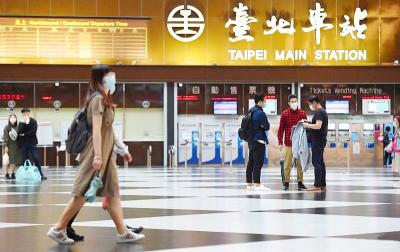
Taiwan Railways Corp (TRC) today announced that Shin Kong Mitsukoshi has been selected as the preferred bidder to operate the Taipei Railway Station shopping mall, replacing the current operator, Breeze Development Co Ltd. Among eight qualified firms that delivered presentations and were evaluated by a review committee, Shin Kong Mitsukoshi was ranked first, while Breeze was named the runner-up, the rail company said in a statement. Contract negotiations are to proceed in accordance with regulations, it said, adding that if negotiations with the top bidder fail, it could invite the second-ranked applicant to enter talks. Breeze in a statement today expressed doubts over


 RSS
RSS