


The public is advised to leverage objects at hand, such as bags, long umbrellas, thick jackets or fire extinguishers, to defend themselves against attackers on the MRT, the Taipei City Police Department’s Rapid Transit Division said.
The division’s Inspection Section instructor Lee Hsien-ming (李賢明) said passengers encountering sudden attacks should refrain from trying to defeat an assailant.
They should prioritize defending themselves and staying away from an attacker, he said.
Photo: screen grab from the Web site of the Taipei Police Department’s Rapid Transit Division
In an emergency, a victim could use their own or other people’s items, such as big bags, to shield important body parts from being stabbed, Lee said.
If a weapon is stabbed into the bag, they should continue to defend themselves and step backward instead of moving forward, he said.
Once the doors open, a victim could push an attacker using the bag and let the police and station personnel handle the incident, Lee said.
Most people lack fighting experience, so they should avoid using objects to fight against an attacker, he said.
Defensive materials or tools are aimed to protect important body parts and create distance between a victim and an attacker, Lee said, adding that these objects could be discarded when the victim gets a chance to run away.
Long umbrellas could be used to keep a distance and poke an attacker to reduce the chance of being assaulted, he said.
The J-shaped handle of long umbrellas can be used to interfere with an attacker’s weapon, so that an attacker would be distracted and a victim would be able to flee, Lee said.
However, folding umbrellas should not be used, as their handle is often fragile and hollow, and their foldability might accidentally shorten the distance between an attacker and their victim, which could increase the risk of being stabbed, he said.
People could also fling thick jackets around an attacker’s hand to add a barrier to their movement, create distance and distract an attacker, Lee said.
A victim could take the chance to escape while warning passengers in the car by shouting that “they have got a knife” to help minimize deaths and injuries, he said.
While each car of the MRT train is equipped with fire extinguishers, they are too heavy for people to use as a weapon, Lee said.
However, people could use fire extinguishers to spray dry chemical powder at an attacker from a distance, he said.
People used to ignoring their surroundings while using their phone on the MRT are advised to raise their head and use their phone from a higher position to broaden their vision, so they could notice something amiss, Lee said.
That could lessen the possibility of being hurt and increase their chances of survival, he added.
If a victim is in a crowded car, they are advised to push an attacker, shout “knife” and escape, as people around them would soon disperse following the warning, Lee said, adding that hand-to-hand fighting with an attacker is not advised.
The strategy could prevent a victim from being severely harmed while awaiting assistance, he said.

Actor Darren Wang (王大陸) was sentenced to six months in prison, commutable to a fine, by the New Taipei District Court today for contravening the Personal Data Protection Act (個人資料保護法) in a case linked to an alleged draft-dodging scheme. Wang allegedly paid NT$3.6 million (US$114,380) to an illegal group to help him evade mandatory military service through falsified medical documents, prosecutors said. He transferred the funds to Chen Chih-ming (陳志明), the alleged mastermind of a draft-evasion ring, although he lost contact with him as he was already in detention on fraud charges, they said. Chen is accused of helping a

SECURITY: Starlink owner Elon Musk has taken pro-Beijing positions, and allowing pro-China companies to control Taiwan’s critical infrastructure is risky, a legislator said Starlink was reluctant to offer services in Taiwan because of the nation’s extremely high penetration rates in 4G and 5G services, the Ministry of Digital Affairs said yesterday. The ministry made the comments at a meeting of the legislature’s Transportation Committee, which reviewed amendments to Article 36 of the Telecommunications Management Act (電信管理法). Article 36 bans foreigners from holding more than 49 percent of shares in public telecommunications networks, while shares foreigners directly and indirectly hold are also capped at 60 percent of the total, unless specified otherwise by law. The amendments, sponsored by Chinese Nationalist Party (KMT) Legislator Ko
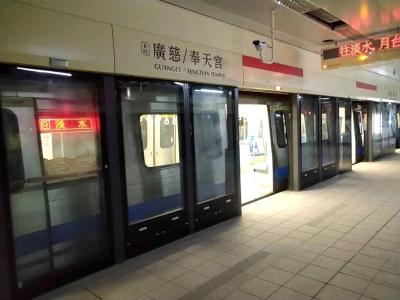
The eastern extension of the Taipei MRT Red Line could begin operations as early as late June, the Taipei Department of Rapid Transit Systems said yesterday. Taipei Rapid Transit Corp said it is considering offering one month of free rides on the new section to mark its opening. Construction progress on the 1.4km extension, which is to run from the current terminal Xiangshan Station to a new eastern terminal, Guangci/Fengtian Temple Station, was 90.6 percent complete by the end of last month, the department said in a report to the Taipei City Council's Transportation Committee. While construction began in October 2016 with an
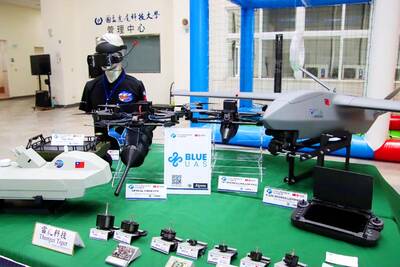
NON-RED SUPPLY: Boosting the nation’s drone industry is becoming increasingly urgent as China’s UAV dominance could become an issue in a crisis, an analyst said Taiwan’s drone exports to Europe grew 41.7-fold from 2024 to last year, with demand from Ukraine’s fight against Russian aggression the most likely driver of growth, a study showed. The Institute for Democracy, Society and Emerging Technology (DSET) in a statement on Wednesday said it found that many of Taiwan’s uncrewed aerial vehicle (UAV) sales were from Poland and the Czech Republic. These countries likely transferred the drones to Ukraine to aid it in its fight against the Russian invasion that started in 2022, it said. Despite the gains, Taiwan is not the dominant drone exporter to these markets, ranking second and fourth


 RSS
RSS