


Starting from April 8, people aged 65 and older, indigenous people aged 55 to 64, children younger than six months old and people who are immunocompromised would be eligible for a booster shot of a vaccine against the JN.1 subvariant of SARS-CoV-2, the Centers for Disease Control (CDC) said yesterday.
The booster shot should only be taken 180 days after their previous shot, CDC Deputy Director-General Tseng Shu-hui (曾淑惠) said.
While a vaccine of the JN.1 variant was administered as of Oct. 1 last year, its protection wanes over time, she said.

Photo courtesy of the Centers for Disease Control
The CDC cited the US Centers for Disease Control and Prevention’s guidelines that people in the targeted groups receive another booster shot.
The immunocompromised group includes people undergoing or who have undergone immunosuppressive therapy, chemotherapy or radiation therapy within the past year or who are taking immunosuppressive medication; people who have had organ transplant or stem-cell transplant surgery; people who have medium or severe congenital immunodeficiency; people who are on dialysis; those who have HIV; and other cases as deemed necessary by a doctor, Tseng said.
Six new severe cases of COVID-19 and one death were reported last week, CDC Epidemic Intelligence Center Deputy Director Lee Chia-lin (李佳琳) said.
From September last year to yesterday, 522 cases of severe local cases of COVID-19 were reported, 112 of which resulted in death, Lee said.
Most cases involved people aged 65 and older or those with chronic diseases, she said.
All new strains reported over the past four weeks were of the SARS-CoV-2 XEC variant, including the JN.1, LP.8.1 and others, she said.
CDC data showed that 2.04 million people have been vaccinated against JN.1, 1.91 million of which used Moderna vaccines and 127,000 used Novavax vaccines.
The nation has a sufficient supply of JN.1 vaccines, with Moderna and Novavax options available for people aged 12 and older, Lee said, adding that children aged six months to 11 years old would only be vaccinated with Moderna vaccines.
Hospitals reported 108,000 emergency room visits for influenza-like illnesses last week, indicating a downward trend, the CDC said.
Emergency rooms admitted 211,000 people with diarrhea-like illnesses, down 18.4 percent from the previous week, but still the highest for the same period over the past five years, it said.
The number of diarrhea clusters in the past four weeks, 242, is also the highest for the same period, it said.
Most outbreaks occur at hotels and eateries, with the majority, 98.7 percent, affected by norovirus, it said, urging people to take necessary precautions.
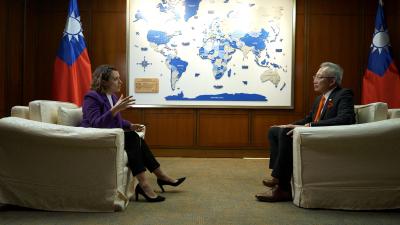
“China is preparing to invade Taiwan,” Deputy Minister of Foreign Affairs Francois Wu (吳志中) said in an exclusive interview with British media channel Sky News for a special report titled, “Is Taiwan ready for a Chinese invasion?” the Ministry of Foreign Affairs said today in a statement. The 25-minute-long special report by Helen Ann-Smith released yesterday saw Sky News travel to Penghu, Taoyuan and Taipei to discuss the possibility of a Chinese invasion and how Taiwan is preparing for an attack. The film observed emergency response drills, interviewed baseball fans at the Taipei Dome on their views of US President
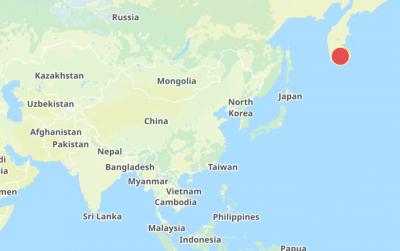
The Central Weather Administration (CWA) today issued a "tsunami watch" alert after a magnitude 8.7 earthquake struck off the Kamchatka Peninsula in northeastern Russia earlier in the morning. The quake struck off the east coast of the Kamchatka Peninsula at 7:25am (Taiwan time) at a depth of about 19km, the CWA said, citing figures from the Pacific Tsunami Warning Center. The CWA's Seismological Center said preliminary assessments indicate that a tsunami could reach Taiwan's coastal areas by 1:18pm today. The CWA urged residents along the coast to stay alert and take necessary precautions as waves as high as 1m could hit the southeastern

The National Museum of Taiwan Literature is next month to hold an exhibition in Osaka, Japan, showcasing the rich and unique history of Taiwanese folklore and literature. The exhibition, which is to run from Aug. 10 to Aug. 20 at the city’s Central Public Hall, is part of the “We Taiwan” at Expo 2025 series, highlighting Taiwan’s cultural ties with the international community, National Museum of Taiwan Literature director Chen Ying-fang (陳瑩芳) said. Folklore and literature, among Taiwan’s richest cultural heritages, naturally deserve a central place in the global dialogue, Chen said. Taiwan’s folklore would be immediately apparent at the entrance of the
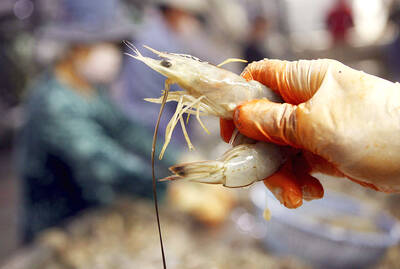
ECONOMIC BENEFITS: The imports from Belize would replace those from Honduras, whose shrimp exports have dropped 67 percent since cutting ties in 2023 Maintaining ties with Taiwan has economic benefits, Ministry of Foreign Affairs officials said yesterday, citing the approval of frozen whiteleg shrimp imports from Belize by the Food and Drug Administration (FDA) as an example. The FDA on Wednesday approved the tariff-free imports from Belize after the whiteleg shrimp passed the Systematic Inspection of Imported Food, which would continue to boost mutual trade, the ministry said. Taiwan’s annual consumption of whiteleg shrimps stands at 30,000 tonnes, far exceeding domestic production, the ministry said. Taiwan used to fill the gap by importing shrimps from Honduras, but purchases slumped after Tegucigalpa severed diplomatic ties with Taiwan


 RSS
RSS