


President William Lai (賴清德) must apologize for stigmatizing military justice, Chinese Nationalist Party (KMT) Chairman Eric Chu (朱立倫) said yesterday, a day after Lai proposed amendments to reinstate military tribunals.
Lai on Thursday announced that the government, as part of broader efforts to combat “China’s infiltration and espionage efforts in the military,” planned to “reinstate the military trial system and bring military justices back to the front line.”
Such changes would require legislative approval. Taiwan abolished the military court system in 2013. While there are still military judges, courts martial are only allowed during times of war.
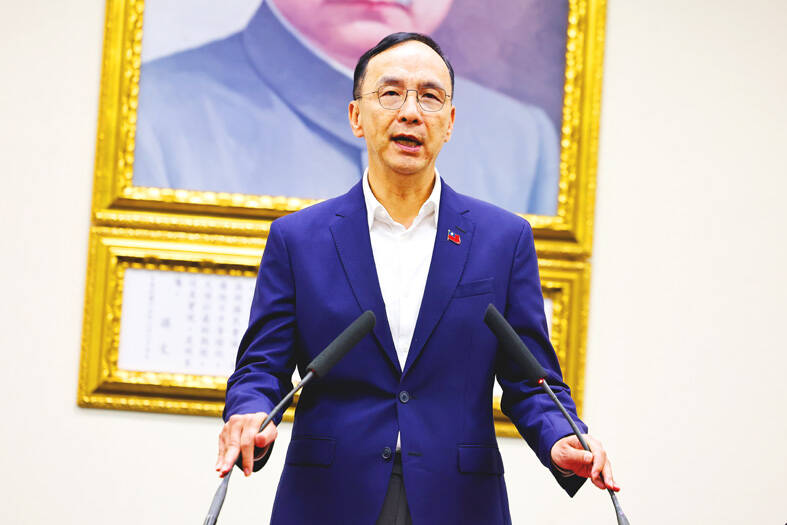
Photo: CNA
KMT Legislator Hsu Chiao-hsin (徐巧芯) and other lawmakers last year proposed amending Article 34 of the Military Trial Act (軍事審判法) to ensure military tribunals could be convened to protect national interests in wartime, Chu wrote on Facebook yesterday.
Article 34 says that “if part of the crime facts shall be prosecuted and tried by the Code of Criminal Procedure, all parts of the crime shall be prosecuted and tried by the Code of Criminal Procedure.”
The KMT proposal would have guaranteed that the lex specialis doctrine would be preserved should an outbreak of military conflict compel activation of the article, Chu wrote.
While the KMT effort sought to create a robust military judicial system, Lai’s proposal targets the armed forces, seeking persecution using the pretext of it being affected by Chinese espionage, he wrote.
Lai’s proposed changes are “tantamount to an accusation that the armed forces have been infiltrated by China,” he wrote. “It is a political maneuver to target internal enemies.”
“Lai is shamelessly evading his responsibility,” Chu added.
The Lai administration should answer to history and the public over the Democratic Progressive Party’s (DPP) support for the abolishment of military tribunals, which weakened the armed forces and allowed communist infiltration, he said, adding that the DPP government should also apologize for its insult to the military’s good name.
The DPP should support the KMT’s call for increased personnel funding to boost morale and reduce service members’ vulnerability to Beijing’s bribery, he added.
Meanwhile, the KMT caucus is to propose a referendum on implementing military trials and martial law, people familiar with the matter said.
The KMT caucus plans to propose a referendum on the question: “Regarding President Lai declaring China as a ‘foreign hostile force’ and cross-strait affairs entering a quasi-war state, do you agree that Taiwan should follow Ukraine in implementing martial law and reinstating military trials?” the sources said.
Separately yesterday, Taiwan People’s Party Chairman Huang Kuo-chang (黃國昌) said that the act is not a substantive law, as it does not define crimes or specify punishments, but merely delineates jurisdictions and procedures.
The Lai administration’s plan to reinstitute military courts is an undefined solution in search of an unidentified problem, as it was announced without discussion, a tangible proposal or a timetable, Huang said.
“It is exceedingly regrettable that an irresponsible party and administrative team is governing Taiwan,” he said, adding that Lai was showing “incompetence while sloganeering and sowing division in society.”
“Taiwan’s most precious assets are its freedom, rule of law and human rights, which set it apart from authoritarian China,” he said.
The DPP should be scrutinized over whether its actions are in line with the founding principles of the nation, Huang added.
Additional reporting by CNA
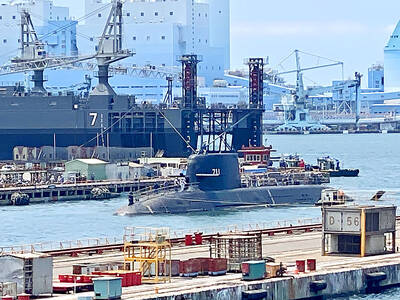
AGING: While Japan has 22 submarines, Taiwan only operates four, two of which were commissioned by the US in 1945 and 1946, and transferred to Taiwan in 1973 Taiwan would need at least 12 submarines to reach modern fleet capabilities, CSBC Corp, Taiwan chairman Chen Cheng-hung (陳政宏) said in an interview broadcast on Friday, citing a US assessment. CSBC is testing the nation’s first indigenous defense submarine, the Hai Kun (海鯤, Narwhal), which is scheduled to be delivered to the navy next month or in July. The Hai Kun has completed torpedo-firing tests and is scheduled to undergo overnight sea trials, Chen said on an SET TV military affairs program. Taiwan would require at least 12 submarines to establish a modern submarine force after assessing the nation’s operational environment and defense

A white king snake that frightened passengers and caused a stir on a Taipei MRT train on Friday evening has been claimed by its owner, who would be fined, Taipei Rapid Transit Corp (TRTC) said yesterday. A person on Threads posted that he thought he was lucky to find an empty row of seats on Friday after boarding a train on the Bannan (Blue) Line, only to spot a white snake with black stripes after sitting down. Startled, he jumped up, he wrote, describing the encounter as “terrifying.” “Taipei’s rat control plan: Release snakes on the metro,” one person wrote in reply, referring
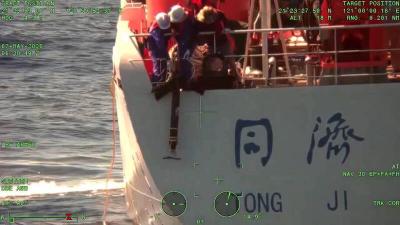
The coast guard today said that it had disrupted "illegal" operations by a Chinese research ship in waters close to the nation and driven it away, part of what Taipei sees a provocative pattern of China's stepped up maritime activities. The coast guard said that it on Thursday last week detected the Chinese ship Tongji (同濟號), which was commissioned only last year, 29 nautical miles (54km) southeast of the southern tip of Taiwan, although just outside restricted waters. The ship was observed lowering ropes into the water, suspected to be the deployment of scientific instruments for "illegal" survey operations, and the coast
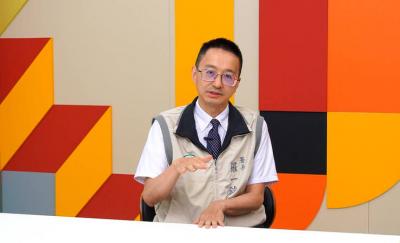
Taiwan’s two cases of hantavirus so far this year are on par with previous years’ case numbers, and the government is coordinating rat extermination work, so there should not be any outbreaks, Centers for Disease Control (CDC) Director-General Philip Lo (羅一鈞) said today in an interview with the Liberty Times (the Taipei Times’ sister newspaper). An increase in rat sightings in Taipei and New Taipei City has raised concerns about the spread of hantavirus, as rats can carry the disease. In January, a man in his 70s who lived in Taipei’s Daan District (大安) tested positive posthumously for hantavirus, Taiwan’s


 RSS
RSS