


The Ministry of Transportation and Communications on Friday said it would review standards for window insulation films on cars to address complaints that they are too dark and have a low light transmission percentage (LTP), and that they are partly responsible for increasing traffic incidents.
After consulting domestic public opinion polling data and reviewing foreign regulations, the ministry is looking at setting the LTP front windshield regulation at 70 percent, and the driver and passenger windows at 35 percent LTP, Minister of Transportation and Communication Chen Shih-kai (陳世凱) said.
Rear side windows would remain unregulated, he said.
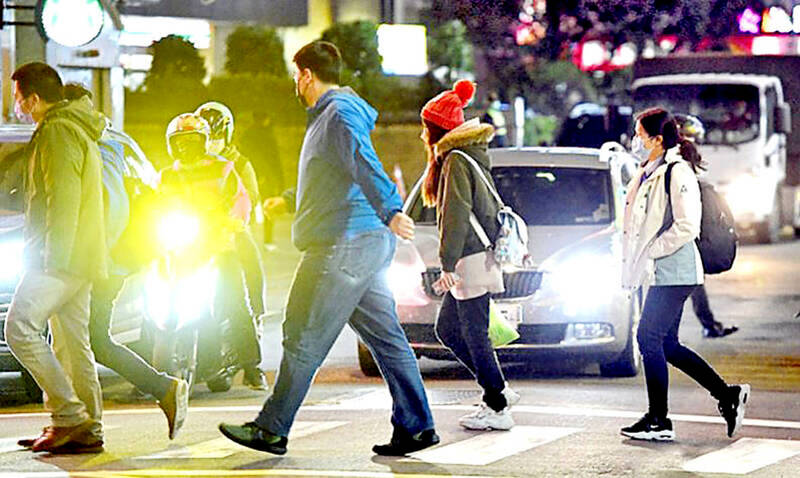
Photo: Taipei Times
Most drivers install window insulation films — usually with an LTP of less than 40 percent — to shield their car’s interior from the summer heat or to have more privacy, Chen said, citing data collected by the ministry.
However, this results in low visibility, especially at night, and many consider them to be the primary culprit behind increased traffic incidents at night, he added.
The ministry said it would discuss new safety standards with auto dealers and film manufacturers, with a view to them taking effect next month.
The ministry plans to roll out the standards nationwide within three to six months of introduction, it said, adding that it intends to purchase additional equipment for car owners to test the films.
Separately, the ministry said it plans to increase the intervals between the stop line and pedestrian crossings by 1m to better protect pedestrians.
Current regulations set the interval at between 1m and 3m, but tall vehicles create the issue of blind spots, Department of Railways, Highways and Road Safety Deputy Director-General Huang Yun-kui (黃運貴) said.
The current regulations are similar to those in Japan, while other countries set the minimum interval at 3m, he said, adding that the ministry would consult with experts to discuss the increase.
Provided there is consensus, the ministry would move to draft amendments on the issue, he said.
Chen also said that improvement in road lighting would be needed.
The ministry would prioritize road lighting for provincial highways — especially for crossings — and change the lightbulbs from yellow lights to white lights to maximize brightness, he said.
The ministry expects to swap the lights for seven to 10 crossings by April, and if the results are favorable, would expand the project to more than 400 locations, he added.
Chen said the ministry has its work cut out to achieve this goal and would review and reset its priorities yearly.
Asked about the government reaching its goal of a 7 percent yearly reduction in traffic injuries and mortality rates, Chen said it was unlikely.
Reducing traffic mortalities and injuries would take some time, and initial measures would not have significant effects, he said.
However, gradually, through improvements in infrastructure, education, and habits, the rates of mortalities and injuries would go down, he added.
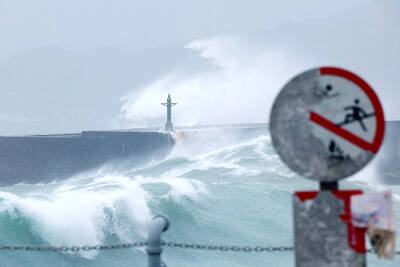
Greenpeace yesterday said that it is to appeal a decision last month by the Taipei High Administrative Court to dismiss its 2021 lawsuit against the Ministry of Economic Affairs over “loose” regulations governing major corporate electricity consumers. The climate-related lawsuit — the first of its kind in Taiwan — sought to require the government to enforce higher green energy thresholds on major corporations to reduce emissions in light of climate change and an uptick in extreme weather. The suit, filed by Greenpeace East Asia, the Environmental Jurists Association and four individual plaintiffs, was dismissed on May 8 following four years of litigation. The

STAY AWAY: An official said people should avoid disturbing snakes, as most do not actively attack humans, but would react defensively if threatened Taitung County authorities yesterday urged the public to stay vigilant and avoid disturbing snakes in the wild, following five reported snakebite cases in the county so far this year. Taitung County Fire Department secretary Lin Chien-cheng (林建誠) said two of the cases were in Donghe Township (東河) and involved the Taiwan habus, one person was bit by a Chinese pit viper near the South Link Railway and the remaining two were caused by unidentified snakes. He advised residents near fields to be cautious of snakes hiding in shady indoor areas, especially when entering or leaving their homes at night. In case of a
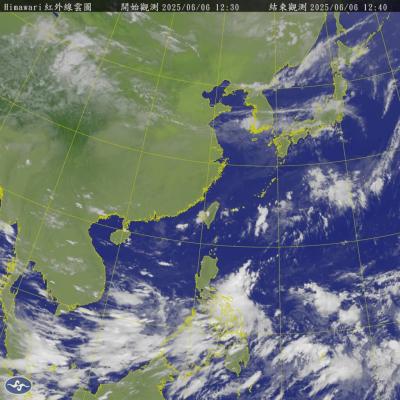
A tropical disturbance off the southeastern coast of the Philippines might become the first typhoon of the western Pacific typhoon season, the Central Weather Administration (CWA) said. The system lacks a visible center and how it would develop is only likely to become clear on Sunday or Monday, the CWA said, adding that it was not yet possible to forecast the potential typhoon's effect on Taiwan. The American Meteorological Society defines a tropical disturbance as a system made up of showers and thunderstorms that lasts for at least 24 hours and does not have closed wind circulation.
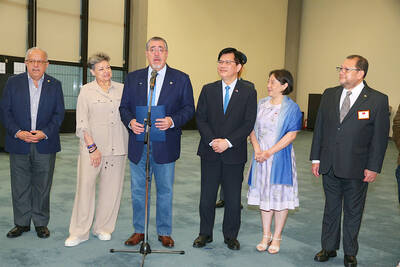
DIPLOMACY: It is Guatemalan President Bernardo Arevalo’s first visit to Taiwan since he took office last year, while Eswatini’s foreign minister is also paying a visit A delegation led by Guatemalan President Bernardo Arevalo arrived in Taiwan yesterday afternoon and is to visit President William Lai (賴清德) today. The delegation arrived at Taiwan Taoyuan International Airport at 4:55pm, and was greeted by Minister of Foreign Affairs Lin Chia-lung (林佳龍). It is Arevalo’s first trip to Taiwan since he took office last year, and following the visit, he is to travel to Japan to celebrate the 90th anniversary of diplomatic relations between the two countries. Arevalo said at the airport that he is very glad to make the visit to Taiwan, adding that he brings an important message of responsibility


 RSS
RSS