


Hiking is a good way to improve one’s health, the Forestry and Nature Conservation Agency said, as it released a list of national forest recreation areas that travelers can visit during the Lunar New Year holiday.
Taking a green shower of phytoncides in the woods could boost one’s immunity system and metabolism, agency Director-General Lin Hwa-ching (林華慶) cited a Japanese study as saying.
For people visiting northern Taiwan, Lin recommended the Dongyanshan National Forest Recreation Area in Taoyuan’s Fusing District (復興).
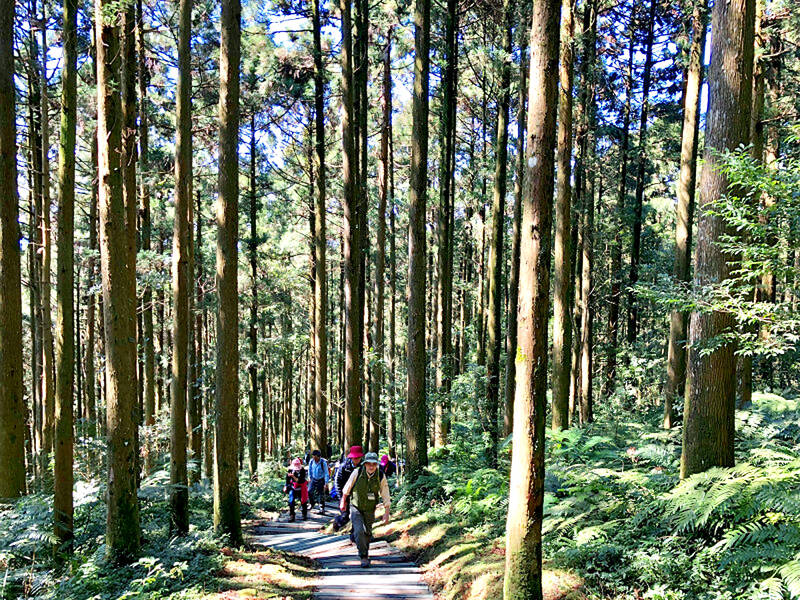
Photo courtesy of the Forestry and Nature Conservation
Once an important plantation in the north, Dongyanshan (東眼山) has a number of historic monuments, he said.
The area is broadly covered by manmade forests of Japanese cedars and Chinese firs, creating a spectacular landscape under treetops, Lin said.
It also has trace fossils of shellfish and sea urchins that are about 30 million years old, as well as an abundance of bird species that birdwatchers would enjoy, he added.
For travelers in central Taiwan, Lin suggested visiting the Aowanda National Forest Recreation Area in Nantou County’s Renai Township (仁愛).
The area features bald cypresses and lots of indigenous maple woods, which form a colorful natural landscape in the autumn and winter, he said.
There are also many cherry trees in the area, and visitors might be able to catch sight of early cherry blossoms during the Spring Festival holiday, Lin said.
One of the must-see spots is the Aowanda Suspension Bridge (奧萬大吊橋) connecting to the pine woods, and people can enjoy a view of the valley and take photographs on the bridge, he said.
Travelers in the south should visit the Shuangliu Forest Recreation Area in Pingtung County’s Shizih Township (獅子), Lin said.
Shuangliu (雙流, literally double flow) refers to the two rivers — Daren and Neiwun — that intersect to form the upper stream of the Fonggang River (楓港溪), he said.
Visitors gravitate toward the scenic streams and waterfalls, and the negative ion-laden air in the area, Lin said.
The area was once populated by the Paiwan, so it is a rich repository of the indigenous people’s history and culture, including the ruins of a tortoise-shell house, a typical Paiwan architecture, he said.
Bird or butterfly watchers should also visit the area, as there are Formosan blue magpies, Taiwan hwamei and the rare, endangered golden birdwings, as well as more than 100 butterfly species, he added.
As for eastern Taiwan, Lin suggested visiting the Danongdafu Forest Park in Hualien County’s Guangfu Township (光復), where there are more than 1 million trees of nearly 20 varieties commonly seen in low-altitude regions.
During the Spring Festival holiday, the area is covered in blooming yellow rapeseed against a backdrop of a broad blue sky and the green mountains of Hualien County, making it a popular site for taking photographs, Lin said.
People visiting these forest recreation areas are advised to check the traffic and weather conditions in advance at the Taiwan Forest Recreation Web site to ensure a safe and pleasant journey, he added.
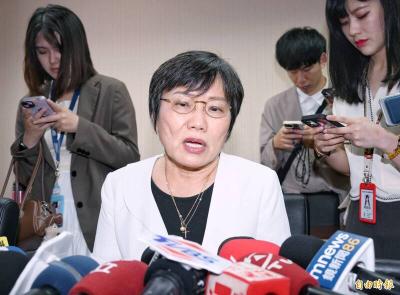
Chinese Nationalist Party (KMT) Chairman Eric Chu (朱立倫), spokeswoman Yang Chih-yu (楊智伃) and Legislator Hsieh Lung-chieh (謝龍介) would be summoned by police for questioning for leading an illegal assembly on Thursday evening last week, Minister of the Interior Liu Shyh-fang (劉世芳) said today. The three KMT officials led an assembly outside the Taipei City Prosecutors’ Office, a restricted area where public assembly is not allowed, protesting the questioning of several KMT staff and searches of KMT headquarters and offices in a recall petition forgery case. Chu, Yang and Hsieh are all suspected of contravening the Assembly and Parade Act (集會遊行法) by holding

PRAISE: Japanese visitor Takashi Kubota said the Taiwanese temple architecture images showcased in the AI Art Gallery were the most impressive displays he saw Taiwan does not have an official pavilion at the World Expo in Osaka, Japan, because of its diplomatic predicament, but the government-backed Tech World pavilion is drawing interest with its unique recreations of works by Taiwanese artists. The pavilion features an artificial intelligence (AI)-based art gallery showcasing works of famous Taiwanese artists from the Japanese colonial period using innovative technologies. Among its main simulated displays are Eastern gouache paintings by Chen Chin (陳進), Lin Yu-shan (林玉山) and Kuo Hsueh-hu (郭雪湖), who were the three young Taiwanese painters selected for the East Asian Painting exhibition in 1927. Gouache is a water-based
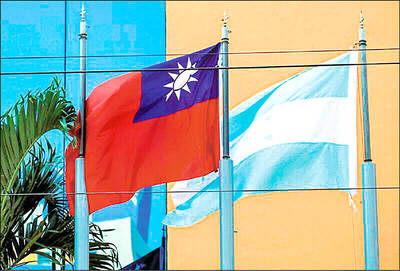
Taiwan would welcome the return of Honduras as a diplomatic ally if its next president decides to make such a move, Minister of Foreign Affairs Lin Chia-lung (林佳龍) said yesterday. “Of course, we would welcome Honduras if they want to restore diplomatic ties with Taiwan after their elections,” Lin said at a meeting of the legislature’s Foreign Affairs and National Defense Committee, when asked to comment on statements made by two of the three Honduran presidential candidates during the presidential campaign in the Central American country. Taiwan is paying close attention to the region as a whole in the wake of a

OFF-TARGET: More than 30,000 participants were expected to take part in the Games next month, but only 6,550 foreign and 19,400 Taiwanese athletes have registered Taipei city councilors yesterday blasted the organizers of next month’s World Masters Games over sudden timetable and venue changes, which they said have caused thousands of participants to back out of the international sporting event, among other organizational issues. They also cited visa delays and political interference by China as reasons many foreign athletes are requesting refunds for the event, to be held from May 17 to 30. Jointly organized by the Taipei and New Taipei City governments, the games have been rocked by numerous controversies since preparations began in 2020. Taipei City Councilor Lin Yen-feng (林延鳳) said yesterday that new measures by


 RSS
RSS