


A master sergeant yesterday morning died after she was sucked into an engine during a routine inspection of a fighter jet at an air base in Taichung, the Air Force Command Headquarters said.
The officer, surnamed Hu (胡), was conducting final landing checks at Ching Chuan Kang (清泉崗) Air Base when she was pulled into the jet’s engine for unknown reasons, the air force said in a news release.
She was transported to a hospital for emergency treatment, but could not be revived, it said.
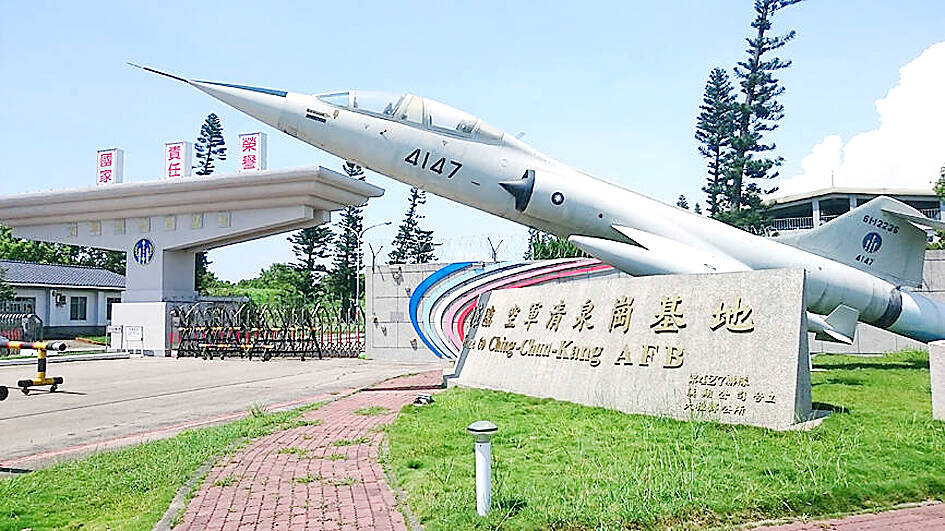
Photo: Ou Su-mei, Taipei Times
The air force expressed its deepest sympathies over the incident, and vowed to work with authorities as they investigate.
It also promised to assist Hu’s family amid their bereavement, and said it would conduct a thorough review to improve flight procedures in the hopes of preventing a recurrence.
Reports said that Hu had served in the military for about 17 years.
The incident reportedly occurred when she was setting up wheel chocks under an Indigenous Defense Fighter (IDF) after it had landed.
An expert with knowledge of the matter expressed disbelief.
Speaking on condition of anonymity, they said that the chance of a ground crew member being sucked in by an IDF engine is “minuscule.”
After the plane lands, the motor speed is on a slow “standby” rotation and should have stopped by the time wheel chocks were being deployed, they said, adding that there would not have been time to for the engine to speed up fast enough to pull anyone in.
In addition, the engine intake opening on the IDF is relatively small, especially compared with the single-engine F-16, with two smaller engines on either side of the fuselage that would not be large enough to fit an adult person, they said.
The source said it should not be difficult to investigate, as security cameras are installed in the hangar.
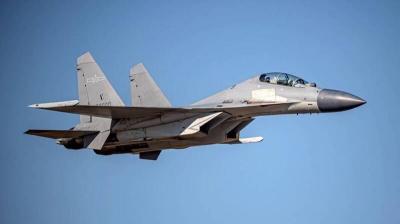
Eight Chinese naval vessels and 24 military aircraft were detected crossing the median line of the Taiwan Strait between 6am yesterday and 6am today, the Ministry of National Defense said this morning. The aircraft entered Taiwan’s northern, central, southwestern and eastern air defense identification zones, the ministry said. The armed forces responded with mission aircraft, naval vessels and shore-based missile systems to closely monitor the situation, it added. Eight naval vessels, one official ship and 36 aircraft sorties were spotted in total, the ministry said.
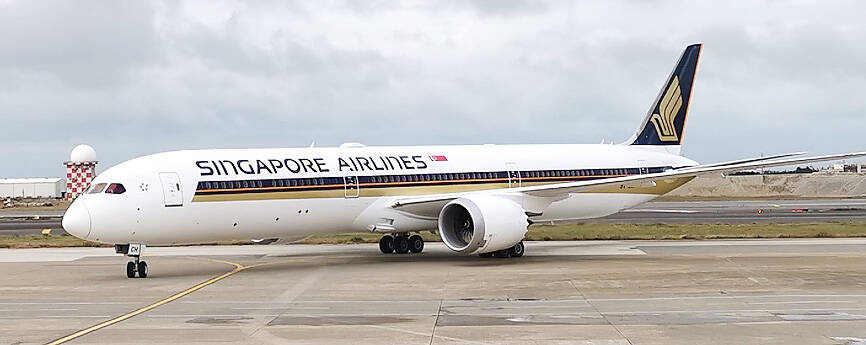
INCREASED CAPACITY: The flights on Mondays, Wednesdays, Fridays and Sundays would leave Singapore in the morning and Taipei in the afternoon Singapore Airlines is adding four supplementary flights to Taipei per week until May to meet increased tourist and business travel demand, the carrier said on Friday. The addition would raise the number of weekly flights it operates to Taipei to 18, Singapore Airlines Taiwan general manager Timothy Ouyang (歐陽漢源) said. The airline has recorded a steady rise in tourist and business travel to and from Taipei, and aims to provide more flexible travel arrangements for passengers, said Ouyang, who assumed the post in July last year. From now until Saturday next week, four additional flights would depart from Singapore on Monday, Wednesday, Friday
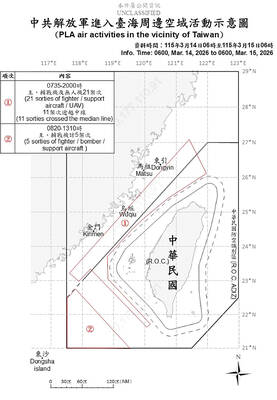
The Ministry of National Defense yesterday reported the return of large-scale Chinese air force activities after their unexplained absence for more than two weeks, which had prompted speculation regarding Beijing’s motives. China usually sends fighter jets, drones and other military aircraft around the nation on a daily basis. Interruptions to such routine are generally caused by bad weather. The Ministry of National Defense said it had detected 26 Chinese military aircraft in the Taiwan Strait over the previous 24 hours. It last reported that many aircraft on Feb. 25, when it spotted 30 aircraft, saying Beijing was carrying out another “joint combat
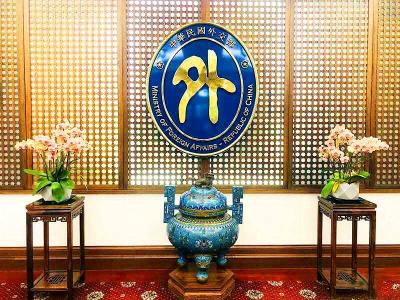
The Ministry of Foreign Affairs (MOFA) today said that if South Korea does not reply appropriately to its request to correct Taiwan’s name on its e-Arrival card system before March 31, it would take corresponding measures to alter how South Korea is labeled on the online Taiwan Arrival Card system. South Korea’s e-Arrival card system lists Taiwan as “China (Taiwan)” in the “point of departure” and “next destination” fields. The ministry said that it changed the nationality for South Koreans on Taiwan’s Alien Resident Certificates from “Korea” to “South Korea” on March 1, in a gesture of goodwill and based on the


 RSS
RSS