


China’s military expansion is obviously threatening regional peace and stability, Minister of National Defense Wellington Koo (顧立雄) today said regarding a US report on China’s military and security developments released yesterday.
China has aroused concerns in the region and countries in the Indo-Pacific region and Europe are holding more military exercises to cooperate on bolstering regional security to avoid any conflict happening in the Taiwan Strait or the Indo-Pacific region, Koo said.
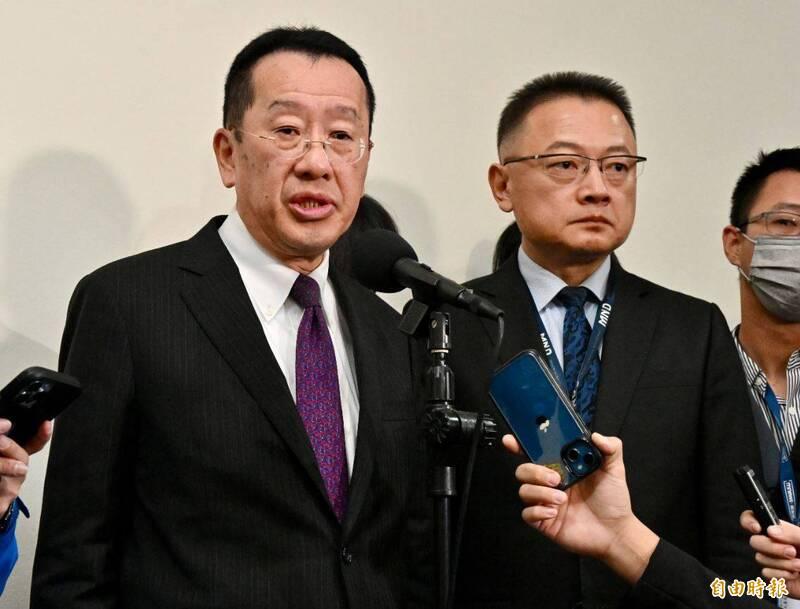
Photo: Tsung Chang-chin, Taipei Times
Taiwan’s military has to bolster its self-defense capability to deter Chinese invasion, he added.
China is expanding its nuclear force, has increased military pressure against Taiwan and has strengthened its ties with Russia over the past year, according to a Pentagon report yesterday that details actions accelerating key areas of conflict with the US.
The report, however, also notes that the recent rash of corruption allegations within China’s powerful Central Military Commission, which oversees the People’s Liberation Army, is hurting Beijing’s military growth and could slow its campaign to modernize.
The impact, said a senior defense official, is a bit of a mixed bag because while there has been progress in some programs, China has slid back in others.
The official, who spoke on condition of anonymity to describe the US assessment, warned that Beijing is working toward developing a more diverse and technologically sophisticated nuclear force. While the expected number of nuclear warheads has maintained consistent growth, China is broadening its targeting abilities.
Beijing is going to be able to go after more and different types of targets, do greater damage and have more options for multiple rounds of counterstrikes, the official said. The US is urging China to be more transparent about its nuclear program, while also warning that the US will defend its allies and take appropriate steps in response.
According to the report, which provides the annual US assessment of China’s military power and is required by Congress, China had more than 600 operational nuclear warheads as of May, and the US expects it will have more than 1,000 by 2030.
The Chinese Embassy, in response, said China has always “firmly adhered to a nuclear strategy of self-defense,” follows the no-first-use nuclear policy and maintains its nuclear capabilities at the minimum level required for national security.
Liu Pengyu (劉鵬宇), the embassy spokesman, said such annual reports by the Pentagon are “filled with ‘Cold-War’ thinking and zero-sum game mentality, which China firmly opposes.”
The administration US President Joe Biden has worked to maintain a balance with China, building up the US military presence in the Asia-Pacific region to be ready to counter Beijing while also encouraging increased communications between the two countries at the diplomatic and military levels.
That uptick in talks has coincided with a decrease in coercive and risky intercepts of US aircraft since late 2023, compared with the previous two years. China still, however, does what the US military considers “unsafe” flights near US and allied forces in the region.
The Pentagon’s national defense strategy is built around China being the greatest security challenge for the US, and the threat from Beijing influences how the US military is equipped and organized for the future.
The corruption within the PLA has resulted in at least 15 high-ranking officials being ousted in a major shakeup of China’s defense establishment.
“This wave of corruption touches every service in the PLA, and it may have shaken Beijing’s confidence,” the report said.
In June, China announced that former Defense Minister Li Shangfu (李尚福) and his predecessor, Wei Fenghe (魏鳳和), were expelled from the ruling Communist Party and accused of corruption. Last month, another senior official, Miao Hua (苗華), was suspended and put under investigation, according to China’s Defense Ministry.
The US report points to a persistent increased military presence by China around Taiwan. It said China’s navy has been in the region more and that there have been increased crossings into Taiwan’s air defense identification zone and major military exercises in the area.
Just last week, a large deployment of Chinese navy and coast guard vessels in the waters around Taiwan triggered alarm as Taiwanese officials said it looked like China was simulating a blockade. Officials have said there were as many as 90 ships involved in what Taiwan described as two walls designed to demonstrate that the waters belong to China.
More broadly, the report concluded that the PLA continued its drive to develop greater military capabilities but “made uneven progress toward its 2027” milestone for modernization.
One area of expansion, the report said, is with unmanned aerial systems, which officials said are “quickly approaching US standards.”
Regarding Russia, the report said China has supported Russia’s war against Ukraine and sold Russia dual-use items that Moscow’s military industry relies on. Dual-use items can be used for both civilian and military purposes.
Additional reporting by Fang Wei-li and Fion Khan
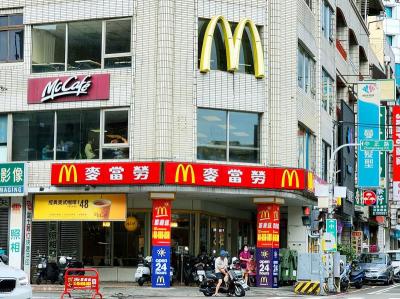
Fast food chain McDonald's is to raise prices by up to NT$5 on some products at its restaurants across Taiwan, starting on Wednesday next week, the company announced today. The prices of all extra value meals and sharing boxes are to increase by NT$5, while breakfast combos and creamy corn soup would go up by NT$3, the company said in a statement. The price of the main items of those meals, if ordered individually, would remain the same. Meanwhile, the price of a medium-sized lemon iced tea and hot cappuccino would rise by NT$3, extra dipping sauces for chicken nuggets would go up
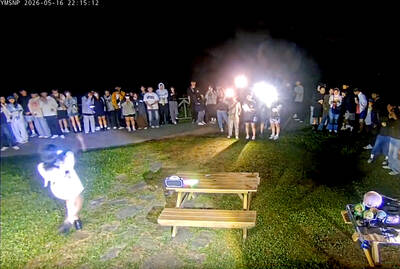
Yangmingshan National Park’s Qingtiangang (擎天崗) nature area has gone viral after a park livestream camera observed a couple in the throes of intimate congress, which was broadcast live on YouTube, drawing large late-night crowds and sparking a backlash over noise, bright lights and disruption to wildlife habitat. The area’s livestream footage appeared to show a couple engaging in sexual activity on a picnic table in the park on Friday last week, with the uncensored footage streamed publicly online. The footage quickly spread across social media, prompting a tide of visitors to travel to the site to “check in” and recreate the

Minister of Digital Affairs Lin Yi-ching (林宜敬) yesterday cited regulatory issues and national security concerns as an expert said that Taiwan is among the few Asian regions without Starlink. Lin made the remarks on Facebook after funP Innovation Group chief executive officer Nathan Chiu (邱繼弘) on Friday said Taiwan and four other countries in Asia — China, North Korea, Afghanistan and Syria — have no access to Starlink. Starlink has become available in 166 countries worldwide, including Ukraine, Malaysia, the Philippines and Vietnam, in the six years since it became commercial, he said. While China and North Korea block Starlink, Syria is not
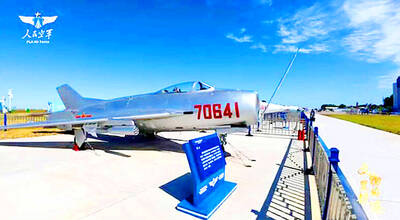
GROUNDED: A KMT lawmaker proposed eliminating drone development programs and freezing funding for counterdrone systems, despite China’s adoption of the technology China has deployed attack drones at air bases near the Taiwan Strait in a strategy aimed at overwhelming Taiwan’s air defense systems through saturation attacks, the Mainland Affairs Council (MAC) said. The council’s latest quarterly report on China said that satellite imagery and open-source intelligence indicate that the Chinese People’s Liberation Army (PLA) had converted retired J-6 fighter jets into J-6W drones, which the PLA has stationed at six air bases near Taiwan, five in China’s Fujian Province and one in Guangdong Province. The report cited J. Michael Dahm, a senior fellow at the US-based Mitchell Institute, as saying that China has


 RSS
RSS