


A civic group on Tuesday called on the Ministry of Labor to abolish the monthly “employment stabilization” fee of NT$2,000 (US$61.47) collected from families who hire migrant at-home caregivers after a care recipient scores below a certain level on the Barthel Index.
The International Association of Family and Employers with Disabilities held a news conference in Taipei to raise awareness about the issue, which it characterized as being equivalent to levying a “handicap tax.”
The monthly fee is intended to fund “employment stabilization” measures when a family hires a migrant caregiver due to the potential negative impact such a move could have on the job opportunities of Taiwanese caregivers.

Photo courtesy of the Ministry of Labor
However, in reality, few, if any, Taiwanese work as live-in caregivers, association chief executive officer Tung Wen-hsun (童文薰) said.
Association president Heidi Chang (張姮燕) said that the employment stabilization fund has often been misappropriated to pay cash rewards to people who report absconded migrant workers to the authorities and to purchase flight tickets to deport such workers after they are found and detained.
In a statement, the association demanded that families with seriously ill members who score lower than a certain level on the Barthel Index, used to determine whether a person qualifies to be cared for by a migrant caregiver, should be exempted from paying the employment stabilization fee.
The ministry in October last year relaxed eligibility rules on recruiting live-in migrant caregivers and waived the requirement of a Barthel Index score for people who have been using long-term care services for at least six consecutive months, those diagnosed with early-stage dementia and people with certain disabilities, such as individuals who experience severe difficulty breathing or difficulty swallowing.
Chinese Nationalist Party (KMT) Legislator Wang Hung-wei (王鴻薇), who attended the news conference, expressed support for the association’s demands and accused former minister of labor Hsu Ming-chun (許銘春) of misusing the fund.
Democratic Progressive Party (DPP) Legislator Lin Shu-fen (林淑芬) has accused Hsu of spending taxpayers’ money to hold a “concert” in Kaohsiung to mark the 20th anniversary of the promulgation of the Gender Equality in Employment Act (性別平等工作法), at which she sang for 30 minutes.
Meanwhile, Taiwan People’s Party caucus whip Huang Kuo-chang (黃國昌) said that Hsu spent NT$3.56 million from the employment stabilization fund on the event.
The association called on lawmakers across party lines to launch a probe into how the fund has been used.
Meanwhile, Minister of Labor Hung Sun-han (洪申翰) on Tuesday visited the Work Development Agency’s northern branch in New Taipei City.
Hung became the minister on Monday after his predecessor, Ho Pei-shan (何佩珊), resigned over her handling of the suicide of a 39-year-old civil servant surnamed Wu (吳) at the regional office.
Hsieh Yi-jung (謝宜容), who headed the branch at the time of Wu’s death, was dismissed on Wednesday last week amid widespread speculation that Wu had been driven to suicide by workplace bullying.
After visiting the office, Hung said the work culture that existed under the former leadership had led to “low morale” and workers feeling unable to voice their concerns.
He vowed to improve the working environment at the ministry to “regain social trust and protect workers’ rights.”

Taipei has once again made it to the top 100 in Oxford Economics’ Global Cities Index 2025 report, moving up five places from last year to 60. The annual index, which was published last month, evaluated 1,000 of the most populated metropolises based on five indices — economics, human capital, quality of life, environment and governance. New York maintained its top spot this year, placing first in the economics index thanks to the strength of its vibrant financial industry and economic stability. Taipei ranked 263rd in economics, 44th in human capital, 15th in quality of life, 284th for environment and 75th in governance,

The Sports Administration yesterday demanded an apology from the national table tennis association for barring 17-year-old Yeh Yi-tian (葉伊恬) from competing in the upcoming World Table Tennis (WTT) United States Smash tournament in Las Vegas this July. The sports agency said in a statement that the Chinese Taipei Table Tennis Association (CTTTA) must explain to the public why it withdrew Yeh from the WTT tournament in Las Vegas. The sports agency said it contacted the association to express its disapproval of the decision-making process after receiving a complaint from Yeh’s coach, Chuang
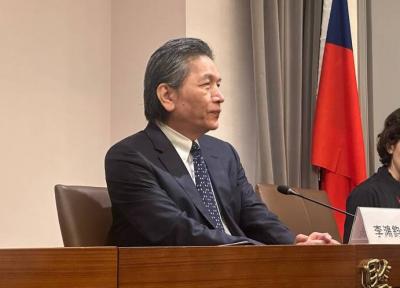
Control Yuan Secretary-General Lee Chun-yi (李俊俋) tendered his resignation last night, admitting that he had misused a government vehicle, as reported by media. His resignation was immediately accepted by the Control Yuan. In a statement explaining why he had resigned, Lee apologized for using a Control Yuan vehicle to transport his dog to a pet grooming salon on May 20. The issue first came to light late last month, when TVBS News reported that Lee had instructed his driver to take the dog to the salon. The news channel broadcast photos that it said were taken by an unnamed whistle-blower, which purportedly showed the

A former officer in China’s People’s Liberation Army (PLA) who witnessed the aftermath of the 1989 Tiananmen Square massacre has warned that Taiwan could face a similar fate if China attempts to unify the country by force. Li Xiaoming (李曉明), who was deployed to Beijing as a junior officer during the crackdown, said Taiwanese people should study the massacre carefully, because it offers a glimpse of what Beijing is willing to do to suppress dissent. “What happened in Tiananmen Square could happen in Taiwan too,” Li told CNA in a May 22 interview, ahead of the massacre’s 36th anniversary. “If Taiwanese students or


 RSS
RSS