

Tea from Taiwan excelled against competitors from around the world at “The Leafies” international tea awards in London earlier this month, winning more accolades than any other country.
The Leafies is an annual tea award co-organized by Fortnum & Mason department store and the UK Tea Academy (UKTA).
Taiwan won eight Gold awards and 10 “Highly Commended” designations across six categories — four for tea production and two for retail.
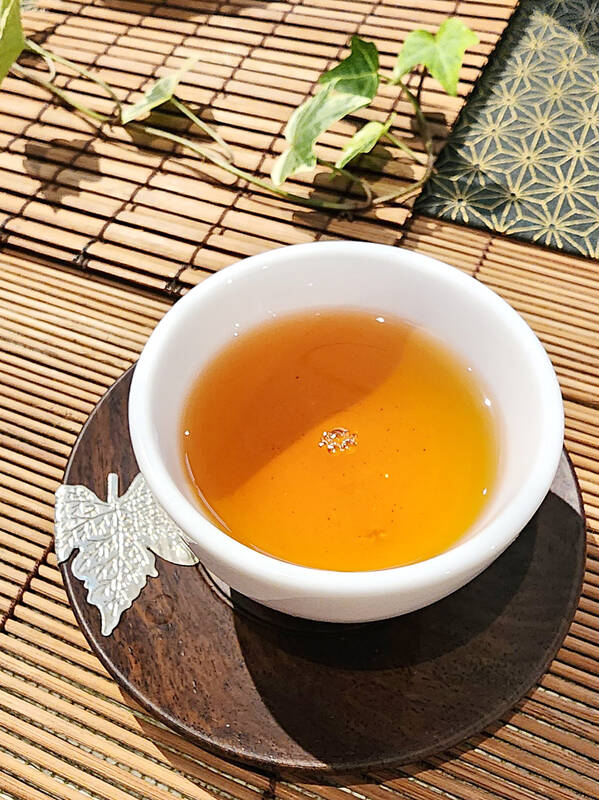
Photo courtesy of Lu Yu Estate via CNA
The biggest winner was Lu Yu Estate from Hualien County, which won the Gold and “Best of Black” awards with its Golden Dew tea.
Black tea is the most common brew around the world and is highly competitive. The Leafies divided the awards into six regions: Taiwan, China, Japan, India, Sri Lanka and others. Although there were multiple winners for Gold and Highly Commended awards, only one Best of Black was given out, with Lu Yu taking the crown.
FormoCha also won a Gold award in black tea production for its Royal Laurel Class Black Tea-241.
“Traditionally, I always knew Taiwan [had] the best of oolong teas. But I’m seeing more and more Taiwanese black teas compete with the best teas we have in India,” Indian judge Kurush Bharuch said.
Bharuch compared the quality and flavor notes of Taiwan’s black teas to that of Darjeeling, one of the world’s most renowned black tea production regions in India, and said that the nation’s black tea production could soon see international appeal.
FormoCha founder Chang Chia-chi (張家齊) attended the event to receive two recognitions.
Chang said that FormoCha shares its Gold award with EVA Air, as the winning tea was created specifically for the airline’s business class passengers.
One of the reasons FormoCha attended The Leafies this year was to encourage the youth to return to the countryside and work in the industry by winning an international accolade, Chang said.
An infusion of young blood into the industry would further strengthen Taiwan’s tea culture, he said.
Taiwan’s tea industry is facing challenges such as an aging workforce and a labor shortage, Chang said, adding that the industry also needs to adopt more creative marketing strategies.
Taiwanese teas also won accolades in three other categories.
FormoCha and Bajia Tea Factory received Gold awards in the “Oolong Heavily Oxidised” category with their Sika deer Oolong and Oolong teas respectively, while Wang Family Tea won Gold in the “Oolong Lightly Oxidised” category for its Dragon’s Breath tea.
Bajia also won a Gold award in the “White Natural” category with its White Tea.
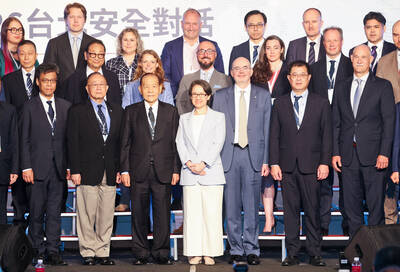
Taiwan’s growing defense preparations might be sending a stronger signal to the US than to Beijing, highlighting the need for Taipei to tailor its deterrence efforts to different audiences, a US security academic said yesterday. Stanford University Freeman Spogli Institute for International Studies fellow Oriana Skylar Mastro made the comment during a Taipei Security Dialogue panel examining lessons Taiwan could draw from the wars in Ukraine and the Middle East. Mastro said she was impressed by Taiwan’s increased defense spending, emphasis on asymmetric capabilities and efforts to prepare society for conflict, but questioned whom those initiatives were influencing. She said when she asked
A total of 400 foreign “high- level” professionals have been naturalized as Republic of China (Taiwan) citizens over the past decade as the government has eased nationality rules to attract talent from a wider range of fields, the Ministry of the Interior said yesterday. The 400th high-level professional, who works in the electronics industry, was approved for ROC citizenship on Aug. 26, the MOI said. The MOI quoted the newly naturalized citizen as saying that Taiwan is a leader in fields such as semiconductors, electronics manufacturing, artificial intelligence development and energy technology. He also said
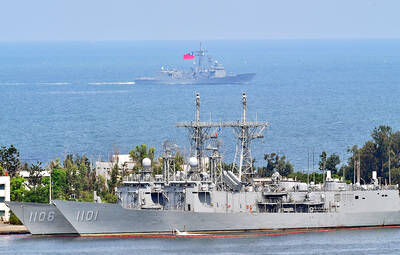
SIZE MATTERS: Large ships are politically attractive as visible symbols of national defense, but small surface combatants are more likely to survive an initial strike Taiwan needs to restructure its naval fleet from focusing on large warships, which are “sitting ducks” for China’s advanced tracking technology, to smaller, stealthy corvettes that are harder to detect but retain sufficient firepower to deter a Chinese invasion, a Taiwanese academic and a former US military commander said in an article published on Friday in the journal Foreign Affairs. Taiwan does not need a fleet capable of competing with the Chinese navy for traditional control of the Taiwan Strait, but rather “sea denial” capabilities that would prevent China from freely using the waterway, Taiwanese aerospace and security expert Holmes Liao
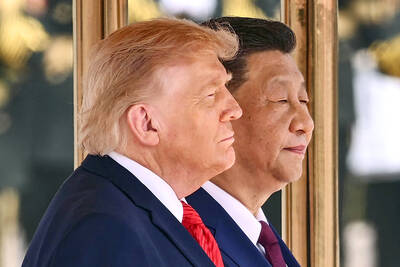
China has warned that it could cancel a planned US-China leaders’ summit if Washington approves new arms sales to Taiwan, a Japanese media outlet quoted sources as saying yesterday. US President Donald Trump, “apparently eager to showcase some diplomatic achievements ahead of November’s midterm congressional elections, places great importance on holding the summit with Chinese President Xi Jinping (習近平),” Japan’s Kyodo News reported. “While preparing for Xi’s upcoming trip, China has restated its position that the Taiwan issue is a ‘red line’ in bilateral relations,” the report said. The report said that when Xi met with Trump in Beijing in May, Xi said


 RSS
RSS