


Sea vessels that are insured by Ascent General Insurance and three other insurance firms would from Sunday next week be banned from entering international commercial seaports in Taiwan for failing to actively resolve shipwreck-related disputes, the Maritime and Port Bureau said on Monday last week.
The bureau contacted Ascent General Insurance, Edinburgharian PANDI Management Limited, Polaris Insurance Co and Arsenal Insurance Company multiple times regarding shipwrecks of their insured vessels, but they were passive and did not take any action, it said.
As the four sea vessel insurers failed to fulfill their responsibilities, the bureau would ban their insured ships from entering the nation’s international commercial seaports to safeguard national interests and protect the public safety of seaports, it said.
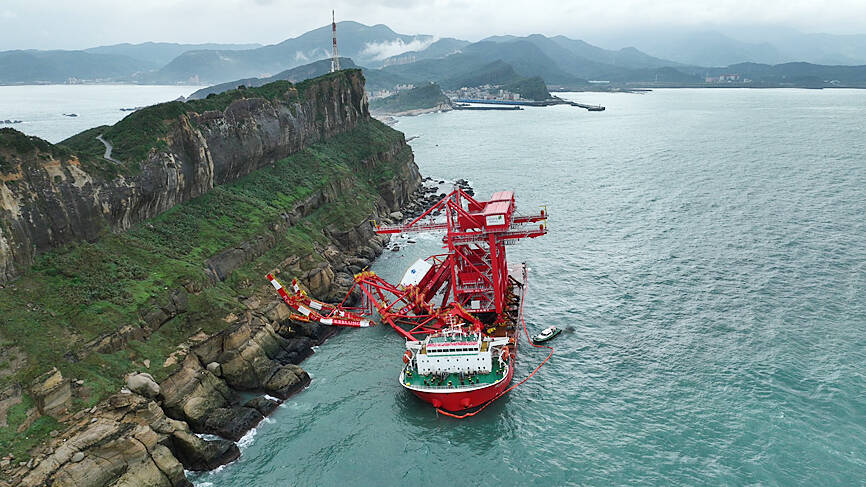
Photo copied by Lin Chia-tung, Taipei Times
The policy applies to ship owners who have been insured by or have renewed insurance policies with the four insurers, it said.
The bureau would ensure that ships enter the nation’s seaports with insurance policies issued by valid insurers, it said.
In addition to these four insurers, the bureau previously designated East of England P&I Association Ltd and Hydor AS as unwelcome maritime insurers on Dec. 29, 2021 and Nov. 10 last year, respectively.
In a recent session of the Legislature’s Transportation Committee, Chinese Nationalist Party (KMT) Legislator Jonathan Lin (林沛祥) called for a comprehensive overhaul in the nation’s ship insurance system, after the government was criticized for its handling of Chinese cargo ship Yu Zhou Qi Hang (鈺洲啟航), which was stranded off the nation’s northeast coast before Super Typhoon Kong-rey made landfall on Oct. 31.
Damage caused by shipwrecks should be fully covered by shipowners’ protection and indemnity insurance, he said.
Having hull insurance is not enough, as it only covers third-party liability and does not cover the costs of removing stranded ships, Lin said.
Ship insurers must be certified as valid organizations by QBE Insurance Group Ltd or other similar organizations, he said.
The agency that oversees and inspects the safety of foreign ships in domestic ports should conduct inspections every quarter, he said, adding that foreign ships should be asked to address safety issues immediately or they should be refused entry to the port.
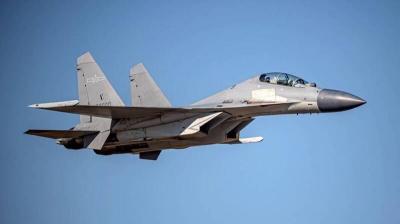
Eight Chinese naval vessels and 24 military aircraft were detected crossing the median line of the Taiwan Strait between 6am yesterday and 6am today, the Ministry of National Defense said this morning. The aircraft entered Taiwan’s northern, central, southwestern and eastern air defense identification zones, the ministry said. The armed forces responded with mission aircraft, naval vessels and shore-based missile systems to closely monitor the situation, it added. Eight naval vessels, one official ship and 36 aircraft sorties were spotted in total, the ministry said.
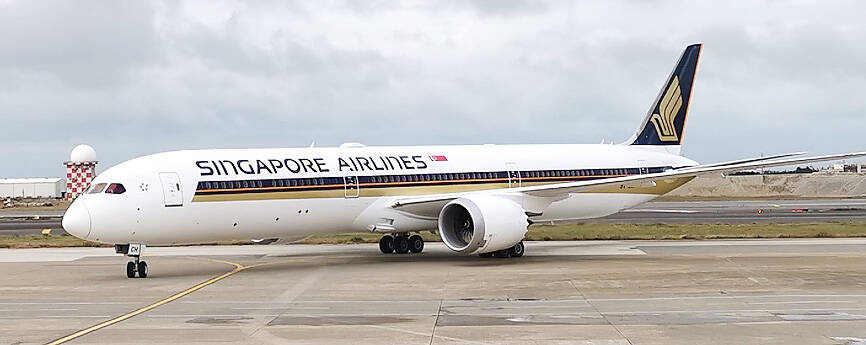
INCREASED CAPACITY: The flights on Mondays, Wednesdays, Fridays and Sundays would leave Singapore in the morning and Taipei in the afternoon Singapore Airlines is adding four supplementary flights to Taipei per week until May to meet increased tourist and business travel demand, the carrier said on Friday. The addition would raise the number of weekly flights it operates to Taipei to 18, Singapore Airlines Taiwan general manager Timothy Ouyang (歐陽漢源) said. The airline has recorded a steady rise in tourist and business travel to and from Taipei, and aims to provide more flexible travel arrangements for passengers, said Ouyang, who assumed the post in July last year. From now until Saturday next week, four additional flights would depart from Singapore on Monday, Wednesday, Friday
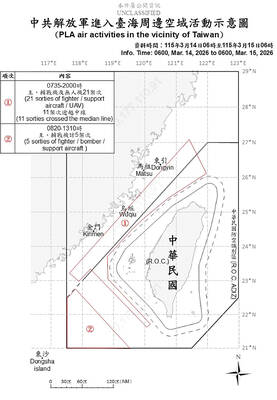
The Ministry of National Defense yesterday reported the return of large-scale Chinese air force activities after their unexplained absence for more than two weeks, which had prompted speculation regarding Beijing’s motives. China usually sends fighter jets, drones and other military aircraft around the nation on a daily basis. Interruptions to such routine are generally caused by bad weather. The Ministry of National Defense said it had detected 26 Chinese military aircraft in the Taiwan Strait over the previous 24 hours. It last reported that many aircraft on Feb. 25, when it spotted 30 aircraft, saying Beijing was carrying out another “joint combat

Taiwan successfully defended its women’s 540 kilogram title and won its first-ever men’s 640 kg title at the 2026 World Indoor Tug of War Championships in Taipei yesterday. In the women’s event, Taiwan’s eight-person squad reached the final following a round-robin preliminary round and semifinals featuring teams from Ukraine, Japan, Thailand, Vietnam, the Basque Country and South Korea. In the finals, they swept the Basque team 2-0, giving the team composed mainly of National Taiwan Normal University students and graduates its second championship in a row, and its fourth in five years. Team captain


 RSS
RSS